Languages
Friday, November 20, 2026



News and Views from the Global South
Development & Aid
The Future of Asia-Pacific’s Cities
(ESCAP news) -- The Seventh Asia-Pacific Urban Forum (APUF-7) opened today with a strong call for cities to take the lead and embrace a “can do” spirit in driving sustainable development commitments across the region.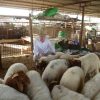
Global Challenges for the ‘NextGen’
Success has many parents – so the saying goes. In the case of the massive successes of international agricultural research, no one person can claim parentage. There are heroes along the way such as Norman Borlaug and his early cereal breeding, and the team that eliminated the cattle disease Rinderpest from the world – smallpox is the only other disease that has been totally eradicated. Another is the founder of The Crawford Fund, Derek Tribe, who was also instrumental in the creation of what is now the International Livestock Research Institute (ILRI), which I chair. However, it would be more correct to highlight the thousands of scientists who have contributed to the world’s greatest feat of feeding an extra three billion people when pundits said it was impossible.
A Major Step Forward in Reducing Food Loss and Waste is Critical to Achieve the SDGs
A new FAO report launched today by the UN Food and Agriculture Organization provides insights into how much food is lost - as well as where and why - at different stages of the food supply chain, calls for informed decisions for an effective reduction and offers new ways to measure progress.
OECD Tax Reform Proposal Could Be Better
The OECD Secretariat published its proposed ‘unified approach’ to reform international tax rules to address tax challenges posed by digitalization on 9 October 2019. Under current rules, there is little chance of a company being taxed without its physical presence in the country concerned. But digitalization enables many businesses to remotely conduct economic activities affecting a national economy without a direct physical presence.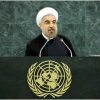
Vibrant Civil Society Essential for Sustainable Development in Iran
2019 has not been a good year for Iranian human rights activists. At a time where civic space had completely closed, many watched in disbelief as the regime mounted even more restrictions on civil society. Over recent months, many activists have been arrested, like Noushin Javari (a photographer), Marzieh Amiri (a journalist), and Javad Lal Mohammadi (teacher).
Stop the Waste: UN Food Agencies Call for Action to Reduce Global Hunger
With one-third of food produced for human consumption lost or wasted, and millions still going hungry, the UN’s food-related agencies are shining a spotlight on the issue: on Monday, the Food and Agriculture Organization (FAO) published its annual State of Food and Agriculture report with findings that could lead to a reduction in food loss and waste, and, earlier in October, the World Food Programme (WFP) launched its awareness-raising #StopTheWaste campaign.
How the Oceans and the Cryosphere are Under Threat and What it Means for Africa- IPCC Author Explains
 “Special reports come to address issues that need deeper understanding and deeper research,” Dr James Kairo, one of the lead authors of the ‘Special Report on the Ocean and Cryosphere in a Changing Climate,’ a special report by the Intergovernmental Panel on Climate Change (IPCC), told IPS.
Free Trade is Dead
In recent years, global trade and trade policy have become central socio-political issues. The planned EU-US trade agreement TTIP triggered an unprecedented storm of indignation and resistance.
Rural Poverty Is Still a Scar on the Soul of Colombia, but a New Program Supporting Agri-Entrepreneurship Can Help Heal the Wounds
Rural poverty and inequality continue inflicting large swaths of population in Colombia, especially in rural areas. This situation, endemic since at least the beginning of the twentieth century, was at the root of the 50-year long conflict that shattered the country, leaving 220,000 deaths and 5.7 million displaced persons, and devastating a significant part of the rural areas, where government services and infrastructure vanished.
World Food Day 2019 – “Our Actions Are Our Future”
 Globalization and urbanization have had a staggering impact on human history, especially over the last decade.

Huge moment for Ethiopia as Abiy Ahmed wins Nobel Peace prize
Ethiopia found itself in the global spotlight for all the right reasons after Abiy Ahmed, its young, dynamic prime minister was awarded the Nobel Peace Prize.
Justin Trudeau´s Blackface
Politics is a dodgy game, maybe even more so if you represent political views based on a moral approach. When the charismatic Justin Trudeau, son of a cosmopolitan liberal who served as Canada´s Prime Minister for 16 years, in 2015 was elected Prime Minister it was within a global political climate different from what it is today. Barack Obama was in the White House, Angela Merkel served her third period as German Chancellor, and the UK Government had not yet announced its country's withdrawal from the EU. Nevertheless, Russia had three months before Trudeau´s election annexed Crimea, while Viktor Orbán´s Hungarian government the month before initiated the construction of a 4 metres high barrier along its nation´s eastern and southern borders to keep immigrants out.
For Some in Kashmir Marriage Equates to Sexual Slavery
Haseena Akhtar was only 13 when an agent told her parents that they could earn a good amount of money by letting her marry a Kashmiri man. The man was, however, three times older than Akhtar, the agent said.
Austerity, the “New Normal”
While this week Ministers of Finance and economists meet in Washington to confront global economic challenges at the IMF and World Bank Annual Meetings, the majority of the world population lives with austerity cuts and see their living standards deteriorating. World leaders must reverse this trend.14 aid agencies warn of humanitarian crisis in North-East Syria
Civilians in north-east Syria are at risk and humanitarian aid could be cut off following the launch of a new military operation in the area, leading aid agencies are warning.
Aid Groups Warn of Humanitarian Crisis from Turkey’s Assault on Syria
Aid groups operating in northeastern Syria have been raising the alarm about civilian casualties and an impending humanitarian crisis this week, as Turkey began a military assault on the turbulent region’s Kurdish militants.
Abortion Remains an Unresolved Issue: ICPD25 Meeting next Month
Currently, the topic of abortion as human rights leaves the world bustling. When the state of Alabama1 in the United States enacted a very strict ban on abortion, it shocked the world. This prompted so-called conservative movements, led by female business owners, to make a full-scale advertisement in the New York Times claiming abortion is a human right2 ; hence the global debate between pro-life and pro-choice.
“Window of Opportunity to Avoid Catastrophic Climate Change is Fast Shrinking”
“The window of opportunity to avoid catastrophic climate change is fast shrinking,” executive director of the Green Climate Fund (GCF), Yannick Glemarec, tells IPS. 
The Most Important Meeting You’ve Never Heard Of — & the Grand Challenge on Inequality
Last month 195 world leaders once again met in New York for big speeches and grand events. But on inequality, when all is said and done, more has been said than done.
The Superfoods of the Andes and the Himalaya
The nutritious grain that mountain peoples of the Americas and high Asia cultivated were displaced by wheat and rice, but they are staging a comeback thanks to growing public consciousness about health.
One Billion People Have Preventable Eye Conditions, Increasingly Linked to Lifestyle Choices, According to WHO
A staggering 2.2 billion people already suffer from eye conditions and visual impairment today, but the global need for eye care is set to increase “dramatically”, with lack of exercise a key factor, the UN health agency said on Tuesday, unveiling its first ever report on vision across the world.« Previous Page — Next Page »


 2026 High-level Political Forum on Sustainable Development. Credit: UN Photo/Eskinder Debebe
In 2015, the United Nations and its Member States adopted the Sustainable Development Goals (SDGs) in an effort to make the world a more sustainable and peaceful place for future generations. Progress on the 17 SDGs has been uneven, and inequality persists across the globe. 10 years after adoption, the 2025 UN SDGs Report revealed that only 35% of the SDG targets are on track, with more than half moving too slowly, and 18% moving backwards from the 2015 baseline. Poverty remains one of the world’s most pressing issues, with hunger, violence, and inequality impeding the opportunities for all people to achieve success. In September 2024, the United Nations Summit of the Future introduced a new goal: to eradicate global poverty by 2030, ensure universal rights to basic services, and increase the overall standard of living in terms of industrialization, economic well-being, citizen health, and literacy. Furthermore, recent shifts in United States foreign aid policy – notably, major budget cuts to USAID and the termination of thousands of development programmes– have severely threatened vital lifelines of financial aid to impoverished communities around the world. Additionally, the United States’ withdrawal from the Paris Climate Agreement has undercut international efforts at sustainable development. With the upcoming 2030 deadline, the UN Secretary-General has called for urgent multilateralism across six priority areas: food systems, energy, digital connectivity, education, jobs and social protection, and climate and biodiversity. IPS sheds light on marginalized communities that struggle on a daily basis to survive and have their stories heard and respected.
Updated by Yilan Batista and Shuli Wong August 2026

The Week with IPS

NEXT STOP - SDGs
Tracking global progress towards a sustainable world
Tracking global progress towards a sustainable world
