Languages
Sunday, November 22, 2026



News and Views from the Global South
Development & Aid

Business Unusual: Valuing Water for a Sustainable Future
Valuing water is more than simply assigning costs to a scare resource - it is an essential step for transforming water governance to meet the needs of a prosperous future.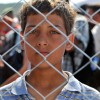
The ‘Water-Employment-Migration’ Explosive Nexus
Water--everybody talks about it, warns against its growing scarcity, excessive waste, the impact of climate change, the frequent severe droughts and so on. Now, a global action network with over 3,000 partner organisations in 183 countries comes to unveil the dangerous nexus between water, employment and migration, in particular in the Mediterranean region.
Africa Drives Global Action Against Mercury Use
With a new international treaty, an increasing number of African countries are committing to phasing out mercury, a significant health and environmental hazard.
Forty-Five Years Since Stockholm, Twenty-Five Years Since the Earth Summit and Five Years Since Rio+20
Over the past five years, I have written with a number of co-authors the history of the sustainable development movement at the global level prior to the first UN Conference on Human Environment held in 1972 through the 1992 Earth Summit and Rio+20 to the adoption of the Sustainable Development Goals and the Paris Climate Agreement. I like to think of these books as the ‘Vienna Café Trilogy’ after the café in the basement of the United Nations headquarters in New York, where many deals are done over coffee. Also, with deference to the Hitchhiker's Guide to the Galaxy: A Trilogy in Five Parts, this trilogy may also have future books.
Millions of Homes in Mexico Suffer from “Energy Poverty”
Energy poverty afflicts millions of homes in Mexico, with many social, economic and environmental impacts for the country.
Growing Unemployed Youth in Africa a Time Bomb, But…
There are nearly 420 million young Africans between the ages of 15 and 35 today. And it is estimated that within ten years, Africa will be home to one-fifth of all young people worldwide.
Valuing Water Beyond the Money
Amid the worst drought in a century, South Africans are kick-starting a global consultative process to agree on the values of water in a bid to ensure more equitable use of the finite resource.
Alert Over Lethal Virus Affecting Popular Tilapia Fish
A highly contagious disease is spreading among farmed and wild tilapia, one of the world's most important fish for human consumption, the United Nations warns, adding that though not a human health risk, Tilapia Lake Virus has large potential impact on global food security and nutrition.
Brazil Drives New School Feeding Model in the Region
“I am going back to Panama with many ideas,” said Gilda Montenegro, a nutritionist with the Panamanian Education Ministry, after getting to know the school feeding system in the city of Vitoria, in central-eastern Brazil.
Asia: 260 Million Indigenous Peoples Marginalised, Discriminated
Asia is home to the largest number of indigenous peoples on Earth, with an estimated 260 million of a total of 370 million original inhabitants worldwide. In spite of their huge number-equaling half of the combined population of Europe-- they are often victims of discrimination and denial of their rights.
Time To Focus On ‘Hidden Hunger’
As World Hunger Day May 28 approaches, it is time for us all to redouble our efforts to reach the goal of Zero Hunger by prioritizing the battle against micronutrient deficiency. If the international community pulls together this year to incorporate proven solutions such as biofortifying crops into the UN framework for sustainable development, we could reduce malnutrition on a truly global scale.
Formalising Informal Trade – Good for African Women?
Women constitute the largest share of informal traders in Africa–about 70 per cent in Southern Africa and more than half in other parts of this vast continent made up of 54 states, home to over 1,200 billion people.
In a “World of Plenty,” G7 Must Fight Famine
World leaders must step up and take action in fighting famine to prevent further catastrophic levels of hunger and deaths, said Oxfam.
Why the G7 Must Fund Health & Nutrition
The G7 Summit, held annually among the leaders of the world’s most powerful economies (Canada, France, Germany, Italy, Japan, the United Kingdom, the United States, and the EU), plays an important role in shaping responses to global challenges—theoretically at least.
Big polluting lobbyists may be forced to declare interests at UN talks
Is the presence of the fossil fuel industry necessary in global climate change negotiations, or does their presence in these talks represent a conflict of interest and undermine global progress?
Africa – More than Just Conflicts, Corruption, Disasters
Natural and man-made disasters, armed conflicts, widespread corruption and deep social inequalities have been so far a dramatic source for most news coverage when it comes to Africa, the world's second-largest and second-most-populous continent on Earth, which hosts 54 states spreading over 30 million square kilometres that are home to over 1.2 billion people.
Slow Growth Stalls SDGs’ Progress
The world will not be on track to eradicate poverty by 2030 if current growth trends continue, a UN task force found.
Q&A: “It’s a Crime” that 35 Million Latin Americans Still Suffer from Hunger
The fight against hunger has been “remarkably successful” in Latin America and the Caribbean, but “it is a crime” that 35 million people still go to bed hungry every day, FAO regional representative Julio Berdegué told IPS.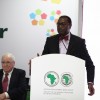
Nutrition Key to Developing Africa’s “Grey Matter Infrastructure”
Developing Africa’s ‘grey matter infrastructure’ through multi-sector investments in nutrition has been identified as a game changer for Africa’s sustainable development.
The Ocean Conference: An Integrated Vision that must be Delivered
In March 2015 at the Sendai World Conference for Disaster Risk Reduction, the then President of Kirbati, Anote Tong, made it very clear how vulnerable his country was to climate and disaster risk, when he informed the room (which was sadly less than half full) that his country had purchased land in Fiji.
Gateway Portals and the Quest for Sustainable Urbanization
On a busy Friday afternoon, the number 1 subway train heading north through Manhattan’s Westside comes out of a dark tunnel --and if one takes a minute to release oneself from communication devices—one can catch sight of the approaching 125th street in the distance, the crosswalk buzzing with yellow cabs.« Previous Page — Next Page »


 2026 High-level Political Forum on Sustainable Development. Credit: UN Photo/Eskinder Debebe
In 2015, the United Nations and its Member States adopted the Sustainable Development Goals (SDGs) in an effort to make the world a more sustainable and peaceful place for future generations. Progress on the 17 SDGs has been uneven, and inequality persists across the globe. 10 years after adoption, the 2025 UN SDGs Report revealed that only 35% of the SDG targets are on track, with more than half moving too slowly, and 18% moving backwards from the 2015 baseline. Poverty remains one of the world’s most pressing issues, with hunger, violence, and inequality impeding the opportunities for all people to achieve success. In September 2024, the United Nations Summit of the Future introduced a new goal: to eradicate global poverty by 2030, ensure universal rights to basic services, and increase the overall standard of living in terms of industrialization, economic well-being, citizen health, and literacy. Furthermore, recent shifts in United States foreign aid policy – notably, major budget cuts to USAID and the termination of thousands of development programmes– have severely threatened vital lifelines of financial aid to impoverished communities around the world. Additionally, the United States’ withdrawal from the Paris Climate Agreement has undercut international efforts at sustainable development. With the upcoming 2030 deadline, the UN Secretary-General has called for urgent multilateralism across six priority areas: food systems, energy, digital connectivity, education, jobs and social protection, and climate and biodiversity. IPS sheds light on marginalized communities that struggle on a daily basis to survive and have their stories heard and respected.
Updated by Yilan Batista and Shuli Wong August 2026

The Week with IPS

NEXT STOP - SDGs
Tracking global progress towards a sustainable world
Tracking global progress towards a sustainable world
