Languages
Sunday, November 22, 2026



News and Views from the Global South
Development & Aid

Latin America Is a Leading Influence in the Global Fight Against Hunger
A model for fighting against hunger and malnutrition with a global reach which has been successful within and outside the region has spread worldwide, first from Brazil and then from Latin America, notes a distinction given to the current Director-General of FAO (United Nations Food and Agriculture Organisation), José Graziano da Silva.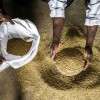
Every Year 700 Million People Fall Ill from Contaminated Food
It may sound like an endless tale of modern seven plagues: mad cows, avian flu, led-poisoned fish, swine fever, desert locusts being the most dangerous of migratory pests, let alone new, aggressive rust threatening entire wheat crops in three continents, just to mention a few. Now it is about contaminated food that every year causes illness to 1 in 10 people around the world – or around 700 million - killing 420,000 people as a result.
Argentina’s Never-ending Environmental Disaster
Is it possible to spend 5.2 billion dollars to clean up a river which is just 64-km-long and get practically no results? Argentina is showing that it is.
Kenya’s Potential in Agriculture Lies in Rural Transformation
Agriculture plays a pivotal role in the livelihoods of Kenya’s majority, providing both formal and informal employment with women accounting for about 70 percent of the agricultural labour force.
No Hidden Figures: Success Stories Can Help Girls’ STEM Careers
What makes a young girl believe she is less intelligent and capable than a boy? And what happens when those children face the ‘hard’ subjects like science, technology, engineering and mathematics (STEM)? A recent study, ‘Gender stereotypes about intellectual ability emerge early and influence children’s interests’ showed that by the age of 6, girls were already less likely than boys to describe their own gender as ‘brilliant’, and less likely to join an activity labelled for ‘very, very smart’ kids.
Supporting Local Organisations: A Syrian Perspective
Just 0.2 percent of humanitarian funding goes directly to local and national NGOs, according to a major UN review of humanitarian financing published ahead of the 2016 World Humanitarian Summit.
Dubai Global Centre of Green Economy in UAE’s Vision 2021
When former UN Secretary-General Ban K-moon was in Abu Dhabi for the World Future Energy Summit last year, he singled out the key role played by the United Arab Emirates (UAE) in “safeguarding the future of our planet” by showcasing clean, sustainable energy --- a centre piece of the UN’s post-2015 development agenda.
Indigenous Peoples Lands Guard 80 Per Cent of World’s Biodiversity
They are more than 370 million self-identified peoples in some 70 countries around the world. In Latin America alone there are over 400 groups, each with a distinct language and culture, though the biggest concentration is in Asia and the Pacific– with an estimated 70 per cent. And their traditional lands guard over 80 per cent of the planet’s biodiversity.
Innovative Credit Model Holds Out Lifeline to Farmers in Honduras
In this village in southern Honduras, in one of the poorest parts of the country, access to credit is limited, the banking sector is not supportive of agriculture, and nature punishes with recurrent extreme droughts.
US, EU Food Standards Major Hurdle for Caribbean Exporters
As Caricom countries struggle to move away from their traditional reliance on a single industry or major crop in the face of growing economic uncertainty worldwide, they are finding it increasingly difficult to enter markets in the EU and North America with new types of food products.
Female Genital Mutilation is a Gruesome Impediment to the Empowerment of Women
On 06 February 2017, the world marks the 14th International Day of Zero Tolerance for Female Genital Mutilation (FGM).
It’s Women’s Turn in Rural Development
Josefina Stubbs, from the Dominican Republic, may become the first woman to preside over the International Fund for Agricultural Development (IFAD), which is dedicated to eradicating rural poverty.
World’s 40,000 MP’s Must Enjoy Their Rights – But Are They?
“Members of Parliament must be free to enjoy their human rights. If not, how can they defend and promote the rights of those who elected them? Yet, around the world vocal parliamentarians find themselves under threat. The 40,000-strong community of parliamentarians includes many men and women who have risked careers and even their lives to express their beliefs.”
New, Aggressive Rust Imperils Wheat Crops in Europe, Africa, Asia
Wheat rust, a family of fungal diseases that can cause crop losses of up to 100 per cent in untreated susceptible wheat, is making further advances in Europe, Africa and Asia, according to two new studies produced by scientists in collaboration with the United Nations.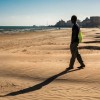
Europe Urged to Address ‘Tragic’ Loss of Lives in Mediterranean
European leaders should take decisive action to address the tragic loss of life on the Central Mediterranean route and the deplorable conditions for migrants and refugees in Libya, urged two major United Nations agencies dealing with migrants and refugees.
Want to Prevent Stroke, Diabetes, Cancer? Get Moving… Now!
Tired, lazy, bored, laying down long hours watching TV or seated checking your email? Wrong. And dangerous: not enough exercise contributes to cancer, diabetes, depression and other non-communicable diseases.
Families of the “Disappeared” Search for Clandestine Graves in Mexico
Juan de Dios is eight years old and is looking for his younger sister, Zoe Zuleica Torres Gómez, who went missing in December 2015, when she was only five years old, in the northeastern state of San Luis Potosí. He is the youngest searcher for clandestine graves in Mexico.
We Need a New Social Movement Against Inequality
Oxfam's latest estimate that just eight super-rich people – down from 62 last year and 388 just six years ago - own more wealth than the poorest half of the world population is a clarion call to change the way we think about and try to tackle inequality.
How a Spring Revival Scheme in India’s Sikkim Is Defeating Droughts
Bina Sharma, a member of the Melli Dhara Gram Panchayat Unit in the southern part of India’s northeastern Himalayan state of Sikkim, is a relieved woman.
Why Kenya Must Create a Million New Jobs Annually
It is estimated that 3000 Kenyans are born every day, a million a year. With a median age of 18 years, Kenya is witnessing a massive youth bulge, which could either be a demographic dividend, or a disaster.
Seeds Are Key to Improving Bean Production in Cuba
“You have to have good and varied seeds to test which one adapts best to each kind of soil,” says 71-year-old farmer Rubén Torres, who on his farm in central Cuba harvests 1.6 tons of organic beans every year, among other crops.« Previous Page — Next Page »


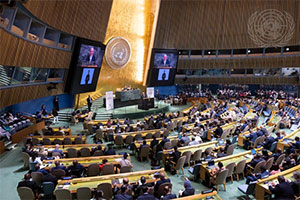 2026 High-level Political Forum on Sustainable Development. Credit: UN Photo/Eskinder Debebe
In 2015, the United Nations and its Member States adopted the Sustainable Development Goals (SDGs) in an effort to make the world a more sustainable and peaceful place for future generations. Progress on the 17 SDGs has been uneven, and inequality persists across the globe. 10 years after adoption, the 2025 UN SDGs Report revealed that only 35% of the SDG targets are on track, with more than half moving too slowly, and 18% moving backwards from the 2015 baseline. Poverty remains one of the world’s most pressing issues, with hunger, violence, and inequality impeding the opportunities for all people to achieve success. In September 2024, the United Nations Summit of the Future introduced a new goal: to eradicate global poverty by 2030, ensure universal rights to basic services, and increase the overall standard of living in terms of industrialization, economic well-being, citizen health, and literacy. Furthermore, recent shifts in United States foreign aid policy – notably, major budget cuts to USAID and the termination of thousands of development programmes– have severely threatened vital lifelines of financial aid to impoverished communities around the world. Additionally, the United States’ withdrawal from the Paris Climate Agreement has undercut international efforts at sustainable development. With the upcoming 2030 deadline, the UN Secretary-General has called for urgent multilateralism across six priority areas: food systems, energy, digital connectivity, education, jobs and social protection, and climate and biodiversity. IPS sheds light on marginalized communities that struggle on a daily basis to survive and have their stories heard and respected.
Updated by Yilan Batista and Shuli Wong August 2026

The Week with IPS

NEXT STOP - SDGs
Tracking global progress towards a sustainable world
Tracking global progress towards a sustainable world
