Languages
Sunday, November 8, 2026



News and Views from the Global South
Population
AUSTRALIA: More Suicides, No Lessons
Supporters of asylum seekers here say that the government’s response to recent suicides in Australian immigration detention centres ignores what is already well-known: that indefinite, long-term detention in crowded facilities results in deaths.
CUBA: Young People Look Abroad
While for their parents, leaving Cuba was a traumatic event because of the impossibility of returning, for younger generations, "moving abroad" is becoming more and more of a normal decision, just another alternative for the future.
LATIN AMERICA: Lack of Prevention, Timely Treatment Make Women Vulnerable to Cancer
In many cases, cancer is preventable, treatable and curable if detected on time. But the fate of millions of women with the disease varies enormously, depending on where they live.
A Table for Nine Billion
As the World Bank and International Monetary Fund convene for their annual Spring Meetings here, soaring food prices are high on the agenda, prompting some analysts to fast-forward to 2050 and the question of how to nourish the mid-century's estimated world population of 8.9 billion people – the majority of whom will live in developing countries.
PHILIPPINES: Religious Groups Weigh In on Reproductive Health Debate
In a country where an estimated 4,500 women die every year due to complications during childbirth, the enactment of a reproductive health (RH) policy is said to be a measure that could save lives.Vast Majority of Stillbirths Found in Developing Countries
According to a special series in the medical journal The Lancet presented in New York Wednesday at the U.N. children's agency UNICEF, over 2.6 million stillbirths occur worldwide annually, affecting mostly African and Asian women who lack proper access to health care and facilities.U.N. Decries Stagnant Funding For Population Goals
As the international community readies to cope with a rising world population of some seven billion people by the middle of this year, U.N. Secretary-General Ban Ki-moon warns that financial assistance for population-related activities has made no visible gains since 2008.
CUBA: Today’s Youth, As Diverse As the Times
Mariana García is a child of the 1990s, when Cuba was in the grip of the severe crisis that hit the island after the collapse of the Soviet Union and the East European socialist bloc. She grew up bombarded by the first video games and surrounded by people who talked more about how to get by than about their dreams and ideals.Libyan Exodus Shrinks Remittances
The exodus of migrants streaming out of Libya due to ongoing unrest has highlighted the heavy dependence of some countries on remittances from their citizens working abroad. In several countries this flow has now become choked.Smart Planning for the Global Family
When it comes to population growth, the United Nations has three primary projections. The medium projection, the one most commonly used, has world population reaching 9.2 billion by 2050. The high one reaches 10.5 billion. The low projection, which assumes that the world will quickly move below replacement-level fertility, has population peaking at eight billion in 2042 and then declining.Migrant Workers Caught in Whirlwind of ‘Arab Spring’
Migrant workers caught in the crossfire of the ongoing upheavals in Bahrain and Libya highlight the need to develop international migration policies based on migrants' rights rather than the economic interest of labour sending and receiving countries, knowledgeable sources say.Broken Promises Loom Large in 2012 Election Run-Up
Just days after United States President Barack Obama announced his reelection campaign for the 2012 run-off via a Youtube video, the White House is poised on the brink of its first shutdown in 15 years, with budget wars, an immigration maelstrom and determined opposition to the administration's seeming tolerance for union-busting barricading the path to a second term for the Democrat incumbent.
SRI LANKA: Finally Dengue Takes a Beating
Dengue infections and deaths here have declined significantly this year.
SOUTH AFRICA: The Invisible People
Since psychiatric care was decentralised last year in South Africa, patients have been moved from hospitals into community day hospitals that don't have the appropriate resources to deal with mental illnesses. As a result, many of society's most vulnerable have slipped through the cracks in the system and now walk the streets like invisible people.
Ghana Border Town Braced for Influx of Ivorian Refugees
As many as a million people have fled Côte d'Ivoire's commercial capital, Abidjan, due to intensified fighting. Many people are fleeing to areas in the north, centre and east of the country as thousands of youth answered a call to join forces loyal to Laurent Gbagbo; others are trying to leave the country.
Foreign Labourers Targeted Throughout Bahrain
As protests in Bahrain continue, increasingly migrant workers are being victimised in violent hate crimes.
PAKISTAN: And Then There Was Light
Hasan Ibrahim’s tea stall is the busiest place in the sleepy, sand-dune covered village of Sholani, proof of the economic and social change the arrival of electricity has ushered in.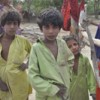
PAKISTAN: Citizens and NGOs Step Forward to End Illiteracy
The man known as ‘Master Ayub’ holds classes for free, between three and seven o’clock. His classroom is a public park, and his students are street children six to 16 years of age who otherwise would be picking trash, begging, or slowly becoming petty thieves.JAPAN: Vulnerability and Uncertainty Prevail In Wake of Nuclear Disaster
Accidents at four nuclear power reactors hit by the earthquake and tsunami in Fukushima have left thousands of residents in the vicinity facing an uncertain future as they prepare for evacuation orders to protect them from dangerous radiation contamination.Cambodia Struggles to Stem Domestic Worker Abuse
Cambodia’s fledgling domestic worker export industry continues to come under scrutiny amid allegations that women have been forcibly detained in privately run training centres.
CAMBODIA: Botched World Bank Project Leads to Thousands of Evictions
The World Bank botched the handling of an ambitious multi-million-dollar land- titling project in Cambodia and has done little to protect thousands of people in a lakeside slum from eviction.« Previous Page — Next Page »





 One Thousand Internally Displaced Persons (IDPs) Relocated from Tomping Camp in South Sudan. Credit: UN Photo/Isaac Billy
It took hundreds of thousands of years for the world’s human population to cross one billion in 1804. Approximately 200 years later, the population has multiplied sevenfold. In 2023, the global population crossed 8 billion, and is expected to reach 9 billion before 2050. With the planet more crowded than ever, it is essential to keep track of population trends, urbanization, migration, and reproduction across the world.
Life expectancy has seen significant strides in the past century, largely due to economic development and increased standards of living. On the contrary, trends in global fertility are shifting, with certain regions in Africa and Asia reporting higher rates, while parts of Europe and North America report stagnant or lower rates. This is in part due to differences in sexual and reproductive healthcare, as well as societal and economic conditions around the world. For example, child marriage is prevalent in certain societies, where childbearing is also considered a familial duty. Meanwhile, stagnating economies frequently experience lower marriage and childbearing rates.
The increase in migration and urban development around the world is also linked to global population trends. By 2050, it is expected that approximately 66 percent of all people will live in cities. Furthermore, global crises such as warfare and natural disasters also prompt transnational migration. Transnational migration is linked to a variety of socioeconomic issues in both host and receiving countries: migrants often leave developing countries with less access to educational and economic opportunities and arrive in developed countries where they are frequently the targets of ethnic, racial, and cultural discrimination, and economic exploitation. Recent crises in Europe and the United States demonstrate the importance of advocating for migrants worldwide. As migrants from the Global South are increasingly stripped of their legal and civic rights in unlawful deportations, or targeted in acts of identity-based violence, it is essential to keep track of population trends and protect the human rights of migrant populations. Climate-related disasters are now a major driver of displacement, with nearly half of all new internal displacements in 2025 being disaster-related.
IPS is devoted to covering issues surrounding population trends, migration, and reproduction through its compelling articles, which use both statistics and human stories to provide readers with robust and informative viewpoints.

The Week with IPS

NEXT STOP - SDGs
Tracking global progress towards a sustainable world
Tracking global progress towards a sustainable world
