Languages
Wednesday, October 7, 2026



News and Views from the Global South
Population
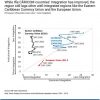
Strengthening Caribbean Regional Integration
The Caribbean economies have long recognized the value of working together. Improving regional integration—for instance, through more intraregional trade and policy coordination—can help the region’s small-size economies build greater resilience and scale, as well as enhance bargaining power on the global stage.
India’s Outdoor Workers on the Frontlines of Climate Change
Last June when more than half of India was reeling under daily temperatures topping 40 degrees Celsius, Nursing Behera’s 11-month-old son burned both his legs when a pot of boiling water fell on him.
Africa Must Prioritise Upskilling its Unemployed Youth, Development Bank Urges
Africa’s inability to produce adequate skills is negatively impacting its economic growth.
A Bigger Impact in a Smaller World: The China Situation
We are now living in a hyper communicative world where news does travel faster than lightning. Boundaries, borders, geographical and time differences have become next to obsolete in today’s speed driven world. At any point in time people, news and local occurrences can influence internationally without much local isolation. Along with the advantages of technology, communications and connections world is also facing new challenges that are proportionally evolving with advancement. One region affected today is affecting the global economy and population in frenzy of minutes, hours and days.
Widowhood: Stressful and Unprepared
In addition to the emotional stress and sorrow of widowhood, most people are unprepared to deal with the daunting challenges following the death of a spouse. Rather than treating widowhood as a taboo subject or something to ponder only in old age, couples need to discuss, plan and make decisions early on regarding the eventual and inevitable passing away of one’s spouse.
Our Message at Davos: Water & Sanitation Are a Critical Line of Defence Against Climate Change
There was only one topic on everyone’s lips at Davos this year – climate change. The headlines focused on the cold war between Greta Thunberg and Donald Trump, but there was much greater consensus among those gathered for the annual meeting of the World Economic Forum (WEF).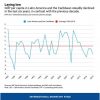
New Challenges to Growth in Latin America & the Caribbean
Economic activity in Latin America and the Caribbean stagnated in 2019, continuing with the weak growth momentum of the previous five years and adding more urgency and new challenges to reignite growth.
‘Organic is the Future’
Vandana Shiva, a pioneer of organic farming in India, is incensed by the 2019 draft law to compulsorily register all seeds used by farmers. On a wintry afternoon, at her farm Navdanya in the Himalayan foothills, the noted ecologist spoke on the future of the organic farming movement in India. Excerpts: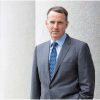
Urbanization as a Path to Prosperity
Growing up in New York City in the 1970s, Edward Glaeser saw a great metropolis in decline. Crime was soaring. Garbage piled up on sidewalks as striking sanitation workers walked off the job. The city teetered on the edge of bankruptcy.
**UPDATE** African Nations Caught in Conflict Re-commit to Inclusive Education
Djibouti’s President Ismail Omar Guelleh knows that his country is in need of an education system that is, “innovative, based on universal principles and values and adaptive of the local realities”.
Global Inequality Continues to Grow: UNDESA Report
More than 70 percent of the global population is currently living in parts of the world where income inequality has grown, according to a World Social Report 2020 launched by United Nations Department of Economic and Social Affairs (DESA).
From Digital Diplomacy to Data Diplomacy
The digital revolution arrived late at the heart of ministries of foreign affairs across the Western world. Ministries latched on to social media around the time of Tahrir Square and Iran’s 2009 Green Revolution, beguiled by a vision of the technology engendering a networked evolution toward more liberal societies.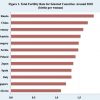
Pro-Growth Demographic Dogma
Whenever the issue of population comes up, pro-growth demographic dogma invariably dominates. Governments, political parties, businesses, the media and many others typically praise population growth and lament population slowdown, stabilization or decline. The demographic dogma basically advocates maintaining robust population growth and a larger and youthful population.
Empowering Women in Poor Communities & Building Resilience Against Climate Pressure
As global temperatures continue to rise, vulnerable populations around the world are facing increasingly complex climate risks – with ongoing droughts in Zimbabwe and floods devastating Indonesia's capital, Jakarta.
Climate Change: A Tale of Weather Extremes with Mixed Fortunes for Zambia
It is early Saturday morning and Planeta Hatuleke, a small scale farmer of Pemba District in Southern Zambia, awakens to the comforting sound of rainfall. As the locals say, the “heavens have opened” and it is raining heavily after a prolonged dry spell.
In the Elusive Grip of an Abusive Partner: A Migrant’s Story
To live in a home with family, to have a safe environment, food and basic human necessities, are some of the essentials that most people expect to have without giving it all much thought. When a child is born, parents or caregivers are likely to provide these things. These expectations get renewed whenever someone gets married and moves to a new home, a different neighborhood, or a city. We can hardly find someone who will say that they were not expecting happiness and safety when stepping into a new relationship, or starting a new chapter of life. But these expectations of a better life turn disastrous for millions of people when they step into another country as a dependent.
India’s Citizenship Law Triggered by Rising Right-Wing Ideology
“Fire bullets at the traitors of the country,” chanted mobs of Bharatiya Janata Party, or BJP, supporters wrapped in Indian flags in Delhi last week.
UN Chief Warns of Rising Misogyny, Xenophobia, Discrimination, Racism & Hate Speech
As we prepare to bid farewell to 2019, we must take a clearsighted look at the global situation and the new challenges we face. Our world is undergoing a shift. It is no longer bipolar or unipolar. But it is not yet truly multipolar. Balances of power are changing, creating new and dangerous risks.
Q&A: Initiative Starts Mental Health Sessions for Bangladeshi Garment Workers
Nearly seven years ago, garment workers in Bangladesh were victims of one of the gravest man-made disasters in history -- a factory collapse that left more than 1,100 workers dead, and rendered thousands with injuries -- in many cases lifelong ones. For many of the workers from Rana Plaza, the trauma remains real even to this day.
Arab Region’s Largest Youth Gathering Focuses on New Tech
On late Monday morning, a motley group of more than a thousand youth gathered in a hall in Sharm el-Sheikh, Egypt, to listen to Sophia — a humanoid robot capable of displaying humanlike expressions and interacting with people. Yahya Elghobashy, a computer science engineering student from Cairo, sat excitedly in the audience. A few meters away from him, also in the audience, was Abdel Fattah el-Sisi — the President of Egypt.
Lithium and Clean Energy in Argentina: Development or Mirage?
The intense white brightness of the salt flats interrupts the arid monotony of the Puna in northwest Argentina, resembling postcards from the moon. Beneath its surface are concealed the world's largest reserves of lithium, the key mineral in the transition to clean energy, the mining of which has triggered controversy.« Previous Page — Next Page »





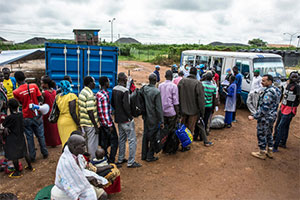 One Thousand Internally Displaced Persons (IDPs) Relocated from Tomping Camp in South Sudan. Credit: UN Photo/Isaac Billy
It took hundreds of thousands of years for the world’s human population to cross one billion in 1804. Approximately 200 years later, the population has multiplied sevenfold. In 2023, the global population crossed 8 billion, and is expected to reach 9 billion before 2050. With the planet more crowded than ever, it is essential to keep track of population trends, urbanization, migration, and reproduction across the world.
Life expectancy has seen significant strides in the past century, largely due to economic development and increased standards of living. On the contrary, trends in global fertility are shifting, with certain regions in Africa and Asia reporting higher rates, while parts of Europe and North America report stagnant or lower rates. This is in part due to differences in sexual and reproductive healthcare, as well as societal and economic conditions around the world. For example, child marriage is prevalent in certain societies, where childbearing is also considered a familial duty. Meanwhile, stagnating economies frequently experience lower marriage and childbearing rates.
The increase in migration and urban development around the world is also linked to global population trends. By 2050, it is expected that approximately 66 percent of all people will live in cities. Furthermore, global crises such as warfare and natural disasters also prompt transnational migration. Transnational migration is linked to a variety of socioeconomic issues in both host and receiving countries: migrants often leave developing countries with less access to educational and economic opportunities and arrive in developed countries where they are frequently the targets of ethnic, racial, and cultural discrimination, and economic exploitation. Recent crises in Europe and the United States demonstrate the importance of advocating for migrants worldwide. As migrants from the Global South are increasingly stripped of their legal and civic rights in unlawful deportations, or targeted in acts of identity-based violence, it is essential to keep track of population trends and protect the human rights of migrant populations. Climate-related disasters are now a major driver of displacement, with nearly half of all new internal displacements in 2025 being disaster-related.
IPS is devoted to covering issues surrounding population trends, migration, and reproduction through its compelling articles, which use both statistics and human stories to provide readers with robust and informative viewpoints.

The Week with IPS

NEXT STOP - SDGs
Tracking global progress towards a sustainable world
Tracking global progress towards a sustainable world
