Languages
Thursday, November 5, 2026



News and Views from the Global South
Population

UN Chief Warns of Rising Misogyny, Xenophobia, Discrimination, Racism & Hate Speech
As we prepare to bid farewell to 2019, we must take a clearsighted look at the global situation and the new challenges we face. Our world is undergoing a shift. It is no longer bipolar or unipolar. But it is not yet truly multipolar. Balances of power are changing, creating new and dangerous risks.
Q&A: Initiative Starts Mental Health Sessions for Bangladeshi Garment Workers
Nearly seven years ago, garment workers in Bangladesh were victims of one of the gravest man-made disasters in history -- a factory collapse that left more than 1,100 workers dead, and rendered thousands with injuries -- in many cases lifelong ones. For many of the workers from Rana Plaza, the trauma remains real even to this day.
Arab Region’s Largest Youth Gathering Focuses on New Tech
On late Monday morning, a motley group of more than a thousand youth gathered in a hall in Sharm el-Sheikh, Egypt, to listen to Sophia — a humanoid robot capable of displaying humanlike expressions and interacting with people. Yahya Elghobashy, a computer science engineering student from Cairo, sat excitedly in the audience. A few meters away from him, also in the audience, was Abdel Fattah el-Sisi — the President of Egypt.
Lithium and Clean Energy in Argentina: Development or Mirage?
The intense white brightness of the salt flats interrupts the arid monotony of the Puna in northwest Argentina, resembling postcards from the moon. Beneath its surface are concealed the world's largest reserves of lithium, the key mineral in the transition to clean energy, the mining of which has triggered controversy.
Madrid Talks End Without Agreement on How to Finance Recovery from Climate-Related Atrocities
Millions of people, particularly in Africa, who lose their property, homes, and even die due to climate-related disasters will have to wait at least another year for the international community to agree on a means of supporting them.
How to Recognise Nigeria’s Trafficked Kids
 What is human trafficking and child trafficking? IPS correspondent Tobore Ovuorie takes to the streets of Lagos to find out what Nigerians know about this crime. The answer was, surprisingly, very little. Ovuorie also speaks to experts about how to identify kids who have been trafficked and what ordinary citizens can do about it.

Haiti’s Cry for Help as Climate Change is Compared to an Act of Violence against the Island Nation
Haiti’s Environment Minister Joseph Jouthe has compared the climate emergency to a violent act and appealed to the international community for help to fight climate change.
Commonwealth: Commit to Limit Global Warming or Face Irreversible Impacts
Commonwealth countries, including those in the Caribbean, continue to push for more ambition, following reports that a few very influential parties have stymied efforts to respond to the climate emergency.
Climate Financing Being Undermined by Rich Nations, NGOs Charge
The successful battle against climate change – which has triggered a rash of natural disasters, including floods, droughts and rising sea levels— will be predicated largely on the availability of financing.
South-South Cooperation Offers Solutions to Urgent Climate Challenges
Climate change is the defining challenge of our time, and developing countries are recognized as hotspots for climatic risks. Through solidarity, peer-to-peer learning and collective self-reliance, developing countries are collaborating among themselves to address the threat.
The World had an ‘Unprecedented’ Number of People in Humanitarian Need this Year
The world had an unexpected number of people in crisis this year, which exceeded projected numbers the United Nations had expected, with climate change being one of the key crises that led to “needs to unprecedented levels” according to a new report.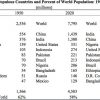
The Changing Distribution of World Population
In addition to its unprecedented rapid rate of demographic growth during the past 75 years, world population’s distribution across the planet has changed significantly over the past seven decades. The momentous global changes in humanity’s geographic distribution pose serious social, economic, political and environmental challenges and disquieting implications for the future.
African Politicians Asked to Develop Legal Instruments to Fight Climate Change
African legislators have been challenged to come up with legal frameworks for climate change to enable countries avoid catastrophes and reactionary emergencies that eat up their budgets.
The Story Behind The Gambia’s Lawsuit against Myanmar over the Rohingya Genocide
On Nov. 11, the Gambia filed a lawsuit against Myanmar in the International Court of Justice for the southeast asian country’s atrocities against the Rohingya population.
Did Sri Lanka’s Presidential Election Bring Back a Polarising Wartime Figure?
The Economist proclaimed recently that Gotabaya Rajapaksa, the man who, as secretary of defense, presided over this horrifying episode (the final phase of Sri Lanka’s terrorist inspired internal conflict), has just been elected president of Sri Lanka.
Bangladeshi Migrant Female Domestic Workers Face Violence
Millions of Bangladeshi women are facing violence either as domestic housemaids or as migrant workers in Gulf countries. A few days ago, a video in social media, secretly filmed by a Bangladeshi housemaid employed in Saudi Arabia, caught everyone’s attention where she was helplessly crying and begging to be rescued from her abusive employer.
UN Warns of ‘Screen Teens’ not Getting Enough Exercise
It is a common complaint of parents globally that their children and teenagers spend far too many hours sprawled on couches playing video games, sharing selfies with online friends and giggling over TikTok videos.
Science & Policy Must Remain Partners in Mercury Challenge
It has been more than two years since the Minamata Convention on Mercury entered into force. The global treaty protects humans and the environment from the toxic metal, but countries are still stuck on how to measure the agreement’s effectiveness.
Sri Lanka’s Presidential Election Brings Back a Polarising Wartime Figure
On 16 November, Gotabaya Rajapaksa – who served as defence secretary during the final phase of Sri Lanka’s brutal civil war – won a decisive victory in Sri Lanka’s presidential election.
Winning the ‘No Food Loss’ Battle: The Case of Japan
Humankind since almost the time that there is recorded history has grappled with the question of ‘how many is too many?’ The response is expectedly complex as it varies across time and space. The pace of population growth was slow till about approximately 250 years or so. It is only since the middle of the eighteenth century that there has been a palpable acceleration in population growth.
With the UN Security Council in Paralysis, Are there New Hopes for Rohingya Muslims?
The 15-member UN Security Council (UNSC) stands virtually paralyzed in the face of genocide charges against the government of Myanmar where over 730,000 to one million Rohingya Muslims have been forced to flee to neighboring Bangladesh since a 2016 crackdown by Myanmar’s military.« Previous Page — Next Page »





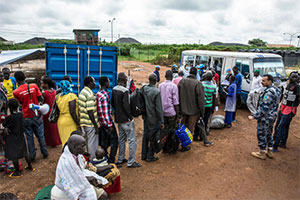 One Thousand Internally Displaced Persons (IDPs) Relocated from Tomping Camp in South Sudan. Credit: UN Photo/Isaac Billy
It took hundreds of thousands of years for the world’s human population to cross one billion in 1804. Approximately 200 years later, the population has multiplied sevenfold. In 2023, the global population crossed 8 billion, and is expected to reach 9 billion before 2050. With the planet more crowded than ever, it is essential to keep track of population trends, urbanization, migration, and reproduction across the world.
Life expectancy has seen significant strides in the past century, largely due to economic development and increased standards of living. On the contrary, trends in global fertility are shifting, with certain regions in Africa and Asia reporting higher rates, while parts of Europe and North America report stagnant or lower rates. This is in part due to differences in sexual and reproductive healthcare, as well as societal and economic conditions around the world. For example, child marriage is prevalent in certain societies, where childbearing is also considered a familial duty. Meanwhile, stagnating economies frequently experience lower marriage and childbearing rates.
The increase in migration and urban development around the world is also linked to global population trends. By 2050, it is expected that approximately 66 percent of all people will live in cities. Furthermore, global crises such as warfare and natural disasters also prompt transnational migration. Transnational migration is linked to a variety of socioeconomic issues in both host and receiving countries: migrants often leave developing countries with less access to educational and economic opportunities and arrive in developed countries where they are frequently the targets of ethnic, racial, and cultural discrimination, and economic exploitation. Recent crises in Europe and the United States demonstrate the importance of advocating for migrants worldwide. As migrants from the Global South are increasingly stripped of their legal and civic rights in unlawful deportations, or targeted in acts of identity-based violence, it is essential to keep track of population trends and protect the human rights of migrant populations. Climate-related disasters are now a major driver of displacement, with nearly half of all new internal displacements in 2025 being disaster-related.
IPS is devoted to covering issues surrounding population trends, migration, and reproduction through its compelling articles, which use both statistics and human stories to provide readers with robust and informative viewpoints.

The Week with IPS

NEXT STOP - SDGs
Tracking global progress towards a sustainable world
Tracking global progress towards a sustainable world
