Languages
Tuesday, October 6, 2026



News and Views from the Global South
Population

Migration and the Economy—an Inseparable Pairing
On the streets of Casablanca there is only one thought on the mind of Ibrahima, a young Senegalese migrant.
Morocco’s Migrant Workers Struggle to Send Money Home
Morocco may be hosting the United Nation’s historic Global Compact for Safe, Orderly and Regular Migration (GCM) conference. But when it comes to remittances—migrant employees, entrepreneurs and business owners all face the same challenge in Morocco: sending money legally to their home countries.
Global Compact for Migration Backed by Most of the World
Safe, orderly and regular migration received support today, Dec. 10, with the adoption by 164 countries of the first-ever inter-governmentally negotiated agreement to cover all dimensions of international migration.
Migrant’s Compact Mischaracterized for Political Reasons
The fact that a handful of countries have indicated their intention not to come to Marrakesh to endorse the compact signifies how the issue of migration has been politicized and become a political flashpoint.
US Blasts Migrant’s Compact – Even as 150+ Countries Embrace it
As UN delegates met in Morocco to adopt a global compact to protect the rights and safety of refugees and migrants (GCM), the Trump administration launched a blistering attack condemning it as a violation of national sovereignty.
A UN Conference Undermined by 11th Hour Withdrawals
When the long-awaited UN conference focusing on the rights and safety of migrants and refugees takes off in Morocco, it will be a rare, if not an unprecedented meeting, for one reason: the withdrawal of at least seven member states almost at the 59th minute of the eleventh hour.
The Revolution of Renewable Energy Needs Political Leadership
The cost of renewable energy is low, and at times, less than fossil fuels. What are the barriers to switching to renewables? Where current energy systems exist, they will need to be upgraded to be able to draw power from modern renewables and to exploit storage solutions that they require.
Thermal Houses Keep People Warm in Peru’s Highlands
Thirty families from a rural community more than 4,300 meters above sea level will have warm houses that will protect them from the freezing temperatures that each year cause deaths and diseases among children and older adults in this region of the southeastern Peruvian Andes.
Watering the Paris Agreement at COP24
Most people will experience climate change in the form of water – higher frequency and intensity of floods and droughts, an increase in waterborne diseases, and overloaded sewage systems that are unable to cope with new demands.
African Countries Deserve an Enhanced Climate Ambition
African countries have been at the climate-change negotiating table for more than 20 years. The continent faces some of the most severe impacts of climate change, but questions remain over its adaptive capacity despite this engagement.
Migrants Send Record Amounts to Home Countries, but Overall Poverty Pertains
At the end of this year, migrants will have sent 466 billion dollars to family and friends in their countries of origin. Despite this record amount these remittances have little to no effect on the dire economic state of affairs in those home countries. Earlier this week in Brussels, a group of experts convened to think of ways to make the sent money work in a way that benefits more than just a few lucky families.
Re-Defining Poverty in its Many Dimensions
Poverty has many dimensions beyond a lack of money. The need for a better understanding of the multiple ways people experience poverty is gaining momentum, as is the importance of measuring the often - overlapping deprivations people face. Understanding both is vital for better decision making.
It is Imperative for the Caribbean to Have a Seat at the COP24 Negotiating Table
The Caribbean will not be left out of the negotiations at COP24 – the 24th Session of the Conference of the Parties to the United Nations Framework Convention on Climate Change – that will take place from Dec. 3 to 14 in Katowice, Poland.
Asia-Pacific Takes Stock of Ambitious Development Targets
Ministers and senior policymakers across Asia and the Pacific are gathered in Bangkok this week to focus on population dynamics at a crucial time for the region. Their goal: to keep people and rights at the heart of the region’s push for sustainable development. They will be considering how successful we have been in balancing economic growth with social imperatives, underpinned by rights and choices for all as enshrined in the landmark Programme of Action stemming from the 1994 International Conference on Population and Development, or ICPD.
Youth Create Businesses that Are Geared to Protecting the Environment
An organic pesticide safe for farmers and the environment, and carbonised fuel briquettes made from agricultural waste materials and organic waste are all business ideas that promote a green economy.
‘What Fish Can Do for the WTO’
Fish will soon be off the menu, unless global leaders strike a deal ending multi-billion dollar harmful fisheries subsidies blamed for threatening world fish stocks and widening the inequitable use of marine resources.
‘A Turtle is Worth More Alive Than Dead’
On the north-eastern shores of Trinidad and Tobago, on the shoreline of Matura, more than 10,000 leatherback turtles climb the beaches to nest each year. But there the local community is keenly area of one thing: ‘a turtle alive is worth more than a turtle dead.”
Global, Inclusive Partnerships Essential for the Future Sustainability of our Oceans and Seas
Throughout history, oceans, seas, lakes and rivers have provided life and livelihoods to people around the world. Today, they are a multi-trillion-dollar global economy supporting hundreds of millions of people and helping drive economic growth in all corners of the world.
Climate Change Drives Up Rural Poverty in Latin America
Only 18 percent of the population of Latin America and the Caribbean live in rural areas, but these are increasingly hotbeds of poverty, and climate change is playing a major role in this phenomenon.
The Start of an Important Global Conversation on the Blue Economy
This November, Canada, along with Kenya and Japan, is proud to host the world’s first global conference focused on the world’s ocean economy: the Sustainable Blue Economy Conference in Nairobi, Kenya.
Expectations High for First Global Blue Economy Conference
In a matter of days the world’s blue economy actors and experts will converge in Nairobi, Kenya for the first ever global conference on sustainable blue economy.« Previous Page — Next Page »





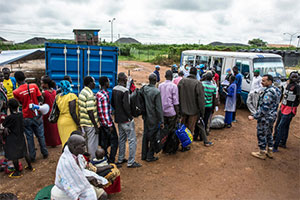 One Thousand Internally Displaced Persons (IDPs) Relocated from Tomping Camp in South Sudan. Credit: UN Photo/Isaac Billy
It took hundreds of thousands of years for the world’s human population to cross one billion in 1804. Approximately 200 years later, the population has multiplied sevenfold. In 2023, the global population crossed 8 billion, and is expected to reach 9 billion before 2050. With the planet more crowded than ever, it is essential to keep track of population trends, urbanization, migration, and reproduction across the world.
Life expectancy has seen significant strides in the past century, largely due to economic development and increased standards of living. On the contrary, trends in global fertility are shifting, with certain regions in Africa and Asia reporting higher rates, while parts of Europe and North America report stagnant or lower rates. This is in part due to differences in sexual and reproductive healthcare, as well as societal and economic conditions around the world. For example, child marriage is prevalent in certain societies, where childbearing is also considered a familial duty. Meanwhile, stagnating economies frequently experience lower marriage and childbearing rates.
The increase in migration and urban development around the world is also linked to global population trends. By 2050, it is expected that approximately 66 percent of all people will live in cities. Furthermore, global crises such as warfare and natural disasters also prompt transnational migration. Transnational migration is linked to a variety of socioeconomic issues in both host and receiving countries: migrants often leave developing countries with less access to educational and economic opportunities and arrive in developed countries where they are frequently the targets of ethnic, racial, and cultural discrimination, and economic exploitation. Recent crises in Europe and the United States demonstrate the importance of advocating for migrants worldwide. As migrants from the Global South are increasingly stripped of their legal and civic rights in unlawful deportations, or targeted in acts of identity-based violence, it is essential to keep track of population trends and protect the human rights of migrant populations. Climate-related disasters are now a major driver of displacement, with nearly half of all new internal displacements in 2025 being disaster-related.
IPS is devoted to covering issues surrounding population trends, migration, and reproduction through its compelling articles, which use both statistics and human stories to provide readers with robust and informative viewpoints.

The Week with IPS

NEXT STOP - SDGs
Tracking global progress towards a sustainable world
Tracking global progress towards a sustainable world
