Languages
Monday, October 5, 2026



News and Views from the Global South
Population

NGOs Call for Disinvestments in Biodiversity Destruction
A discussion held earlier this week at the ongoing Convention of Biodiversity’s (CBD) Conference of Parties in Egypt highlighted that grants to curb deforestation in the Amazon are not enough if they are accompanied with investments that increase the loss of biodiversity.
Solar Energy Drives Social Development in Brazil’s Favelas
"We can't work just to pay the electric bill," complained José Hilario dos Santos, president of the Residents Association of Morro de Santa Marta, a favela or shantytown embedded in Botafogo, a traditional middle-class neighborhood in Rio de Janeiro.
The Blue Economy – A New Frontier for Small Island Developing States
The blue economy—a concept and economic model that balances economic development with equity and environmental protection, and one that uses marine resources to meet current needs without compromising the ability of future generations to meet their own—is not a new idea.
Improved Husbandry Practices Boosts Aquaculture in Kenya
Despite the humid late October midday weather in Kisumu County near the shores of Lake Victoria, Jane Kisia is busy walking around her fish ponds feeding her fish. As she rhythmically throws handfuls of pellets into the ponds, located within her homestead, the fish ravenously gobble them up.
E-Commerce Giants Under Fire for Retailing Hazardous Mercury-Based Cosmetics
A coalition of over 50 civil society organizations (CSOs), from more than 20 countries, have urged two of the world’s largest multi-billion dollar E-commerce retailers – Amazon and eBay – to stop marketing “dangerous and illegal mercury-based skin lightening creams.”
Earth’s Biodiversity: A Pivotal Meeting at a Pivotal Time
The quality of the air we breathe, the food we eat and the water we drink depend directly on the state of our biodiversity, which is now in severe jeopardy. We need a transformational change in our relationship with nature to ensure the sustainable future we want for ourselves and our children.
Women Make the Voice of Indigenous People Heard in Argentina
The seed was planted more than 20 years ago by a group of indigenous women who began to gather to try to recover memories from their people. Today, women are also the main protagonists of La Voz Indígena (The Indigenous Voice), a unique radio station in northern Argentina that broadcasts every day in seven languages.
Q&A: All Sustainable Development Goals Relate in Some Way to the Oceans
When Peter Thomson, the United Nation’s Secretary General’s Special Envoy for the Ocean, heard in 2010 there was going to be a 2030 Sustainable Development Agenda, he knew he had to include the ocean question.
Creating Beauty and Worth from Bamboo Enhances the Livelihoods of Ghana’s Artisans
Yaw Owiredu Mintah from Ghana has been working as an all-round processor of bamboo and rattan since the 1980s. And while he says that he can do most things with bamboo like weaving, framing and finishing, he admits, “I need to improve my skills and designs because all of us are, most of the time, doing the same things.”
Northeast Nigeria: Urgent Need to Combat Deadly Cholera Outbreaks
The number of people who have been affected by cholera in northeast Nigeria has increased to 10,000. The disease is spreading quickly in congested displacement camps with limited access to proper sanitation facilities.
Considerations for Pakistan’s New Minister for National Food Security and Research
Despite the fact that Pakistan’s industrial and services sector continue to grow in importance, what happens in the agriculture sector remains critical to the performance of Pakistan’s economy and the wellbeing of its people.
Only Acting Together Can We Stop the Rise in Malnutrition
The number of undernourished people increased for the third consecutive year in Latin America and the Caribbean. It has exceeded 39 million people. In addition, almost one in four adults is obese, while overweight affects 250 million; more than the entire population of Brazil.
Making Agriculture Cool
At every conference she has attended on the youth, Nawsheen Hosenally has been frustrated to hear that agriculture is not ‘cool’. The 29-year-old graduate in agricultural extension and information systems knew she wanted to do something to redeem the image of agriculture among young people.
Alert! Hunger and Obesity on the Rise in Latin America for Third Year in a Row
"For the third consecutive year there is bad news" for Latin America and the Caribbean, where the numbers of hungry people have increased to "39.3 million people," or 6.1 percent of the population, Julio Berdegué, FAO's regional representative, said Wednesday.
Rainwater Harvesting Eases Daily Struggle in Argentina’s Chaco Region
"I've been used to hauling water since I was eight years old. Today, at 63, I still do it," says Antolín Soraire, a tall peasant farmer with a face ravaged by the sun who lives in Los Blancos, a town of a few dozen houses and wide dirt roads in the province of Salta, in northern Argentina.
The Caribbean Island of Mayreau Could be Split in Two Thanks to Erosion
As a child growing up in Mayreau four decades ago, Filius “Philman” Ollivierre remembers a 70-foot-wide span of land, with the sea on either side that made the rest of the 1.5-square mile island one with Mount Carbuit.
Ambitious Agenda, Ambitious Financing? UNGA Shows a Long Way Still to Go for SDGs
There was a much-needed focus on financing the Sustainable Development Goals (SDGs) at the September 2018 opening of the United Nations General Assembly (UNGA).
Cholera Threatens a Comeback Worldwide
Cholera outbreaks across history regularly killed a hundred thousand or more. It isn’t well known today because it was essentially eliminated in the Western world.
Gay & Lesbian Rights Prove Divisive at Parliamentarians’ Conference
When the International Parliamentarians’ Conference (ICPI) on population and development concluded its two-day forum in the Canadian capital last week, more than 150 legislators from around the world approved a seven page Declaration reaffirming their opposition to some of the culturally sensitive issues, including female genital mutilation (FGM) and child marriages.
South Korea Looks at How to Accelerate its Transition to Renewable Energy
While major countries have pledged to be powered entirely by renewable energies in order to stop greenhouse gas emissions by 2050, there are a number of states that are investigating ways to implement this transition quickly in order to achieve their goals ahead of this deadline.
“Governments are Starting to See that Organic Food Policy Works”
Many countries and farmers around the world are not readily making the switch to organic farming. But the small Himalayan mountain state of Sikkim, which borders Tibet, Nepal and Bhutan, is the first 100 percent organic farming state in the world.« Previous Page — Next Page »


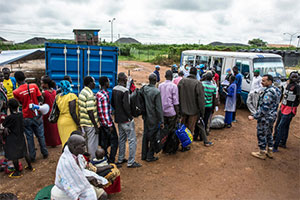 One Thousand Internally Displaced Persons (IDPs) Relocated from Tomping Camp in South Sudan. Credit: UN Photo/Isaac Billy
It took hundreds of thousands of years for the world’s human population to cross one billion in 1804. Approximately 200 years later, the population has multiplied sevenfold. In 2023, the global population crossed 8 billion, and is expected to reach 9 billion before 2050. With the planet more crowded than ever, it is essential to keep track of population trends, urbanization, migration, and reproduction across the world.
Life expectancy has seen significant strides in the past century, largely due to economic development and increased standards of living. On the contrary, trends in global fertility are shifting, with certain regions in Africa and Asia reporting higher rates, while parts of Europe and North America report stagnant or lower rates. This is in part due to differences in sexual and reproductive healthcare, as well as societal and economic conditions around the world. For example, child marriage is prevalent in certain societies, where childbearing is also considered a familial duty. Meanwhile, stagnating economies frequently experience lower marriage and childbearing rates.
The increase in migration and urban development around the world is also linked to global population trends. By 2050, it is expected that approximately 66 percent of all people will live in cities. Furthermore, global crises such as warfare and natural disasters also prompt transnational migration. Transnational migration is linked to a variety of socioeconomic issues in both host and receiving countries: migrants often leave developing countries with less access to educational and economic opportunities and arrive in developed countries where they are frequently the targets of ethnic, racial, and cultural discrimination, and economic exploitation. Recent crises in Europe and the United States demonstrate the importance of advocating for migrants worldwide. As migrants from the Global South are increasingly stripped of their legal and civic rights in unlawful deportations, or targeted in acts of identity-based violence, it is essential to keep track of population trends and protect the human rights of migrant populations. Climate-related disasters are now a major driver of displacement, with nearly half of all new internal displacements in 2025 being disaster-related.
IPS is devoted to covering issues surrounding population trends, migration, and reproduction through its compelling articles, which use both statistics and human stories to provide readers with robust and informative viewpoints.

The Week with IPS

NEXT STOP - SDGs
Tracking global progress towards a sustainable world
Tracking global progress towards a sustainable world
