Languages
Wednesday, October 14, 2026



News and Views from the Global South
Population

High and Dry: Can We Fix the World’s Water Crisis?
April 12 is expected to be the infamous “Day Zero” in South Africa’s second largest city of Cape Town, a tourist hub which attracts millions of visitors every year.
Balancing Green & Grey this World Water Day
Going into World Water Day, I have an ambivalent feeling. This year’s theme The Answer is in Nature can sound almost like mockery considering how badly parts of the world have been hit in recent years due to water-related natural disasters, be it floods, storms or droughts.
How Nature Can Quench Our Thirst & Bring Water Back to Our Ecosystems
Freshwater makes up only 2.5% of all water we have on earth. Readily accessible freshwater – which is found in rivers, lakes, wetlands and aquifers – accounts for less than one per cent of the world’s water supply. It is vital for the existence of nearly every species on earth.
ILO Fails to Cut Ties with Tobacco Industry – Yet Again
Last week, the International Labour Organization’s (ILO) governing body postponed yet again a decision to stop accepting money from the tobacco industry for its projects to end child labour in the tobacco growing sector.
Achieving Universal Access to Water and Sanitation
At the start of the seventy-second session of the General Assembly of the United Nations I emphasized our common goal: peace and a decent life for all people on a sustainable planet. Many leaders echoed this overarching priority at the general debate and beyond.
A Breath of Fresh Air in India
With India’s citizens clamouring for breathable air and efficient energy options, the country’s planners are more receptive than ever to explore sustainable development options, says Frank Rijsberman, Director-General of the Global Green Growth Institute (GGGI).
Will the Next War Be About Water?
One of the first resolutions adopted by the United Nations General Assembly, on the location of the headquarters of the Organization, gives the United Nations “exclusive rights over the subsoil of land conveyed to it, and in particular the right to make constructions underground and to obtain therefrom supplies of water.”
Water, Sanitation & Hygiene: First Response in Conflicts & Natural Disasters
When disaster strikes, or conflict rages, families soon discover their most urgent need - water. In such precarious situations, access is usually limited or non-existent, and children and their families are forced to put themselves in further danger in the quest for water.
Latin America & the Caribbean Edging Towards Eliminating Tuberculosis
Known as El Libertador throughout the Latin America and Caribbean (LAC) region, Simón Bolívar was central to the battle for independence from Spanish rule in Venezuela, Bolivia, Colombia, Ecuador, and Peru.
Water Scarcity: India’s Silent Crisis
As Cape Town inches towards ‘Zero Hour’ set for July 15, 2018, the real threat of water scarcity is finally hitting millions of people worldwide. For on that day, the South African city's 3.78 million citizens -- rich and poor, young and old, men and women -- will be forced to queue up with their jerry cans at public outlets for their quota of 25 litres of water per day.
Women Lead the Fight for Housing in Brazil
"Here we empower women and we do not tolerate domestic violence, which we treat as our own, not as an intra-family, issue," says Lurdinha Lopes, a leader of the squatting movement in Brazil.
Monsoon Season Threatens More Misery for Rohingyas
More than half a million Rohingya refugees crammed into over 30 makeshift camps in Cox’s Bazar in southeast Bangladesh face a critical situation as the cyclone and monsoon season begins in a few weeks’ time.
Citizen-Generated Energy Enters the Scene in Argentina
The Argentine population can now generate their own energy through clean and unconventional sources and incorporate surpluses into the public grid, thanks to a new law. This is an important novelty in a country embarked on a slow and difficult process, with a still uncertain end, to replace fossil fuels.
For the Rural Poor of Peru, the Social Agenda is Far Away
“The day will come when people do not have to go to the cities to overcome poverty," says Elmer Pinares, mayor of an Andean highlands municipality in Cuzco, in southern Peru, where malnutrition and lack of support for subsistence farming are among the main problems.
A New Dawn for South Africa
In the post-Apartheid era, it is safe to say that Jacob Zuma has become the most reviled public figure in South Africa. Zuma was essentially discredited even before he became president in 2009 by his two essential weaknesses: his relationship with money and his lack of personal integrity.
African Brain Drain: Is There an Alternative?
“Brain drain is particularly acute in sub-Saharan Africa,” says the World Economic Outlook (October 2016), a report published by the International Monetary Fund (IMF). “The migration of young and educated workers takes a large toll on a region whose human capital is already scarce. The concentration of migrants among those who are educated is higher than in other developing economies.
A Restructured African Development Bank Plans to Meet Economic Challenges Facing Continent
Over the past few years, the African Development Bank (AfDB) has confirmed its position as Africa’s premier development finance institution, generating significant impact on the continent’s economic and social development.
Development, Self-Interest & Countries Left Behind
The world’s wealthiest countries today promote development abroad in a way that is relatively new. For centuries, some of these countries colonized the developing world. As former colonies gained independence they were caught in the international power struggle of the Cold War, often led by dictators who found it in their interest to serve as pawns in great power proxy conflicts.
Combating Africa’s Inequalities
Nelson Mandela, shortly after becoming the first democratically elected president of South Africa, spoke to both his countrymen and women—indeed, for Africans everywhere—when he declared, “We must work together to ensure the equitable distribution of wealth, opportunity and power in our society.”
Power of Partnerships in the Fight Against Poverty
The 2030 Agenda is the most ambitious plan governments have ever developed to eradicate extreme poverty and safeguard our planet. While it is a global agenda, it will only be achieved by addressing the multidimensional aspects of poverty and through ensuring ownership on the part of communities, local authorities and individuals.
Inequality also Relates to Education, Health & Illiteracy, not Wealth Alone
Antipoverty group Oxfam International got a lot of attention for claiming that there’s a global “inequality crisis,” but a far more important point is entirely neglected: globally, income distribution is less unequal than it has been for 100 years.« Previous Page — Next Page »





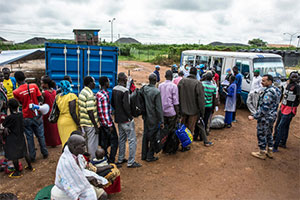 One Thousand Internally Displaced Persons (IDPs) Relocated from Tomping Camp in South Sudan. Credit: UN Photo/Isaac Billy
It took hundreds of thousands of years for the world’s human population to cross one billion in 1804. Approximately 200 years later, the population has multiplied sevenfold. In 2023, the global population crossed 8 billion, and is expected to reach 9 billion before 2050. With the planet more crowded than ever, it is essential to keep track of population trends, urbanization, migration, and reproduction across the world.
Life expectancy has seen significant strides in the past century, largely due to economic development and increased standards of living. On the contrary, trends in global fertility are shifting, with certain regions in Africa and Asia reporting higher rates, while parts of Europe and North America report stagnant or lower rates. This is in part due to differences in sexual and reproductive healthcare, as well as societal and economic conditions around the world. For example, child marriage is prevalent in certain societies, where childbearing is also considered a familial duty. Meanwhile, stagnating economies frequently experience lower marriage and childbearing rates.
The increase in migration and urban development around the world is also linked to global population trends. By 2050, it is expected that approximately 66 percent of all people will live in cities. Furthermore, global crises such as warfare and natural disasters also prompt transnational migration. Transnational migration is linked to a variety of socioeconomic issues in both host and receiving countries: migrants often leave developing countries with less access to educational and economic opportunities and arrive in developed countries where they are frequently the targets of ethnic, racial, and cultural discrimination, and economic exploitation. Recent crises in Europe and the United States demonstrate the importance of advocating for migrants worldwide. As migrants from the Global South are increasingly stripped of their legal and civic rights in unlawful deportations, or targeted in acts of identity-based violence, it is essential to keep track of population trends and protect the human rights of migrant populations. Climate-related disasters are now a major driver of displacement, with nearly half of all new internal displacements in 2025 being disaster-related.
IPS is devoted to covering issues surrounding population trends, migration, and reproduction through its compelling articles, which use both statistics and human stories to provide readers with robust and informative viewpoints.

The Week with IPS

NEXT STOP - SDGs
Tracking global progress towards a sustainable world
Tracking global progress towards a sustainable world
