Languages
Sunday, November 8, 2026



News and Views from the Global South
Poverty & SDGs

Renewed Partnership to End Hunger in Africa by 2025
After a period of prolonged decline, world hunger is on the rise. Africa has the highest rates of hunger in the world, and they are increasing. Agricultural and livestock productivity in Africa is under threat. This is largely due to conflict and climate change.
For Millions of Indian Women, Marriage Means Migration
Rekha Rajagopalan, a 26-year-old schoolteacher, migrated to the Indian capital city of New Delhi from southern Chennai in 2015 after her marriage. The reason was simple. Rekha's husband and his family were based in Delhi, so like millions of other married Indian women, she left her maternal home to relocate to a new city with her new family.
Indigenous Peoples & Local Communities Vital to the Global Environment
Indigenous Peoples and local communities are some of the best environmental stewards. Their livelihoods and cultures depend on forests, clean water and other natural resources, so they have strong incentives to sustainably manage their lands.
Breaking Barriers in Bangladesh
It’s nearing 4:30 p.m. on a foggy day, but there seems to be no great hurry amongst the workers to wind up their day in a factory producing high-end designer bags. Located in the Export Processing Zone (EPZ) of Nilphamari, a northern district 40 kilometers from the divisional headquarters of Rangpur in Bangladesh, the area is known for creating job opportunities for the local population.
Biodiversity and Food Security: the Dual Focus of the World Potato Congress
Potatoes were first taken out of Peru, where they originated, 458 years ago to feed the world. Half a millennium later, potatoes have spread throughout the planet but there are challenges to preserve the crop’s biodiversity as a source of food security, as well as the rights of the peasants who sustain this legacy for humanity.
The Future of Our Cities: New Agenda, New Faces, New Year
Urban development is one of our greatest challenges. While the world is highly urbanizing, our cities are transforming the nexus for the social, economic, environmental and political realities of our times.
Aid Group Shines Spotlight on the Neglected
Though 2017 was marked by stories of humanitarian disasters around the world, many crises remain under the radar with devastating consequences for those affected, a new report says.
Migrants Without Shoes
Addis Ababa, Ethiopia, 2013. It is past midnight. The aircraft come in from Saudi Arabia carrying workers who had been hastily ejected. They had gone from Ethiopia to work in a variety of jobs in a Kingdom flush with oil wealth.
China’s Mass Market Adopts Mobile Payments
China’s mass-market adoption of mobile payments in recent years has stunned observers. In 2016, more than 500 million Chinese used mobile payments and transacted 97 billion times on nonbank mobile apps.
Left Behind: Families of Migrants Wait in Limbo
Wahid Haider talks about his son’s departure to Italy almost seven years ago without regret or hesitation. Haider has not seen Nayeem, now 30 years old, since he left Nankar in search of better economic prospects, travelling through Romania, where he spent several months, before entering Italy.
Davos: a Tale of Two Mountains
As the elite in the world of finance gather in the Swiss luxury town of Davos, rallies are taking place around the world as citizens demand for solutions to rising inequality. At the same time as the World Economic Forum’s rich and powerful hold forth about fixing the crisis of inequality they created, a new movement called the Fight Inequality Alliance is telling another story that is growing around the world.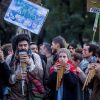
Argentina’s Law on Forests Is Good, But Lacks Enforcement
Never in the parliamentary history of Argentina had something similar happened: one and a half million people in 2007 signed a petition asking the Senate to pass a law to reduce deforestation. The law was quickly approved, and promulgated on Dec. 26 of that year. But 10 years later, it has left a bittersweet taste.
Caught Between Two Countries
Three friends are relaxing in a quiet courtyard. They speak English with a strong American accent and talk about their disadvantaged neighborhoods. Their tattoos depict a rough life on the street. One of them calls Massachusetts home, while the others grew up in Georgia.
PPPs Likely to Undermine Public Health Commitments
The United Nations Agenda 2030 for the Sustainable Development Goals (SDGs) is being touted in financial circles as offering huge investment opportunities requiring trillions of dollars. In 67 low- and middle-income countries, achieving SDG 3 — healthy lives and well-being for all, at all ages — is estimated to require new investments increasing over time, from an initial $134 billion annually to $371 billion yearly by 2030, according to recent estimates by the World Health Organization (WHO) reported in The Lancet.
Fate of the Rohingyas – Part Two
With discussions underway between Bangladesh and Myanmar about the repatriation of more than a half a million Rohingya refugees, many critical questions remain, including how many people would be allowed back, who would monitor their safety, and whether the refugees even want to return to violence-scorched Rakhine state.
Sustainable Energy Critical for Achieving Overall Goals of Paris Climate Agreement
The Paris Agreement ushered in a new global approach to climate change. At the core of this agreement are the Nationally Determined Contributions. We are now implementing these pledges.
Can Uganda Reduce Financial Exclusion to 5% in 5 Years?
In October 2017, Uganda launched a new five-year National Financial Inclusion Strategy. The strategy seeks to reduce financial exclusion from 15 to 5 percent by 2022 by ensuring that all Ugandans have access to and use a broad range of quality and affordable financial services.
The Data Revolution Should Not Leave Women and Girls Behind
If there is one political principle that has been constant throughout the history of human civilization it is the fact that land is power. This is something that is particularly true, and often painfully so, for women who farm in Africa.
Clean Energy Sources Manage to Cut Electricity Bill in Chile
A 75 percent drop in electricity rates, thanks to a quadrupled clean generation capacity, is one of the legacies to be left in Chile by the administration of Michelle Bachelet, who steps down on Mar. 11.
Policy Support Gap for “Climate-Smart” Agriculture
Conditioned that ploughing is the sure way to produce crops, Zimbabwean farmer Handrixious Zvomarima surprised himself by trying a different method. He planted cowpea seeds directly without tilling the land. It worked.
How Low-Income Bangladeshis Use Loans
Bangladeshis have a long tradition of borrowing from family, neighbors and other informal sources. Microfinance institutions (MFIs) have proliferated over the past three decades and offer a more formal loan service that has been taken up with enthusiasm, and today some 25 million Bangladeshis borrow from MFIs.« Previous Page — Next Page »





 Romani people in Cairo, Egypt, forage through trash. Credit: UN Photo/Armineh Johannes
In 2015, the United Nations adopted the Sustainable Development Goals (SDGs) in an effort to promote “peace and prosperity for people and the planet.” To achieve that goal, it is essential to provide equal opportunities and access to basic services to all people. The 2025 UN SDG Report found that 35% of the 169 SDG targets are on track or making moderate progress, while 18% have reversed compared to the 2025 baseline. One in ten people still live in extreme poverty, one in eleven experience food insecurity, and over 1.1 billion people live in slums without access to clean water and sanitation. It is imperative to acknowledge the societal, technological, economic, and political issues that sustain poverty in countries around the world. Eradicating poverty will require significant frameworks in policy and governance on a national and international scale to ensure that all people will have equal access to basic services and economic opportunities by 2030. Furthermore, a dramatic reduction of United States foreign aid in 2025, including the termination of 83% of USAID programmes, threatens to erode years of fragile development gains.
Throughout the world, violent conflict and natural disasters also contribute to extreme poverty. The complete destruction of infrastructure and blockage of aid has significantly impoverished Palestine since October 7th. The destructive impact of Hurricane Maria in Puerto Rico left $91 billion in damage. An inadequate US government response also revealed significant and enduring questions within the issue of mitigating poverty: how do we rebuild infrastructure after its destruction? How do we restimulate economic development and bring in financial aid after disasters? Similar questions have been raised in the realm of regional cooperation, as devastating floods have wrecked hundreds of thousands of homes across multiple Southeast Asian nations in the past few years. Furthermore, the COVID-19 pandemic has greatly exacerbated the global poverty crisis, particularly in developing countries, setting back the United Nations goal of eradicating poverty by 2030.
IPS is committed to providing comprehensive features that focus on the persisting environmental, sociopolitical, and systemic issues that sustain poverty, and the steps taken worldwide towards poverty eradication.

The Week with IPS

NEXT STOP - SDGs
Tracking global progress towards a sustainable world
Tracking global progress towards a sustainable world

