Languages
Monday, November 9, 2026



News and Views from the Global South
Poverty & SDGs

Insurance: A Valuable Incentive for Small Farmers’ Climate Resilience
Frequent extreme weather and climate shifts pose a challenge to already vulnerable groups such as smallholder farmers in the developing world. Between 2004 and 2014, farmers are said to have endured the brunt of the 100-billion-dollar cost of climate-related disasters.
Education, a Building Block for Sustainable Peace
Millions lack access to quality education around the world—but how can the international community change this?
Chilean President’s Apology to the Mapuche People Considered “Insufficient”
Chilean President Michelle Bachelet’s formal apology to the country’s Mapuche Indians, for the “mistakes and atrocities” committed against them by the Chilean state, is seen by indigenous and social activists in the central region of Araucanía – the heartland of the Mapuche people - as falling short.
More Bang for Your Buck: Saving Lives by Investing in the Poorest
Investing in the health of the poorest communities saves almost twice as many lives, according to a UN agency’s analysis.
Any Way to Help Slow Down Climate Change… Individually?
 It is no secret that the biggest responsible for climate change is greed. The greed of the world’s largest private corporations, which blindly seek unlimited high financial benefits. And the greed of those politicians who are also blindly keen about holding their temporary power at any cost, thus not daring to challenge big business. Ordinary people can meanwhile help slow down such a hellish race.

SLIDESHOW: When Women Have Land Rights, the Tide Begins to Turn
 In Meghalaya, India’s northeastern biodiversity hotspot, all three major tribes are matrilineal. Children take the mother’s family name, while daughters inherit the family lands.

Global Devaluation of Work Drives Up Unemployment in Brazil
In addition to driving up the number of unemployed people to 14.2 million, the severe recession of the last two years led Brazil to join the global trend of flexibilisation of labour laws in order to further reduce labour costs.
“Black Soils” – Excessive Use of Arsenic, Cadmium, Lead, Mercury…
Soils are polluted due mostly to human activities that leave excess chemicals in soils used to grow food, the United Nations reports.
The World Is Burning
Record high temperatures are gripping much of the globe and more hot weather are to come. This implies more drought, more food insecurity, more famine and more massive human displacements.
UN Response Teams Underfunded as Costs Hit Staggering $23.5 Billion
UN response teams that help the most vulnerable people in the world are still largely underfunded, a new status report has revealed. The funding available to the teams is no match for the record number of people—141 million—who need assistance today.
No Wall for Ethiopia, Rather an Open Door—Even for Its Enemy
It’s one thing to read about the exodus of souls flowing out of Eritrea, it’s quite another to look into the tired eyes, surrounded by dust and grime, of a 14-year-old Eritrean girl who’s just arrived on the Ethiopian side of the shared border.
Children Now More Than Half of the 65 Million Displaced
Around 20 people are newly displaced every minute of the day, according to a new report. In its annual Global Trends report, the UN’s refugee agency UNHCR has recorded unprecedented and concerning levels of displacement around the world.
The World Society Needs to Express Greater Solidarity for Refugees Worldwide
The world is heading into troubled waters as we are witnessing an unprecedented movement of people – refugees, migrants and internally displaced persons (IDPs) alike – fleeing from misery, poverty and conflicts. The refugee crisis that has swept across Europe and the Middle East is becoming the 21st century’s most protracted crisis with no immediate solution in sight. The world has not witnessed a more complex movement of people since the end of the Second World War; thousands of human beings undertake perilous and treacherous journeys in hope for a better and a safer future. Many of them perish during these hazardous journeys.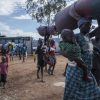
New Inhumane Record: One Person Displaced Every Three Second
Nearly 66 million people were forcibly displaced from their homes last year, the United Nation refugee agency has reported.
Asia-Pacific: Farming Rice and Fish Together to Reduce Poverty
Rice is a major food commodity and staple food for many, and adding fish to flooded rice paddies has been a farming tradition practiced in a number of Asian countries for many centuries—even for more than 1000 years in some Chinese areas, the United Nations reports.
Achieving Universal Health Coverage (UHC) in Kenya through Innovative Financing
Every year, one million Kenyans are driven below the poverty line by healthcare-related expenditures. Poverty predisposes them to disease and slows all aspects of growth in the economy.
Africa: Drought and Jobless, Hopeless Youth, Fertile Grounds for Extremism
Ignoring the plight of jobless young people in sub-Saharan Africa is a recipe for political instability and global insecurity, warned a high-level symposium of Africa’s interior, environment and foreign affairs ministers in Ouagadougou, Burkina Faso.
Safeguarding Precious Crop Genes in Trust for Humanity
A genetic resource centre run by the Nigeria-based International Institute for Tropical Agriculture (IITA) has banked thousands of crop varieties for disaster relief and research, holds the world’s largest and most diverse collection of cowpeas, and contains some of Africa’s rarest insect species.
Latin America’s Rural Exodus Undermines Food Security
In Latin America and the Caribbean, which account for 12 per cent of the planet’s arable land, and one-third of its fresh water reserves, a number of factors contribute to soil degradation and to a rural exodus that compromises food security in a not-so-unlikely future.
Africa Could Help Feed the World – If Its Fertile Land Doesn’t Vanish
The 23rd World Day to Combat Desertification was celebrated in Burkina Faso’s capital of Ouagadougou on June 15 with a call to create two million jobs and restore 10 million hectares of degraded land.
BRICS to Lead World’s Efforts to Eradicate Hunger, Poverty by 2030
With the clock ticking toward the 2030 deadline for meeting the international goals to eradicate hunger and poverty, five of the world's most important emerging economies are well positioned to take a leading role in helping to achieve these objectives, according to the United Nations.« Previous Page — Next Page »





 Romani people in Cairo, Egypt, forage through trash. Credit: UN Photo/Armineh Johannes
In 2015, the United Nations adopted the Sustainable Development Goals (SDGs) in an effort to promote “peace and prosperity for people and the planet.” To achieve that goal, it is essential to provide equal opportunities and access to basic services to all people. The 2025 UN SDG Report found that 35% of the 169 SDG targets are on track or making moderate progress, while 18% have reversed compared to the 2025 baseline. One in ten people still live in extreme poverty, one in eleven experience food insecurity, and over 1.1 billion people live in slums without access to clean water and sanitation. It is imperative to acknowledge the societal, technological, economic, and political issues that sustain poverty in countries around the world. Eradicating poverty will require significant frameworks in policy and governance on a national and international scale to ensure that all people will have equal access to basic services and economic opportunities by 2030. Furthermore, a dramatic reduction of United States foreign aid in 2025, including the termination of 83% of USAID programmes, threatens to erode years of fragile development gains.
Throughout the world, violent conflict and natural disasters also contribute to extreme poverty. The complete destruction of infrastructure and blockage of aid has significantly impoverished Palestine since October 7th. The destructive impact of Hurricane Maria in Puerto Rico left $91 billion in damage. An inadequate US government response also revealed significant and enduring questions within the issue of mitigating poverty: how do we rebuild infrastructure after its destruction? How do we restimulate economic development and bring in financial aid after disasters? Similar questions have been raised in the realm of regional cooperation, as devastating floods have wrecked hundreds of thousands of homes across multiple Southeast Asian nations in the past few years. Furthermore, the COVID-19 pandemic has greatly exacerbated the global poverty crisis, particularly in developing countries, setting back the United Nations goal of eradicating poverty by 2030.
IPS is committed to providing comprehensive features that focus on the persisting environmental, sociopolitical, and systemic issues that sustain poverty, and the steps taken worldwide towards poverty eradication.

The Week with IPS

NEXT STOP - SDGs
Tracking global progress towards a sustainable world
Tracking global progress towards a sustainable world

