Languages
Friday, November 20, 2026



News and Views from the Global South
Poverty & SDGs
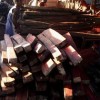
Illegal Logging Spreading in Madagascar
The transitional authorities in Madagascar are struggling to overcome the problem of illegal logging of precious wood. In spite of an April 2010 decree that prohibits the logging, transporting, trading and export of precious woods, felling in the forests is still continuing.
ZAMBIA: Making the Most of Limited Capital
Proponents of microfinance often portray it as the empowering extension of credit to vulnerable but diligently self-employed poor people - often women - who support each other to improve their livelihoods as well as repay their loans. The image is true, to some extent, but in many parts of Africa, microfinance institutions have somewhat sharper teeth.
Sub-Saharan School Enrolment Shoots Up, But Challenges Remain
Investment in education by sub-Saharan African countries is paying dividends, with more children than ever before now attending school, according to a new report by the United Nations Educational, Scientific and Cultural Organization (UNESCO).
Still Awaiting a Roadmap for Sustainable Development
The road to the crucial Rio+20 conference on greening the world economy next year has hit a setback with the breakdown of the 19th session of the U.N. Commission on Sustainable Development after 10 days of intense negotiations.Parliamentarians Ask G8 to Focus on Women
Ahead of this month's G8 summit in France, parliamentarians from 35 countries have issued a strong call for leaders of the world's major economies to focus on the role of women and girls in development.DR CONGO: Measles Claims Lives as Public, Private Resources Stretched Thin
More than 3,000 cases of measles have been recorded in the past three months in two districts of Maniema Province, in the eastern part of the Democratic Republic of Congo.U.N. to Launch International Year of Cooperatives
When the United Nations commemorates the International Year of Cooperatives (IYC) in 2012, the world body will recognise the contributions made by cooperatives to socioeconomic development, including poverty reduction, employment generation and social integration.ARGENTINA: Small Loans, Big Solutions
Avoiding the costs of traditional microcredit models, remote communities in the La Puna high plateau region in northwest Argentina have launched a successful loan programme that enables them to meet extraordinary expenses such as weaving material, school supplies or medicine.
BRAZIL: Women Break Down Barriers in Heavy Construction
They represent just seven percent of the workers building the Santo Antonio hydroelectric dam on the Madeira River, which cuts across the Amazon jungle in northwest Brazil. But the women workers total 1,200, and many of them have had to break down barriers to jobs seen as the preserve of men.Yemen Faces Older Birth Pangs As Well
An estimated 2,555 women in Yemen die annually during childbirth because they do not have access to proper health facilities or experienced medical professionals.
BRAZIL: Despite Historic Victory, Gay Rights Struggle Far from Over
Although gay rights organisations in Brazil are celebrating a historic triumph, legal recognition of civil unions by the Supreme Court, they say the struggle is far from over.Homophobia in the Caribbean Varies Widely
While homosexuality is punishable by law in nine Caribbean island nations, gay activism is increasingly taking root in countries like Cuba.
INDIA: Women Hold Their Own in Provinces
Provincial elections in four major Indian states have produced two female chief ministers, proving women capable of holding their own in the rough and tumble of politics in this deeply patriarchal country.
DEVELOPMENT: Women Leading Bangladesh Away from the LDC Tag
Women entrepreneurs and workers will soon help Bangladesh shake off the Least Developed Country (LDC) label, business leaders say.
DEVELOPMENT: Chinese Step In, Efficiently
For Jany Chen from Shanghai, concern often-raised in Europe and North America about the Chinese invasion of Africa is a lot of wasteful talk that deserves to be flushed down the toilet. Efficiently.
Uganda Stoves Saving Fuel and Forests
Carbon finance is putting new and efficient charcoal stoves into hundreds of thousands of kitchens in Uganda – reducing charcoal use and protecting forests as well as saving money for poor households.HEALTH: Rich and Poor Suffer Both Infectious and Noncommunicable Diseases
The world is experiencing a change in the geographic distribution of diseases. Traditionally, infectious diseases, which claim the lives of so many children, affected poor countries, and noncommunicable diseases like diabetes, cardiac ailments and cancer plagued rich countries.DEVELOPMENT: New Action Programme, and New Name for the Poorest
A new 10-year blueprint for assisting the poorest countries on the planet to join the league of the more fortunate ones was approved Friday at the closing of the Fourth U.N. Conference on the Least Developed Countries (LDC-IV) held May 9- 13 here.
DEVELOPMENT: Programme of Action Adopted for World’s Poorest Nations
"The future for least developed countries lies in trade, productive capacity and governance more than in aid," said Cheick Sidi Diarra, United Nations High representative for the Least Developed Countries, responding to criticism of the plan of action put forward as the U.N. conference on the world's poorest nations drew to a close in Istanbul.
DEVELOPMENT: South-South Axis Strengthens
The glass isn’t exactly half-full, but it certainly is not entirely empty either. Within the broad failure of the weeklong Fourth U.N. Conference on the Least Developed Countries (LDC-IV) in Istanbul that concluded Friday, many delegates are taking heart in a strengthening South-South front that has emerged.Humanity Hitting the Resource Ceiling
Better living through using far fewer material resources is the only possible future, experts agree. Humanity is pressing up against the limits of a finite planet to provide resources like water, oil, metals and food, according to a new report released Thursday.« Previous Page — Next Page »


 Romani people in Cairo, Egypt, forage through trash. Credit: UN Photo/Armineh Johannes
In 2015, the United Nations adopted the Sustainable Development Goals (SDGs) in an effort to promote “peace and prosperity for people and the planet.” To achieve that goal, it is essential to provide equal opportunities and access to basic services to all people. The 2025 UN SDG Report found that 35% of the 169 SDG targets are on track or making moderate progress, while 18% have reversed compared to the 2025 baseline. One in ten people still live in extreme poverty, one in eleven experience food insecurity, and over 1.1 billion people live in slums without access to clean water and sanitation. It is imperative to acknowledge the societal, technological, economic, and political issues that sustain poverty in countries around the world. Eradicating poverty will require significant frameworks in policy and governance on a national and international scale to ensure that all people will have equal access to basic services and economic opportunities by 2030. Furthermore, a dramatic reduction of United States foreign aid in 2025, including the termination of 83% of USAID programmes, threatens to erode years of fragile development gains.
Throughout the world, violent conflict and natural disasters also contribute to extreme poverty. The complete destruction of infrastructure and blockage of aid has significantly impoverished Palestine since October 7th. The destructive impact of Hurricane Maria in Puerto Rico left $91 billion in damage. An inadequate US government response also revealed significant and enduring questions within the issue of mitigating poverty: how do we rebuild infrastructure after its destruction? How do we restimulate economic development and bring in financial aid after disasters? Similar questions have been raised in the realm of regional cooperation, as devastating floods have wrecked hundreds of thousands of homes across multiple Southeast Asian nations in the past few years. Furthermore, the COVID-19 pandemic has greatly exacerbated the global poverty crisis, particularly in developing countries, setting back the United Nations goal of eradicating poverty by 2030.
IPS is committed to providing comprehensive features that focus on the persisting environmental, sociopolitical, and systemic issues that sustain poverty, and the steps taken worldwide towards poverty eradication.

The Week with IPS

NEXT STOP - SDGs
Tracking global progress towards a sustainable world
Tracking global progress towards a sustainable world

