Languages
Tuesday, October 27, 2026



News and Views from the Global South
Poverty & SDGs

Illegal Immigration: A 21st Century Crisis
Illegal immigration is a 21st century crisis that will only worsen with the consequences of climate change.
Green Gold: Billion Dollar Question for Congo Rainforest
On the brink of an unprecedented environmental emergency, EU ambassadors to the Democratic Republic of Congo (DRC) gathered earlier this month for a luxury river cruise hosted by the country’s Environment Minister, Eve Bazaiba.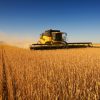
Grabbed
“Imagine that the land your family has worked for generations is suddenly stripped away from you, purchased by wealthy companies or governments to produce food or bio-fuels or simply as a profitable investment for other people, often far away. You watch on helplessly as vast tracts of land are cleared for mono-culture crops and rivers are polluted with run-off and chemicals.”
In Sub-Saharan Africa and Elsewhere, We Need to Look Harder for Tuberculosis
Before COVID-19 came along, tuberculosis (TB) was a primary focus of health authorities in sub-Saharan Africa. In 2019, approximately 1.4 million people were diagnosed with TB in the region, but epidemiologists estimated that 1 million more had TB but were neither diagnosed nor treated.
Despite Climate Crisis, Politicians Will Double the Production of Energy from Fossil Fuels
In a time when the world's scientific community sounds louder, and stronger than ever, the alarm about the fast growing climate crisis and its destructive impacts, governments still plan to produce more than double the amount of fossil fuels in 2030.
Bringing Quality Education to Syria’s Most Vulnerable, Crisis-Impacted Children – Their Education Cannot Wait
In war-torn Syria, the support of Education Cannot Wait (ECW) – the United Nations global fund for education in emergencies and protracted crises – is bringing positive, life-changing educational opportunities tailored to children like 11-year-old Ali.
Climate Change: How 1.3 Billion Africans Cause Least But Suffer Most
While Africa reportedly causes just 4 percent of global emissions of Carbon Dioxide (CO2) —an acidic colourless gas with a density about 53% higher than that of dry air, causing climate change—, this vast continent, home to over 1.3 billion inhabitants in 52 countries, bears the heaviest brunt of 80 percent of the climate crisis destructive impacts.
Forests & Climate: We Need to do Much, Much More
Governments agree that saving the climate means saving forests – but ambition and action fall short of what’s required. First the good news: one of the forest goals agreed by governments, businesses and civil society organizations has been met.
Inflation Bogey Blocking Recovery
The bogey of inflation has been revived. Dubious pre-pandemic economic progress, fiscal constraints and vaccine apartheid were bad enough. Now, ostensibly anti-inflationary measures also threaten recovery and sustainable development.
What Fate for Three Billion of Humans Who Are Born Equals?
While more than a third of all purchased food is wasted in rich, mostly Western States, and a similar percentage is lost in poor countries due to the lack of appropriate harvesting, storage and transportation facilities, over three billion people --or some 40 percent of world population-- cannot afford a healthy diet. Add to these figures --which were released by UN's Food and Agriculture Organization (FAO) on 16 October this year, marking the World Food Day-- another dramatic fact.
A School & Cultural Institution Aims to Level the Playing Field for Women & Girls in Rural Uganda
As we honored women and girls last week, on the annual International Day of Rural Women on October 15, we want to highlight how a community is coming together to change the lives and livelihoods of rural women and girls in Uganda.
Inclusive Education to Break the Cycles of Poverty
In September 2021, children in the northern hemisphere returned to school after the summer break. For some, the end of the holidays signaled a return to normalcy and to the joys of learning after facing months of school closures due to the Covid-19 pandemic. For the majority of children in the Global South, however, the return to reality looked grimmer.
Argentina’s Small Farming Communities Reach Consumers Online
"The biggest problem for family farmers has always been to market and sell what they produce, at a fair price," says Natalia Manini, a member of the Union of Landless Rural Workers (UST), a small farmers organisation in Argentina that has been taking steps to forge direct ties with consumers.
Winning the Human Race, Together
“Now is the time for a stronger, more networked and inclusive multilateral system anchored in the United Nations,” said UN Secretary-General António Guterres in his latest report “Our Common Agenda.” Indeed, there is a fork in the road: we can either choose to breakdown or to breakthrough.
Will the World Bank Walk Away with $100 Billion IDA20 Replenishment Without “Walking the Talk” on Disability?
Will the World Bank walk away with $100 Billion IDA20 replenishment without “Walking the Talk” on disability? The World Bank Group’s (WBG) International Development Association (IDA), the Bank’s low-income lending arm, aspires to raise $100 billion for its early 20th replenishment (IDA20). IDA20’s focus includes “reducing barriers preventing …persons with disabilities…from achieving their full potential”.
Education Cannot Wait Interviews the LEGO Foundation’s New CEO Anne-Birgitte Albrectsen
Anne-Birgitte Albrectsen is the CEO of The LEGO Foundation. Ms. Albrectsen has spent almost 30 years in fields of international development, human rights and diplomacy, most recently holding the position of Global CEO at Plan International since September 2015.
Disparities in Poverty Between Ethnic Groups & Across Genders Show Why We Need to Dig Deeper into Poverty Data
During the pandemic, we learnt a new word – at least I did: comorbidity. It means that one or more additional conditions co-occur (all happen at the same time for a person) alongside a primary condition – in this case the virus.
Day of the Girl Child: A Digital Generation Where Every Girl Counts
The theme of this year’s annual International Day of the Girl Child, on October 11, “Digital generation. Our generation.”, recognizes the digital transformation brought about by the COVID-19 pandemic. But while the pandemic accelerated the transition to online learning, working and networking, it also accelerated women and girl's risk of being left behind.
China and the UN at 50- What We Can Achieve Together
China was one of the architects of the United Nations and was the first signatory of the UN Charter in San Francisco in 1945. But it was only in October 1971, with the Chinese delegation led by Mr. Qiao Guanhua, that China’s representation at the UN resumed. Since that time, the UN has had the great privilege of witnessing and supporting China in achieving one of the greatest periods of socio-economic progress in world history.
UN Chief, in an Unprecedented War of Words, Battles it out with a Member State
A growing diplomatic battle is being played out at the United Nations between Secretary-General Antonio Guterres and one of the world body’s member states: the politically-troubled Ethiopia which is desperately in need of international humanitarian assistance.
Rural Communities in El Salvador United to Supply Water for Themselves – VIDEO
 As the saying goes, united we stand, divided we fall, hundreds of families in rural communities in El Salvador are standing together to gain access to drinking water.
 « Previous Page — Next Page »





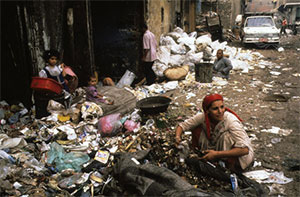 Romani people in Cairo, Egypt, forage through trash. Credit: UN Photo/Armineh Johannes
In 2015, the United Nations adopted the Sustainable Development Goals (SDGs) in an effort to promote “peace and prosperity for people and the planet.” To achieve that goal, it is essential to provide equal opportunities and access to basic services to all people. The 2025 UN SDG Report found that 35% of the 169 SDG targets are on track or making moderate progress, while 18% have reversed compared to the 2025 baseline. One in ten people still live in extreme poverty, one in eleven experience food insecurity, and over 1.1 billion people live in slums without access to clean water and sanitation. It is imperative to acknowledge the societal, technological, economic, and political issues that sustain poverty in countries around the world. Eradicating poverty will require significant frameworks in policy and governance on a national and international scale to ensure that all people will have equal access to basic services and economic opportunities by 2030. Furthermore, a dramatic reduction of United States foreign aid in 2025, including the termination of 83% of USAID programmes, threatens to erode years of fragile development gains.
Throughout the world, violent conflict and natural disasters also contribute to extreme poverty. The complete destruction of infrastructure and blockage of aid has significantly impoverished Palestine since October 7th. The destructive impact of Hurricane Maria in Puerto Rico left $91 billion in damage. An inadequate US government response also revealed significant and enduring questions within the issue of mitigating poverty: how do we rebuild infrastructure after its destruction? How do we restimulate economic development and bring in financial aid after disasters? Similar questions have been raised in the realm of regional cooperation, as devastating floods have wrecked hundreds of thousands of homes across multiple Southeast Asian nations in the past few years. Furthermore, the COVID-19 pandemic has greatly exacerbated the global poverty crisis, particularly in developing countries, setting back the United Nations goal of eradicating poverty by 2030.
IPS is committed to providing comprehensive features that focus on the persisting environmental, sociopolitical, and systemic issues that sustain poverty, and the steps taken worldwide towards poverty eradication.

The Week with IPS

NEXT STOP - SDGs
Tracking global progress towards a sustainable world
Tracking global progress towards a sustainable world

