Languages
Tuesday, October 27, 2026



News and Views from the Global South
Poverty & SDGs

What Governments Should Learn from The Climate Activists
“Nothing about us without us” – that was the call from the indigenous rights advocate Ghazali Ohorella from the Alifuru people in the Maluku Islands, Indonesia during a panel at the climate summit in Glasgow.
Inequity in Funding: Africa’s Agripreneurs Pay a High Price for Start Up Finance
Africa has pinned its hopes on agriculture for the creation of jobs and the resulting reduction of poverty. But its role is being stymied by the high cost of financing.
Glasgow Summit Ends Amidst Climate of Disappointment
Developing countries will surely remember the Glasgow climate summit, the most important since 2015, as a fiasco that left them as an afterthought. That was the prevailing sentiment among delegates from the developing South during the closing ceremony on the night of Saturday Nov. 13, one day after the scheduled end of the conference.
Rich Food from Poor Fish, Making Food and Health Sustainable
During the COVID-19 lockdown in Uganda, a breastfeeding mother struggled to improve the health of her malnourished child. With the closure of her local health centre, she worried the child could die without urgent medical treatment.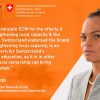
Education Cannot Wait Interviews Patricia Danzi, Director General of the Swiss Agency for Development and Cooperation
Patricia Danzi was appointed Director General of the Swiss Agency for Development and Cooperation (SDC) in May 2020. For nearly three decades, she has dedicated her career to serving the world’s vulnerable populations.
COP26 – New Toolkit to Boost Clean Energy Investments in Small Island Nations
A new toolkit launched in the margins of the UN Climate Change Conference COP26 aims to unlock clean energy investments for small island nations, many of whom rely heavily on imported fossil fuels for power generation.
COP26: Avoiding Carbon Tunnel Vision: Action on Climate Change Needs an Inter-connected Response
With the UN climate change conference – COP26 – continuing this week in Glasgow, it’s obvious that there is consensus among a majority of world leaders and key stakeholders that much more needs to be done, if the ambition of keeping global warming to a 1.5-degree increase is to have any chance of being met. Yet talk, as they say, is cheap. Or, in the words of Greta: too much “blah, blah, blah” and not enough action.
COP26: Climate Justice Begins with the Human Right to Water
As the UN Climate Change Conference (COP26) is swiftly moving to its conclusion on Friday, climate justice could not be more urgent or timely.
Carbon Tax Over-Rated
Addressing global warming requires cutting carbon emissions by almost half by 2030! For the Intergovernmental Panel on Climate Change, emissions must fall by 45% below 2010 levels by 2030 to limit warming to 1.5°C, instead of the 2.7°C now expected.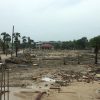
Half World’s Population, Exposed to Floods, Storms, Tsunamis, by 2030
While negotiators from all over the world have been discussing, since 31 October 2021 in Glasgow, every single word, coma and dot in order to reach a final text that is expected to apparently keep everyone happy but really not everybody satisfied, 50% of world’s population will live in coastal areas, exposed to floods, storms and tsunamis by the year 2030.
Zimbabwe’s High-Risk Cross-Border Trade
Thirty-six-year-old Thandiwe Mtshali* watched helplessly as her informal cross-border trading (ICBT) enterprise came to a grinding halt when the Zimbabwean authorities closed the border with South Africa as part of global efforts to stem the spread of the deadly novel coronavirus.
Daughters of a Lesser God (I) 800 Million Girls Forced to Be Mothers
Imagine your child, your daughter, being genitally mutilated and, further on, sold or even handed over for free to an older man who will force her to become a child mother, when her body is still far from being formed and thus able to bear with a so early pregnancy.
COP26 Discussions Must Prioritize Agriculture
Local, national and world leaders, and committed climate change activists are in Glasgow for the 26th UN Climate Change Conference of the Parties (COP26) to share the progress they’ve made since the COP21 in Paris six years ago and to discuss what comes next. One of the issues that must be on the table at COP26 is the worrying impact of climate change on agriculture in Africa.
Indigenous Communities & Human Rights Defenders Under Siege in Colombia
On 21 October, I had the honor of addressing the UN Security Council at the annual open debate on Women, Peace and Security. I spoke as a member of Cxhab Wala Kiwe, which means “Great People’s Territory” in the Nasa Yuwe language, also known as ACIN—Association of Indigenous Councils of the North of Cauca—in Colombia.
Obtaining Water, a Daily Battle in Argentina’s El Impenetrable Region
Next to the brick or adobe houses of El Impenetrable, a wild area of forest and grasslands in northern Argentina, loom huge plastic barrels where rainwater collected from the corrugated iron roofs of the houses is stored. However, the barrels are empty, because it has hardly rained for two years, local residents complain.
COP26: The Many Links Between Food Systems & Climate Change: Message to Glasgow
Unless food systems transformation is put at the center of climate action, commitments governments have already made, and could make at COP26, will be jeopardized.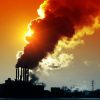
Any End to This Suicidal War? (II): More Lethal Gases and Fewer, Weaker Sinks
Another Year Another Record! The emissions of greenhouse gases continue to rise, the land and sea temperatures are higher than ever since there are records, and the ecosystems could fail their role as vital sinks absorbing carbon dioxide and as a buffer against larger temperature increases.
Mental Health Strategic Plan for Bangladesh: An Overview
Mental health and treating mental health conditions involves not only treating an individual’s ability to manage their thoughts, emotions, behaviors, and interactions with others, but also ensuring that the social, cultural, economic, political, and environmental conditions are in place through effective national policies, social protections, adequate living standards, working conditions, community social support, and a tiered system of care through a robust network of health services. In Bangladesh, the Mental Health Act 2018 and the National Mental Health Policy 2021 were developed with the above in mind.
Transforming Food Systems To Defeat Hunger
During October, the World Food Month, there has been a huge increase in the number of qualified voices promoting new ways to transform food systems that would allow to reduce and eliminate hunger, of which more than 811 million people in the world are already victims.
Climate Crisis Fuels Exodus to Mexico, Both Waystation and Destination
In September, 31-year-old Yesenia decided to leave her home on the outskirts of the northern Honduran city of San Pedro Sula, driven out by violence and the lack of water.
Mental Health Achievements in Bangladesh
Mental health is a state of well-being when both your body and your mind are in balance, and you are able to deal with the difficulties and challenges that come your way and easily find joy, peace, and happiness once the challenge is overcome. For many people though, the challenges often remain for too long - the pain of losing someone you dearly loved, being diagnosed with a chronic disease like cancer or a heart condition, losing your family/home/job or feeling like you failed to meet expectations. All those things and more can trigger so much intense stress and maladjustment, that if it goes unchecked and untreated, it may lead to a chronic disease, a mental health disorder. WHO defines health as “a state of complete physical, mental and social well-being and not merely the absence of disease or infirmity”. The majority of people are able to cope and get back to life as normal, but for the many who cannot, they begin to experience intense detachment from reality (experiencing delusions, pervasive sadness, uncontrollable fears, intense anger and/or fantasies and hallucinations). For those individuals, there is limited help and treatment in every country in the world. Those who suffer from mental health disorders and the brave professionals who learn to treat them are chronically stigmatized, under-appreciated and under-paid.« Previous Page — Next Page »





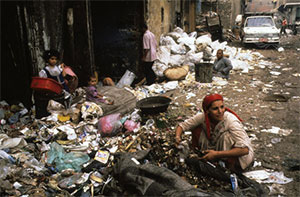 Romani people in Cairo, Egypt, forage through trash. Credit: UN Photo/Armineh Johannes
In 2015, the United Nations adopted the Sustainable Development Goals (SDGs) in an effort to promote “peace and prosperity for people and the planet.” To achieve that goal, it is essential to provide equal opportunities and access to basic services to all people. The 2025 UN SDG Report found that 35% of the 169 SDG targets are on track or making moderate progress, while 18% have reversed compared to the 2025 baseline. One in ten people still live in extreme poverty, one in eleven experience food insecurity, and over 1.1 billion people live in slums without access to clean water and sanitation. It is imperative to acknowledge the societal, technological, economic, and political issues that sustain poverty in countries around the world. Eradicating poverty will require significant frameworks in policy and governance on a national and international scale to ensure that all people will have equal access to basic services and economic opportunities by 2030. Furthermore, a dramatic reduction of United States foreign aid in 2025, including the termination of 83% of USAID programmes, threatens to erode years of fragile development gains.
Throughout the world, violent conflict and natural disasters also contribute to extreme poverty. The complete destruction of infrastructure and blockage of aid has significantly impoverished Palestine since October 7th. The destructive impact of Hurricane Maria in Puerto Rico left $91 billion in damage. An inadequate US government response also revealed significant and enduring questions within the issue of mitigating poverty: how do we rebuild infrastructure after its destruction? How do we restimulate economic development and bring in financial aid after disasters? Similar questions have been raised in the realm of regional cooperation, as devastating floods have wrecked hundreds of thousands of homes across multiple Southeast Asian nations in the past few years. Furthermore, the COVID-19 pandemic has greatly exacerbated the global poverty crisis, particularly in developing countries, setting back the United Nations goal of eradicating poverty by 2030.
IPS is committed to providing comprehensive features that focus on the persisting environmental, sociopolitical, and systemic issues that sustain poverty, and the steps taken worldwide towards poverty eradication.

The Week with IPS

NEXT STOP - SDGs
Tracking global progress towards a sustainable world
Tracking global progress towards a sustainable world

