Languages
Friday, November 20, 2026



News and Views from the Global South
Poverty & SDGs
Student Drop Out Rate on the Increase Despite Free Education
2010 will go down in history as the year when the first batch of pupils to benefit from the government’s introduction of free primary education sat for their Kenya Certificate of Primary Education (KCPE).
BRAZIL: Climate Change Means New Crop Health Concerns
Farming around the globe, already reeling from drought, heat waves and major storms, will have to prepare for the new challenges that global warming will bring, especially in the form of pests and disease.
AGRICULTURE – SOUTH AFRICA: Small Scale Farmers Face Uphill Battle
Just before sunrise 39-year -old Alan Simons, an emerging small-scale farmer, gets ready for his usual nine-hour day of harvesting, packing and deliveries. In his black Nissan van he drives ten kilometres to the seaside town of Strand outside of Cape Town to pick up his six workers, all of who are women.
HEALTH-INDIA: Vitamin A Doses Keep Child Malnutrition Away
With three small children to raise in a dirt-poor village in eastern India’s Bihar state, farm labourer Renu Devi is an unsung rural supermom who shuttles between home and field every day.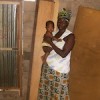
GAMBIA: Families Left Homeless by Floods
Amie Manneh and her family lived securely in their single-bedroom home in Bundung, 15 kilometers from the capital, Banjul. Then their home was destroyed by heavy rainfall in September. Since then Amie, her husband and six children have been living in the damaged house.MALAWI: Women Claim Equal Share of Family Property
Seated on a wooden bench at her Katoto township house in Mzuzu, Grace Mkandawire’s face reflects the traumatic experiences she has endured since her husband’s death in 1998. She looks lost and confused and as she narrates her story there is fear, hatred and resignation that Malawi’s Marital Property Law of (1882) disenfranchises poor women like her.
POLITICS- NAMIBIA: Numbers of Women in Government Declining
Twenty years after independence, representation of women in senior government structures and in Parliament is declining in Namibia. According to the latest demographic survey results of August 2010, out of a population of around 2 million, women outnumber men 10:9. In 2001, the ratio was 94 males per 100 females.
FOOD CRISIS: Two New Varieties of Vegetables on Kenyan Food Market
Agriculture remains one of the most significant economic activities in Kenya. It accounts for over 24 percent of Gross Domestic Product (GDP) with an estimated 70 percent of total production coming from small scale farmers who typically have about 2-5 acres of land, depending on the region.CAMBODIA: Aid Dependence May Hurt Successes in HIV, AIDS
Thanks to a healthy cocktail of foreign aid and a pragmatic condom policy, one of South-east Asia’s poorest countries is well on course to meeting an international target aimed at reversing the spread of HIV and AIDS.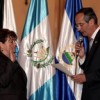
GUATEMALA: Women Make Inroads in Key Positions of Power
Guatemala, it seems, is trying out a new image. As of this month, women are at the helm of the Public Prosecutor's Office and the Comptroller General's Office, winning their posts on merit, in what local activists are calling an important step in women's access to political power -- though "there is a long way to go."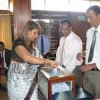
MAURITIUS: They Do Politics Differently
"I do politics every day, but partisan politics? No, thank you," says Jane Ragoo, long-time trade unionist and social worker. She believes in working to bring about change in society and improve people’s lives but has no interest in clambering onto a truck to campaign for office.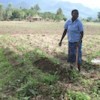
AGRICULTURE: Desperation Over Subsidies
As the rains start to fall in Malawi, marking the beginning of the growing season, government is continuing to implement the fertiliser and seed subsidy programme which has since made the country a bread basket in the Southern African Development Community, SADC.
SOUTH AMERICA: Rain May Disappear from the World’s Breadbasket
South America still has vast extensions of land available for growing crops to help meet the global demand for food and biofuels. But the areas of greatest potential agricultural production -- central-southern Brazil, northern Argentina, and Paraguay -- could be left without the necessary rains.
ARGENTINA: Affordable Housing – A Distant Dream
While real estate investment and the number of upscale apartments for sale or rent are growing in the Argentine capital, tens of thousands of poor families are living in crowded shanty towns, and are demanding affordable housing and access to mortgage programmes.
Cholera Forces Haiti to Face Sewage Dilemma
The cholera crisis is forcing Haitian authorities to address an unpleasant and now life-threatening problem – untreated feces.
NEPAL: Education Shouldn’t Be A Casualty in Emergencies
Nepal may be doing well in providing complete primary education to boys and girls, but has quite a bit of catching up to do when it comes to ensuring that their schooling does not become a casualty during disasters and emergencies.
Q&A: “Transparency Helps Ensure Donors’ Promises Are Met”
This past September, world leaders meeting at the United Nations vowed to spend $40 billion over the next five years to save the lives of more than 16 million women and children dying of deadly diseases or lack of medical care, particularly during and after pregnancy.
KENYA: Mobile Phones to the Rescue for Pregnant Women
Pumwani Maternity Hospital, in the impoverished Nairobi neighbourhood of Eastlands, is the site of a trial project using mobile phones to help HIV-positive mothers avoid passing the virus on to their children.
WATER: Early Rains Rekindle Interest in Rainwater Harvesting
In Thembekie Gwebu’s yard under the roof leaves stands a curious giant green plastic container with a plastic pipe connected to the gutter. She has been asked a number of times by curious visitors and passers-by what the contraption is, and she happily explains.
WATER: Miracle Man Eases Village’s Water Woes
Hermes Chimombo, a welder in his 50s, is a revered man in the impoverished Naotcha Township. Armed with rudimentary tools and a passion to ease people’s suffering, he has tapped a spring in the mountain above the slum to provide water for its 25,000 residents.
AGRICULTURE: Kenyan Researchers Say Traditional Vegetables Can Improve Food Security
According to Vision 2030, which is a government strategic plan on how to boost growth and development in Kenya, there are an estimated five million out of an estimated eight million households who depend directly on agriculture, despite the fact that agriculture continues to be one of the most under-budgeted ministries.« Previous Page — Next Page »


 Romani people in Cairo, Egypt, forage through trash. Credit: UN Photo/Armineh Johannes
In 2015, the United Nations adopted the Sustainable Development Goals (SDGs) in an effort to promote “peace and prosperity for people and the planet.” To achieve that goal, it is essential to provide equal opportunities and access to basic services to all people. The 2025 UN SDG Report found that 35% of the 169 SDG targets are on track or making moderate progress, while 18% have reversed compared to the 2025 baseline. One in ten people still live in extreme poverty, one in eleven experience food insecurity, and over 1.1 billion people live in slums without access to clean water and sanitation. It is imperative to acknowledge the societal, technological, economic, and political issues that sustain poverty in countries around the world. Eradicating poverty will require significant frameworks in policy and governance on a national and international scale to ensure that all people will have equal access to basic services and economic opportunities by 2030. Furthermore, a dramatic reduction of United States foreign aid in 2025, including the termination of 83% of USAID programmes, threatens to erode years of fragile development gains.
Throughout the world, violent conflict and natural disasters also contribute to extreme poverty. The complete destruction of infrastructure and blockage of aid has significantly impoverished Palestine since October 7th. The destructive impact of Hurricane Maria in Puerto Rico left $91 billion in damage. An inadequate US government response also revealed significant and enduring questions within the issue of mitigating poverty: how do we rebuild infrastructure after its destruction? How do we restimulate economic development and bring in financial aid after disasters? Similar questions have been raised in the realm of regional cooperation, as devastating floods have wrecked hundreds of thousands of homes across multiple Southeast Asian nations in the past few years. Furthermore, the COVID-19 pandemic has greatly exacerbated the global poverty crisis, particularly in developing countries, setting back the United Nations goal of eradicating poverty by 2030.
IPS is committed to providing comprehensive features that focus on the persisting environmental, sociopolitical, and systemic issues that sustain poverty, and the steps taken worldwide towards poverty eradication.

The Week with IPS

NEXT STOP - SDGs
Tracking global progress towards a sustainable world
Tracking global progress towards a sustainable world

