Languages
Saturday, November 21, 2026



News and Views from the Global South
Poverty & SDGs

HEALTH-AFGHANISTAN: Patients at Private Doctors' Mercy
Thirty five-year-old Habibulah Khan walks out of a private clinic in the Afghan capital, covered in dust and looking dog-tired.
HEALTH-AFGHANISTAN: Private Care – Designed to Make Money
Forty five-year-old Rahima thought she was going to die. Her family had checked her into Shenuzada, a private hospital in Makroyan in the Afghan capital, for an operation on her abdomen.
AGRICULTURE: Cultivating Rural Prosperity in Cameroon
Emilie Nyate has a two million CFA smile on her face these days. She's one of the beneficiaries of the Roots and Tubers Market- Oriented Programme, known better by its French acronym of PNDRT, which is transforming the lives of small-scale farmers in Cameroon.Q&A: ‘We Do Not Want to See The Blame Game’
Developing economies are vulnerable to climate change and need funds to implement much needed adaptation and mitigation measures. This is one of the key points that needs to be addressed during the next round of U.N.-led negotiations on climate change in Copenhagen, according to Mohamed Aslam, Maldives Minister of Housing, Transport and Environment.
HEALTH: Fighting AIDS in Conservative Mauritania
Campaigners against HIV/AIDS in Mauritania face an uphill task to put their messages across, especially those that deal with safer sex and condom use. Campaigners have to cut corners in order to avoid angering the country's powerful religious clerics.ENERGY-CAMEROON: Dam Project Questioned
Construction has begun on a new dam at the confluence of the Lom and Pangar rivers in Cameroon. The government is pushing the project as key to addressing an energy shortfall, allowing for economic growth; observers believe the plan may only increase the country's vulnerability to drought.CAMEROON: Fears for Forest as Dam Construction Begins
Crouched on a low wooden stool in front of his mud hut in the village of Pangar, Alain Selembe puffs away at his clay pipe, his gaze lost in the surrounding forest, quite oblivious to the noise made by his two playing daughters. All he hears is the rumbling of bulldozers opening up a 30 kilometre road from Deng Deng village to the confluence of the Lom and Pangar rivers, where the government plans to construct a new dam.CLIMATE CHANGE: 75 Million Environmental Refugees to Plague Asia-Pacific
Pacific Islanders, aiming to secure their very survival, are calling for immediate commitments from the developed world to reduce greenhouse gas emissions by at least 45 percent by 2020.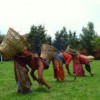
POLITICS-NEPAL: Women Push for Gender Equality in New Constitution
A political crisis, which has dragged on for months, crippling progress in drafting a new constitution for Nepal by the Constituent Assembly (CA) has considerably dampened the euphoria of women's organisations here.HAITI: Aid Flowing, But Food Crisis Drags On
Though beleaguered with their own financial problems, donor countries say they are not planning to withdraw financial support for cash-strapped Haiti.
PARAGUAY: Indigenous Squatter Communities Organise Self-Help
Indigenous families living in a squatter settlement on the outskirts of the Paraguayan capital are organising themselves, and now have a community soup kitchen and are producing and selling handicrafts. They don't want to return to panhandling on the streets of Asunción, so far from their home villages.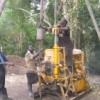
TANZANIA: Solutions to Dar's Water Problems in the Pipeline
In the nine months since she moved to the Dar es Salaam neighbourhood of Kinondoni, Anna Christopher has only seen water running from her taps once.RIGHTS: U.N. Body Relentlessly Pursues Women's Equality
The U.N. Committee on the Elimination of Discrimination Against Women (CEDAW) is known to publicly castigate countries accused of gender discrimination or violating international conventions governing women's rights.WATER-TANZANIA: Who Pays the Piper?
When John Rubara* and his family moved into their new house in Dar es Salaam's Tabata Kimanga, a fast-growing middle-income neighbourhood in Temeke district, the water company disconnected their supply because the previous owner was in arrears.
HEALTH-AFRICA: Early ART: A Stitch in Time…
A global call to put people living with HIV on antiretroviral therapy (ART) at an earlier stage of their illness is intensifying, but most developing countries, especially in Africa, are struggling to meet the current recommendations.
MOROCCO: Farmers Overcome Water Scarcity
Researchers in the central Moroccan region Beni Mellal are introducing new agricultural techniques that increase production while reducing water usage.
ECONOMY-RWANDA: Credit for Women's Development
In early July, Rwandan officials announced a new programme that aims to strengthen women's economic capacity by providing more access to credit and enabling them to start income generating projects.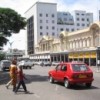
ZIMBABWE: Water Rationing Looms in Bulawayo
Bulawayo city council is to tighten a water rationing programme relaxed last year because residents are rapidly pushing up the city's daily consumption by using municipal water supplies for non-domestic activities.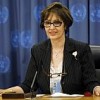
Q&A: "Changing Stereotypes of Women Is the Starting Point"
For the last 10 days, experts from the U.N. Committee on the Elimination of All Forms of Discrimination Against Women (CEDAW) have been reviewing the status of women's rights in 11 countries.ARGENTINA: Kidnappings, Threats Target Child Rights Campaign
Youngsters involved in a network of social organisations working with street kids and disadvantaged youths, as part of its "Hunger Is a Crime" campaign, have been the targets of eight kidnappings and dozens of death threats in the last 16 months.MOROCCO: New Law, But the Same Old Men
The new Moroccan family law was designed to give women equal rights in the family. But five years after its introduction, Moroccan women leaders say opposition to the law from politicians and within the judicial system persists, and the new law has not been able to change Moroccan mentality.« Previous Page — Next Page »


 Romani people in Cairo, Egypt, forage through trash. Credit: UN Photo/Armineh Johannes
In 2015, the United Nations adopted the Sustainable Development Goals (SDGs) in an effort to promote “peace and prosperity for people and the planet.” To achieve that goal, it is essential to provide equal opportunities and access to basic services to all people. The 2025 UN SDG Report found that 35% of the 169 SDG targets are on track or making moderate progress, while 18% have reversed compared to the 2025 baseline. One in ten people still live in extreme poverty, one in eleven experience food insecurity, and over 1.1 billion people live in slums without access to clean water and sanitation. It is imperative to acknowledge the societal, technological, economic, and political issues that sustain poverty in countries around the world. Eradicating poverty will require significant frameworks in policy and governance on a national and international scale to ensure that all people will have equal access to basic services and economic opportunities by 2030. Furthermore, a dramatic reduction of United States foreign aid in 2025, including the termination of 83% of USAID programmes, threatens to erode years of fragile development gains.
Throughout the world, violent conflict and natural disasters also contribute to extreme poverty. The complete destruction of infrastructure and blockage of aid has significantly impoverished Palestine since October 7th. The destructive impact of Hurricane Maria in Puerto Rico left $91 billion in damage. An inadequate US government response also revealed significant and enduring questions within the issue of mitigating poverty: how do we rebuild infrastructure after its destruction? How do we restimulate economic development and bring in financial aid after disasters? Similar questions have been raised in the realm of regional cooperation, as devastating floods have wrecked hundreds of thousands of homes across multiple Southeast Asian nations in the past few years. Furthermore, the COVID-19 pandemic has greatly exacerbated the global poverty crisis, particularly in developing countries, setting back the United Nations goal of eradicating poverty by 2030.
IPS is committed to providing comprehensive features that focus on the persisting environmental, sociopolitical, and systemic issues that sustain poverty, and the steps taken worldwide towards poverty eradication.

The Week with IPS

NEXT STOP - SDGs
Tracking global progress towards a sustainable world
Tracking global progress towards a sustainable world

