Languages
Tuesday, October 6, 2026



News and Views from the Global South
Poverty & SDGs

Celebrating Vanuatu’s Path to Sustainable Development
The Pacific Island Developing State of Vanuatu has emerged as one of the region’s great success stories. Vanuatu has joined the ranks of Samoa and the Maldives as one of only six countries to graduate from being a least developed country, since the category was introduced by the United Nations in 1971.
Reduce Military Spending – the Much-Needed Response to Violence Against Women
The COVID-19 pandemic is NOT the biggest pandemic the world confronts at the moment, despite over 69 million cases and 1.5 million deaths worldwide.1 If it’s not COVID, what is it then? It is violence against women!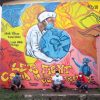
Human Rights Must Be at the Heart of the COVID-19 Recovery
On 10 December every year, we celebrate Human Rights Day, marking the anniversary of the adoption of the Universal Declaration of Human Rights. The Universal Declaration guarantees a spectrum of human rights that belong to each of us equally, and unite us as a global community and upholds our humanity.
Education Is a Fundamental Human Right and the Priority of the 21st Century
Education is not a privilege. It is a fundamental human right. Yet, education is undervalued even at the best of times. We often fail to connect the dots between the right to education and the realization of all human rights. As noted by the Nobel-winning economist Amartya Sen, we have failed to give ‘this massive potential in transforming human lives’ the attention it deserves.
Drop in Remittances – a Financial Lifeline for 800 Million People – Could Impact Financial Stability of Numerous Countries
On Dec. 2 Gabriel Arias, 42, left a Washington Heights, New York, money transfer agency after sending money home to the Dominican Republic. For the past eight years, every fortnight he would come to this branch at 171st street after getting paid from his construction job. But things are different this year and he worries about his family back home. Arias lost his job in May, amid heightened COVID-19 restrictions in the state. He told IPS he has tried to work some odd jobs, but has barely earned enough for his monthly apartment rental. This early December visit to send money home was only his second since June.
La Niña Weather Phenomenon Could Endanger Colombia’s Food Security
After ten years without a strong La Niña weather phenomenon in Colombia, the climate pattern, coupled with the COVID-19 pandemic, could create a vacuum in food production and supply. Multilateral organizations, along with the Colombian government, are trying to implement measures to reduce malnutrition risk. Still, the population is already overwhelmed by a year of struggles that have deepened socio-economic differences.
Urgently Needed Deficit Financing No Excuse for More Fiscal Abuse
Fiscal and monetary measures needed to fight the economic downturn, largely due to COVID-19 policy responses, require more government accountability and discipline to minimise abuse. Such measures should ensure relief for the vulnerable, prevent recessions from becoming depressions, and restore progress.
Choice and Opportunity for African Farmers Will Transform Africa
’A hungry man is not a free man. He cannot focus on anything else but securing his next meal.’ So proclaimed the late Kofi Annan.
Nigerian Focus Group Reveals Why Ending Gender-Based Violence is Necessary
Every year, the global 16 Days of Activism against Gender-Based Violence begins on November 25 and ends December 10. The theme of this year’s activism is "Orange the World: Fund, Respond, Prevent, Collect!"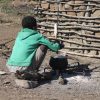
Fixing the Food System to Produce Healthy Diets
As the world accelerates towards achieving the targets of the Sustainable Development Goals by 2030, it is time to replace the current broken food system. With only a decade left to reach the deadline, evidence shows that the way food is produced, processed and transported is not only destructive to the environment but it is also leaving millions behind.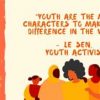
Lost in Translation? Understanding Relevance of Women, Peace & Security in Arms Control & Disarmament
“What does the Women, Peace and Security Agenda have to do with arms control and disarmament?”. Under varying formulations, this question keeps coming up whenever someone refers to the Women, Peace and Security (WPS) Agenda as a basis for ensuring that women’s voices and their specific security needs were taken into account in multilateral arms control discussions.
Nepal’s Climate Targets: Unrealistically Ambitious or Unnecessarily Ambiguous
The global pandemic hijacked 2020 and reset priorities, but countries now need to regroup and renew their commitment to cap global warming at well below 2°C above pre-industrial levels, as agreed in Paris in 2015.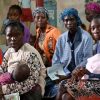
How the Rich Get Richer
Wealth begets wealth. This simple concept of privilege has added to growing discontent with inequality that has escalated under the shadow of the COVID-19 pandemic.
COVID-19 an Opportunity to Build Resilience around Food Systems
The Barilla Centre for Food and Nutrition (BCFN) has appealed to the United Nations to educate citizens to use their roles as consumers to create a momentum for change. This was ahead of the 2021 Food Systems Summit which the United Nations Secretary-General, António Guterres, will host on November 25 next year.
Securing Freedom to Eat
For Zimbabwean organic farmer, Elizabeth Mpofu, access to healthy food is liberation.Millions of people across the world go to bed hungry. Scores do not have access to nutritious food owing to an inequitable global food system focused on industrial mass food production. The food from this system is less nutritious, more expensive and less friendly to the environment.
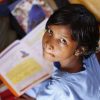
How Did Rural India Learn During Lockdown?
School closures due to the nationwide lockdown in March 2020 meant that children were disengaged with formal education for a prolonged period. The resulting talks around e-education exposed India’s digital divide, with only 24 percent of households having access to the internet.
Q&A: Next Decade Sufficient Time for a Food Revolution
In March, after the World Health Organisation first declared COVID-19 a pandemic, the World Food Programme (WFP) of the United Nations activated a global corporate emergency mechanism for the first time. It had already written to all donor countries asking for $1.9 billion in front-loaded funding, and had begun emergency procurement. Its priority was to sustain life-saving assistance first.
Q&A: Vote with your Fork for a World Free from Hunger
A world free from hunger is possible but only if we change how we grow and eat food. And resetting the food system — including all aspects of production, processing, marketing, distribution and the consumption and nutrition of food — is key to securing a sustainable food future post COVID-19.
Women Empowerment During COVID-19 Through Remote Learning – the Fuzia Perspective
This year, the world commemorated the 25th anniversary of the Beijing Declaration and Platform for Action, instead of celebration; however, its progress has been impeded by the COVID-19.
UN Special Session on COVID-19 Must Recognize Right to Health & Access to Vaccines
The holding of this Special Session (the 37th in the history of the UN) is of considerable importance. It is a unique opportunity to define and implement joint actions at the global level to fight the pandemic in order to ensure the right to life and health for all the inhabitants of the Earth. As the President of the UN General Assembly wrote in his letter of convocation: "Let us not forget that none of us are safe until we are all safe".
Africa Should Be at the Forefront of a Global Response to COVID-19
As COVID-19 swept across the globe, one thing became clear: a well-functioning, well-resourced, agile and resilient health system can mean the difference between life and death.« Previous Page — Next Page »





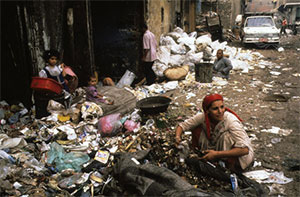 Romani people in Cairo, Egypt, forage through trash. Credit: UN Photo/Armineh Johannes
In 2015, the United Nations adopted the Sustainable Development Goals (SDGs) in an effort to promote “peace and prosperity for people and the planet.” To achieve that goal, it is essential to provide equal opportunities and access to basic services to all people. The 2025 UN SDG Report found that 35% of the 169 SDG targets are on track or making moderate progress, while 18% have reversed compared to the 2025 baseline. One in ten people still live in extreme poverty, one in eleven experience food insecurity, and over 1.1 billion people live in slums without access to clean water and sanitation. It is imperative to acknowledge the societal, technological, economic, and political issues that sustain poverty in countries around the world. Eradicating poverty will require significant frameworks in policy and governance on a national and international scale to ensure that all people will have equal access to basic services and economic opportunities by 2030. Furthermore, a dramatic reduction of United States foreign aid in 2025, including the termination of 83% of USAID programmes, threatens to erode years of fragile development gains.
Throughout the world, violent conflict and natural disasters also contribute to extreme poverty. The complete destruction of infrastructure and blockage of aid has significantly impoverished Palestine since October 7th. The destructive impact of Hurricane Maria in Puerto Rico left $91 billion in damage. An inadequate US government response also revealed significant and enduring questions within the issue of mitigating poverty: how do we rebuild infrastructure after its destruction? How do we restimulate economic development and bring in financial aid after disasters? Similar questions have been raised in the realm of regional cooperation, as devastating floods have wrecked hundreds of thousands of homes across multiple Southeast Asian nations in the past few years. Furthermore, the COVID-19 pandemic has greatly exacerbated the global poverty crisis, particularly in developing countries, setting back the United Nations goal of eradicating poverty by 2030.
IPS is committed to providing comprehensive features that focus on the persisting environmental, sociopolitical, and systemic issues that sustain poverty, and the steps taken worldwide towards poverty eradication.

The Week with IPS

NEXT STOP - SDGs
Tracking global progress towards a sustainable world
Tracking global progress towards a sustainable world

