Languages
Monday, October 5, 2026



News and Views from the Global South
Poverty & SDGs
Ten Defining Moments for Women in 2020
While 2020 will be remembered most for the way COVID-19 changed our lives in nearly every way and in every part of the world, we made some strides for women’s rights and gender equality.
2020: A Yet More Devastating Year Closes With At Least Some Signs Of Hope
Despite its grim record of multiple natural disasters and a deepening climate crisis, one could be forgiven for looking back on 2019 with a degree of nostalgia. There is no disguising the extent of the calamity wrought this year by COVID-19, yet as we approach the end of 2020 we may also draw strength from positive developments emerging.
The World in 2021
The year 2020 is ending with the world caught up in an unprecedented human and economic crisis. The pandemic has contaminated 75 million people and killed 1.7 million. With the lockdowns, the global economy has suffered the worst recession in 75 years, causing the loss of income for millions of people. In such a bleak environment, what will the new year bring? Whilst uncertainty is the only certainty, eight points are likely to be key in the year ahead:
Why Transforming Our Food Systems Is a Feminist Issue
In countries where women are most marginalized, discriminated under the law and where gendered norms prevent women from owning property and resources, people are also the hungriest. This is because gender equality and food systems are intertwined.
Empowering Women through Wisdom
During the COVID 19 lockdown in Sri Lanka, seven women from diverse religious and ethnic backgrounds came together to deliver Wisdom and their message that women must be empowered and their voices for national unity must be heard through this movement.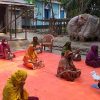
The Impact of COVID-19 on Child Marriage and Other Gender-Based Violence
I recently visited rural areas of Bangladesh amid the COVID-19 pandemic and returned to Dhaka with a new understanding of the impact that COVID-19 is having on child marriage, a harmful practice that is a global challenge. The fundamental shift that I saw was that child marriage, which has typically been encouraged by struggling parents, is now being encouraged by struggling girls. This worrisome trend underscores a new burden of the pandemic on the poor.
Uganda’s School Plan for Refugee Children Could Become a Global Template
Thirteen-year-old Wita Kasanganjo is a pupil at Maratatu Primary School in the Kyangwali Refugee Settlement based in Uganda’s Hoima district. But last month, when Uganda’s President Yoweri Museveni ordered the re-opening of schools for the first time since the mid-March nationwide closure, Kasanganjo was not part of the returning group of students. The government, in a cautious lifting of coronavirus lockdown restrictions, has allowed only pupils who are part of the final year or candidate classes to return to their schooling.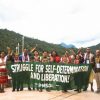
Reclaim Your Rights: Defend Indigenous People’s Lands
Rights are earned through hard-fought struggles. And for Indigenous Peoples (IP), its fulfillment comes from the collective and continuous defense of ancestral land and territory, and assertion of their ways of life and the right to self-determination.
Energy Efficiency for Developing Countries: Pivoting from Fewer Inputs to More Outputs
Energy efficiency (EE) is often marketed as a tool to save energy and money. The oft-repeated mantra is doing “more with less”, namely producing more goods with less energy. But, as set out in a recent World Bank report (which I co-authored), EE can do something that is often much more important for developing countries: it can produce the additional goods and services needed to raise standards of living.
Sid Chatterjee Epitomizes the New Leadership Model of UN Resident Coordinators Worldwide
Siddharth Chatterjee, who has served with the United Nations for over 20 years, has been appointed as the new Resident Coordinator in China, the world’s second largest economy after the United States.
Pandemic Puts Jamaican Children at Heightened Risk of Abuse
In Jamaica, school playgrounds are deserted, filled only with phantom shrieks of delight. Blackboards remain devoid of arithmetic and uniforms hang wrinkle-free in closets. When the first case of Covid hit Jamaican shores in early March, the government closed primary and secondary schools and over 500,000 children transitioned to remote learning. The majority of schools have yet to resume face-to-face classes since the March 13 closure.
Getting Children in Lebanon Back to School Amongst Multiple Crises
Education and health care were high on the agenda when the United Nations vowed to work toward a better future by setting 17 Sustainable Development Goals (SDGs) to be met by 2030.
India: National Education Policy 2020 Could Transform Early Childhood Education If Implemented Effectively
It is after almost 34 years that the central government approved the new National Education Policy 2020 on July 29, 2020. This document contains comments on the entire education system and its various recommendations are being heavily debated.
Can Conservation and Development Be Balanced in Sri Lanka?
The Sri Lankan government recently cancelled three circulars that protected 700,000 hectares of forests, labelled Other State Forests (OSFs), which are not classified as protected areas but account for five percent of the island nation’s remaining 16.5 percent of forest cover.
Intellectual Property Monopolies Block Vaccine Access
Just before the World Health Assembly (WHA), an 18 May open letter by world leaders and experts urged governments to ensure that all COVID-19 vaccines, treatments and tests are patent-free, fairly distributed and available to all, free of charge.
Helping Women to Step out of the ‘Shadow Pandemic’ of Women Abuse
The United Nations Secretary-General’s UNiTE by 2030 to End Violence against Women campaign marked the 16 Days of Activism against Gender-based Violence (25 November to 10 December 2020) at a time when COVID-19 exacerbated the conditions women operate under.
Discriminatory Laws Still Holding Women Back in the Middle East
Decades of aggressive efforts to create equal opportunities for women, shatter the glass ceiling and build a more inclusive society only ends up in failure, when the key stake holders refuse to acknowledge discriminatory laws, socio-cultural and religious set ups that continue to threaten progress made by the female work force.
Safe Drinking Water Should Mean Safe Collection Too: How to Reduce the Risks
Globally, millions of people don’t have access to water in their home. They collect water from shared water supply points or surface water sources and physically carry water containers back home for household use.
R & D Expenditure: How to Raise It and Why
Economic growth is the time-tested method of raising living standards and, if not accompanied by large increases in inequality, lowering poverty. Since World War II, economic growth has lifted hundreds of millions of people out of poverty, including in South Asia.
Africa Readying for Free Trade, Come January 2021
One day in February 2020, Accra-based coffee and cocoa trader Meron Dagnew visited the Secretariat of the African Continental Free Trade Area (AfCFTA) to introduce herself, even before the Secretariat was fully operational.
A Vaccine That Was Hijacked by the Rich
There is a longstanding belief that virtually everything in this world is stacked up against the poor and the downtrodden. The Covid-19 vaccine is no exception because some of world’s richest nations, including the US, Canada and UK, seem to have cornered most of the supplies -- whilst marginalizing the world’s poorer nations.« Previous Page — Next Page »





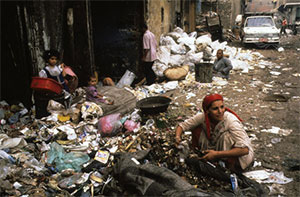 Romani people in Cairo, Egypt, forage through trash. Credit: UN Photo/Armineh Johannes
In 2015, the United Nations adopted the Sustainable Development Goals (SDGs) in an effort to promote “peace and prosperity for people and the planet.” To achieve that goal, it is essential to provide equal opportunities and access to basic services to all people. The 2025 UN SDG Report found that 35% of the 169 SDG targets are on track or making moderate progress, while 18% have reversed compared to the 2025 baseline. One in ten people still live in extreme poverty, one in eleven experience food insecurity, and over 1.1 billion people live in slums without access to clean water and sanitation. It is imperative to acknowledge the societal, technological, economic, and political issues that sustain poverty in countries around the world. Eradicating poverty will require significant frameworks in policy and governance on a national and international scale to ensure that all people will have equal access to basic services and economic opportunities by 2030. Furthermore, a dramatic reduction of United States foreign aid in 2025, including the termination of 83% of USAID programmes, threatens to erode years of fragile development gains.
Throughout the world, violent conflict and natural disasters also contribute to extreme poverty. The complete destruction of infrastructure and blockage of aid has significantly impoverished Palestine since October 7th. The destructive impact of Hurricane Maria in Puerto Rico left $91 billion in damage. An inadequate US government response also revealed significant and enduring questions within the issue of mitigating poverty: how do we rebuild infrastructure after its destruction? How do we restimulate economic development and bring in financial aid after disasters? Similar questions have been raised in the realm of regional cooperation, as devastating floods have wrecked hundreds of thousands of homes across multiple Southeast Asian nations in the past few years. Furthermore, the COVID-19 pandemic has greatly exacerbated the global poverty crisis, particularly in developing countries, setting back the United Nations goal of eradicating poverty by 2030.
IPS is committed to providing comprehensive features that focus on the persisting environmental, sociopolitical, and systemic issues that sustain poverty, and the steps taken worldwide towards poverty eradication.

The Week with IPS

NEXT STOP - SDGs
Tracking global progress towards a sustainable world
Tracking global progress towards a sustainable world

