Languages
Saturday, September 19, 2026



News and Views from the Global South
Financial Crisis
Developing Countries Leading Economic Rebound
Led by growth in developing countries, the global economy is rebounding more quickly than expected, according to the latest 'World Economic Outlook' (WEO) released by the International Monetary Fund (IMF) here Wednesday.IMF Backs Flat Tax to Defray Bailouts
Political momentum for a levy against the world's largest banks to repay governments for the cost of bank rescue packages during the global financial crisis has gained momentum with the leak of an International Monetary Fund (IMF) report which calls for a set of taxes against the financial industry.New Face of U.S. Foreclosures – The Unemployed
Giselle Jiles could be the new face of foreclosure. The 52-year-old financial planner has owned her home in Oakland's Laurel District for 12 years. She did not buy an expensive home that was beyond her means and she did not sign up for a predatory adjustable rate mortgage that was reset at an unsustainably expensive rate.WORLD-ECONOMY: New Directions or Just New Directors?
The business and political leadership of the world's strongest emerging economies meet this week in Brazil. Are these gatherings of the champions of a new and fairer global economy, or of new pretenders to the old throne?
ECONOMY: Get the Cab From Shanghai to London
The black, curvy London cab is so much more than just a taxi. It is an icon without which the picture of London can never be complete.ECONOMY: Voluntary Simplicity – Answer to Financial Meltdown
The global financial crisis offered an opportunity to reform the economic system and participants in a conference on ‘degrowth’ in Barcelona, last week, appeared determined not to lose it.
AFRICA: Growth Down; Unemployment Up
Due to the global economic and financial crisis, growth on the African continent dropped to an average of 1.6 percent in 2009, compared to 4.5 percent in 2008.DEVELOPMENT: Recovery Could Leave Behind World’s Poorest
The world's 49 least developed countries (LDCs), described as the poorest of the poor, could feel the effects of the global economic crisis for decades, a senior U.N. official warned this week.EAST EUROPE: “Inevitable” Budget Cuts Anger Unions
Trade unions in Romania and Bulgaria are embarking on a spring of protests in response to the governments’ anti-crisis measures involving considerable cuts in budget expenditure.
Q&A: EPAs Are Still Not Developmental, Despite EU Promises
The contentious trade deals known as the economic partnership agreements (EPAs) will in their current form not do African countries any good as they still do not take those countries’ development needs into consideration, despite such an undertaking by the European Union (EU).POLITICS: G20 Big Powers Under Scrutiny by Smaller Nations
When the G20, representing some of world's politically and economically powerful developing and industrial nations, suddenly gained a higher profile with the onset of the global financial crisis two years ago, there was apprehension the group would sooner or later try to upstage the United Nations and its key decision-making role.ECONOMY: Greek Crisis Impacts the Balkans
Serious concerns are being raised about the impact of the ongoing recession in Greece on the political and economic situation in the neighbouring Balkans.DEVELOPMENT: Political Will the Missing Link for MDGs
Despite numerous factors that threaten the achievement of the Millennium Development Goals by 2015 - a global financial crisis, a food crisis, climate change, natural disasters – U.N. Secretary-General Ban Ki-moon said this week that his main concern is "political will".SOUTHERN AFRICA: Unexpected Low Custom Revenue Causes Budget Shortfalls
Plummeting revenues from the Southern African Customs Union (SACU) could cause severe financial difficulties in the region, economic experts warn. To make matters worse, the organisation is split over the future of its tariff pool that largely bankrolls the national budgets of its poorer members.
SWAZILAND: Budget Cuts Ahead but More Money for Education and Health
Her swollen feet are a constant reminder to Sanele Matsebula that she needs to take her medication.BALKANS: Farming Prospers as Farmers Suffer
Official statistics put Serbian agriculture as the single most productive branch of the economy and one that not only survived the financial meltdown but chalked up a record trade surplus of almost a billion US dollars in 2009.DISARMAMENT: Despite Recession, Global Arms Race Spirals
The global financial crisis has not deterred some of the world's developed and developing nations from bolstering their military arsenals with expensive new weapons systems, including sophisticated fighter planes, combat helicopters, submarines, armoured vehicles and air defence systems.
Q&A: Wanted in Latin America: Responsible Credit
Improving access to financial services and achieving "responsible credit" require ongoing dialogue on the part of companies, states and consumers, Juan Trímboli, regional coordinator of the Consumers International office in Latin America and the Caribbean, told IPS.RIGHTS: Fewer Jobs, Less Money, Same Old Story
"What do I get from them? Nothing but bullsh*t," says Nupur Acharya, reflecting about how she is treated by her husband and two grown sons on daily basis.EUROPE: Economists Blame Germany for Mediterranean Crisis
Germany’s obsession with maintaining a trade surplus, in line with its mercantilist traditions, is one cause for the severe economic crisis that has gripped several Euro-Mediterranean countries, say economists.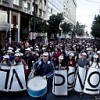
ECONOMY-GREECE: Austerity Measures Unsettle Public
Xristos Kiriakou, 30, joined the Feb. 24 strike against the austerity measures announced by the Panhellenic Socialist Party (Pasok), although he has never been involved in public protests before.« Previous Page — Next Page »


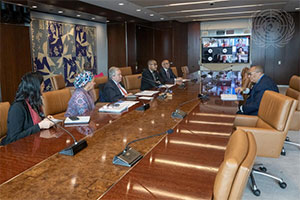 Secretary-General Meets with Members of Debt Expert Group. Credit: UN Photo/Eskinder Debeb
Financial crises are often defined by banking panics, recession, loss of market value, and deflation. Various financial crises at the turn of the 20th century, such as the Asian Crisis of 1997-1998 and the 2007-2008 Global Financial Crisis, have had immense impacts on the world economy. The COVID-19 pandemic also caused a financial crisis when mass lockdowns triggered staggering unemployment rates, a stagnation of economic growth, and led to the 2020 stock market crash. With the Russian invasion of Ukraine, the world has also witnessed a global energy crisis with shortages and increased prices in oil, gas, and electricity markets. According to UNCTAD’s World of Debt 2025, global public debt surpassed $100 trillion in 2024, with developing country debt growing twice as fast as developed economies since 2010. Burdens of debt servicing come with economic slowdowns and demands of austerity from lenders, with some economists arguing that this will lead to a new “lost decade” for the Global South. IPS brings you worldwide coverage of these financial developments and how we should manage these crises.

The Week with IPS

NEXT STOP - SDGs
Tracking global progress towards a sustainable world
Tracking global progress towards a sustainable world
