Languages
Sunday, October 4, 2026



News and Views from the Global South
Labour

It’s Simple, but Requires Determination
I am drafting this on International Women’s Day - March 8 - with an eye towards World Water Day on March 22. On International Women’s Day we celebrate progress in gender equality. At the same time, we recognize how much remains to be done: how many women remain excluded from decision-making across many professions. Changing this is urgent. Water – clean and accessible – is getting scarcer at an alarming rate. While working to change this, we cannot afford to exclude women.
HER LOST LAND
(The Daily Star) - I do not usually write very easily. As someone working mostly with people with little or no literacy, my forte, as I would like to call it, is the oral tradition. I speak, I talk, I converse. I write today based on my perceptions from my work with rural women with whom I have lived and learnt from over the last four decades.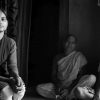
Women, Work, and Migration
Social barriers have historically been blamed for the lack of gender parity in the workplace. But there are other dimensions to this age-old discourse.
Promoting Privatization
Privatization has been central to the ‘neo-liberal’ counter-revolution from the 1970s against government economic interventions associated with Roosevelt and Keynes as well as post-colonial state-led economic development. Many developing countries were forced to accept privatization policies as a condition for credit or loan support from the World Bank and other international financial institutions, especially after the fiscal and debt crises of the early 1980s. Other countries voluntarily embraced privatization, often on the pretext of fiscal and debt constraints, in their efforts to mimic new Anglo-American criteria of economic progress.
The Crisis in Venezuela
My mission to Venezuela in November/December 2017 was the first by a UN rapporteur in 21 years. It was intended to open the door to the visit of other rapporteurs and to explore ways how to help the Venezuelan people overcome the protracted economic and institutional crisis.
Smart Tech Will Only Work for Women When the Fundamentals for Its Uptake Are in Place
Science and technology offer exciting pathways for rural women to tackle the challenges they face daily. Innovative solutions for rural women can, for example, reduce their workload, raise food production and increase their participation in the paid labour market. But even the very best innovative, gender-appropriate technology makes no sense without access to other critical resources, especially secure land rights, which women in rural areas need to flourish.
Decent Work Still a Distant Dream for Many Latin American Women
Women in Latin America earn one-fifth less than men for every hour worked, on average - one of the statistics that reflect the continuing inequality in the world of work that makes it unlikely for the region to meet the goal of equal pay by 2030.
How Cultural & Creative Industries Can Power Human Development in 21st Century
Cultural and creative industries, which include arts and crafts, advertising, design, entertainment, architecture, books, media and software, have become a vital force in accelerating human development. They empower people to take ownership of their own development and stimulate the innovation that can drive inclusive sustainable growth.
Industrial Jobs in Danger When the Climate is to be Saved
The trade unions' solution for a greener world is new jobs with good working conditions. The critics argue that there's not enough time. ”We can either protect industrial jobs in the global north or save the climate”, says political scientist Tadzio Müller.
Criminality, School Dropout and Gender Equality
I assume it was the Swedish author Stieg Larsson´s Millenium trilogy (2005-2007) that generated the popularity of Scandinavian Crime Fiction, as well numerous movies and TV-series that followed in its wake. A typical Nordic Noir novel takes place within a gloomy landscape of dreary towns, or a semi-deserted countryside, where under the thin surface of an apparently well-ordered society, murder, misogyny, rape, racism and international crime syndicates are thriving.
Modern Day Slavery Rated World’s Largest Single Crime Industry
After an exhaustive study of modern day slavery, the Geneva-based International Labour Organization (ILO) concluded there are over 40 million people who are victims of slavery, including 25 million in forced labour and 15 million in forced marriages – with at least 71 percent of them comprising women and girls.
Intricacies of a Broken System: A Convict’s Tale
Inaccessible justice and socio-economic inequality act as core components of the United States criminal justice system. Thousands of individuals are denied their basic human rights and treated as a criminal “underclass” in what appears to be a perfectly “legal” and “just” system.
Reverse Engineering for SDGs
When young people from small towns and villages seek higher education they have to usually migrate to big cities leaving their local communities behind. On completion of their degree from the Universities, they generally prefer staying in cities, in search of a good job and a successful career. Though this is a standard practice, it is also a case of lost opportunities, especially for students who pursue higher education in agriculture. Here is why.
Roma the Movie: The Hidden Drama of Domestic Workers
Roma, a 2018 Mexican film written and directed by Alfonso Cuarón, is currently on a triumphal journey through the world. It won the Golden Lion at the Venice Film Festival, the best director and best foreign language film at the Golden Globe Awards, best director and best picture at the Critics´ Choice Awards, best film, best direction and best cinematography at the British Academy Film Awards. Furthermore, Roma has a record high ten nominations for the upcoming Academy Awards (The Oscars). Not at all bad for a black-and-white movie, which appears to have been directed by a sophisticated cineaste and custom-made for an art-house audience. Moreover, Roma deals with a highly controversial and seldom treated theme – the plight of poor, women domestic workers.
Economic Crisis Can Trigger World War
Economic recovery efforts since the 2008-2009 global financial crisis have mainly depended on unconventional monetary policies. As fears rise of yet another international financial crisis, there are growing concerns about the increased possibility of large-scale military conflict.
Seas of Death and Hope
The Mediterranean Sea is currently a sea of death. On the 20th of June every year, i.e. The World Refugee Day, an organization called UNITED for Intercultural Action publishes a “List of Deaths”, summarising information on where, when and under which circumstances a named individual has died due to the “fatal policies of fortress Europa”. The data are collected through information received from 550 network organisations in 48 countries and from local experts, journalists and researchers in the field of migration. The list issued in 2018 accounted for 27 000 deaths by drowning since 1993, often hundreds at a time when large embarkations capsize. These deaths account for 80 per cent of all the entries,1 there are probably thousands more dead, corpses that were never found and/or not accounted for.
Is UN Planning to Replace Humans with Machines & Robots?
The United Nations-- once facetiously described as an institution whose bloated bureaucracy moves at the leisured pace of a paralytic snail -- is steadily zooming into the field of fast-paced, cutting-edge digital technology where humans may one day be replaced with machines and robots.
Ethics for artificial intelligence
Owing to our varied circumstances and experiences, there are contradictory tendencies to either exaggerate or underestimate the power and importance of artificial intelligence (AI) in contemporary society.
Back to the Future: Vietnam Now and Then
In 1989 I watched Back to the Future, Part II by Robert Zemickis, a complicated story about a youngster who from 1985 time travelled to 2015. Within the movie I spotted a poster from the imaginary 2015: US AIR Surf Vietnam. Back in 1989 I associated Vietnam with the war that lasted from 1955 to the fall of Saigon in 1975 and by different media was brought into the homes of millions, radicalizing and engaging youngsters, not the least me.
Women’s unpaid work: Time to take concrete action
(The Daily Star, Bangladesh) - In 1995, during the Fourth World Conference on Women in Beijing, the UNDP Human Development report stated that women's unaccounted work would amount to USD 3 trillion annually if monetised. Since then women's unpaid and care work has become a much discussed topic around the globe led by rights and development organisations. Recognition of women's unpaid and care work has been included in Goal 5 of the SDGs as a target to be achieved by 2030. However, there is little concrete evidence on how states are going about achieving this target.
Hospital PPPs Undermine Healthcare
Despite all the evidence to the contrary, and substantial opposition from community groups, public-private partnerships (PPPs) are still being promoted to deliver sustainable development. Public-private hospital partnerships are supposed to ensure that the private sector will offer much needed efficiency in healthcare provision.« Previous Page — Next Page »


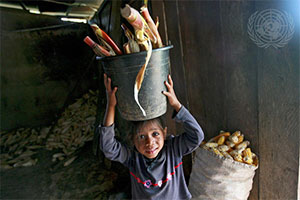 Timorese Girl with Fresh-Picked Corn. Credit: UN Photo/Martine Perret
A global common denominator is the need for a decent job. The economic realities of each country determine just how difficult it is to find one. Despite the labour movement's achievements, serious challenges persist: gender discrimination, child labour, worker migration, the digital divide and AI automation, evaporating pensions, unsafe workplaces, corporate pressure against union organising, negative impacts of trade agreements, and the precariousness of informal employment. The 2025 UN SDG Report identifies jobs and social protections as one of the six priority areas requiring urgent action, with progress either stalled or reversing in many developing nations.
In recent years, the fight to protect labour equality has taken on new dimensions with the rise of Environmental, Social and Governance standards. With the Social aspect aiming to promote equality and human rights, ESG principles have strengthened labour advocacy within corporate and governmental regulatory landscapes. In particular, ESG has become much more institutionalized in emerging economies such as Brazil and China. IPS follows the world’s workers as they confront these challenges - their setbacks and their successes.

The Week with IPS

NEXT STOP - SDGs
Tracking global progress towards a sustainable world
Tracking global progress towards a sustainable world
