Languages
Thursday, November 12, 2026



News and Views from the Global South
Labour
Undisclosed Beheading at Heart of Indonesian, Saudi Row
Indonesia, which has an estimated 1.2 million emigrants in Saudi Arabia, is deeply troubled that Saudi Arabia beheaded one of its citizens in a death penalty sentence without even contacting the government in Jakarta.DEVELOPMENT: Partners, Not Donors Needed For Africa
On an unusually hot Belgian afternoon, Thoko Kaime, leans back in his chair and explains how ‘township’ actually means ‘slum’ in his home country of Malawi.U.S.: Public Workers Fight to Preserve Pensions
Municipal workers across the United States are fighting to preserve their pensions amidst a concerted campaign by corporate interests coupled with budget shortfalls facing all urban areas in the current recession.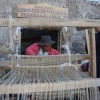
PERU: Indigenous Women Weave New Community Ties
Fuchsia, green and turquoise yarn shuttles swiftly across the wooden loom Dora Huancahuari has learned to use. Together with other craftswomen, she has started a small weaving business which is helping to rebuild their lives in this remote, poverty-stricken Andean community torn by Peru's history of armed conflict.KAZAKHSTAN: Workers Fight Massive Crackdown
Workers striking in what has been described as the biggest organised threat to Kazakhstan’s authoritarian regime in the last decade are being beaten by hired thugs as the government ignores pleas for basic international labour rights to be observed.
BANGLADESH: Child Smugglers Risk Life for a Few Dollars
Thirteen-year-old Jamal is a Bangladeshi bootlegger who carries goods from Haridaspur town in the Indian state of West Bengal to the border district of Jessore in southwest Bangladesh, playing cat-and-mouse with Indian frontier guards every day.INDIA: With No IT Sector, Kashmir Lags Behind
At a time when information technology has revolutionised life across the globe, Kashmir in north India lags behind the rest of the country, and the world, because it has no IT industry to speak of.
Gender Indicators for Global Climate Funds Still an Afterthought
Of the millions of dollars spent on climate change projects in developing countries, little has been allocated in a way that will benefit women. Yet, in Africa, it is women who will be most affected by climate change.
U.S.: New Yorkers Occupy Streets to Protest Budget Cuts
They have taken over a strip of the sidewalk at Park Place and Broadway, handing out flyers to passersby and taping posters to the ground and to the metal crossbars of the scaffolding that shelters them from the rain.ARGENTINA: Deep-Rooted Prejudice Against Immigrants
Although Argentina's immigration law is regarded as one of the most progressive in Latin America, xenophobia and discrimination persist, showing that progress is still more theoretical than practical.JAPAN: Workers Bear Brunt of Nuke Clean-up
Twenty-eight-year-old Yushi Sato washes cars for a living, but they are no ordinary cars. Every day, Sato hoses down vehicles contaminated with radiation from the Fukushima Nuclear Power plant that was damaged by the earthquake and tsunami that hit north-east Japan Mar 11.BOLIVIA: Women Fight Superstition, Machismo in Mining Cooperatives
Hundreds of women belonging to mining cooperatives in Bolivia are striving for the right to mine seams of tin and silver in the country's western highlands, where an age old superstition maintains that the presence of women "scares away" the minerals.
MALAWI: Tax on the Poor Is to Compensate for Tariff Revenue Loss
The decision by the Malawian government to introduce value-added tax (VAT) of up to 16.5 percent on products such as bread, meat, milk and dairy products is being blamed for losses incurred by small-scale businesses. The move comes in response to a loss of revenue due to regional trade commitments.ZIMBABWE: Microcredit Operators Target Salaried Workers
Johnson Gama knows life on the poverty line only too well. A qualified teacher, Gama has in the last few years been unable to survive on his salary despite working in a profession which two decades ago was considered middleclass in Zimbabwe.U.S.: Supreme Court Walmart Decision Is a “Blow to Justice”
Labour and women’s rights groups are strongly criticising the Supreme Court’s rejection of a class action suit brought by current and former female employees of Walmart who sought to represent 1.5 million female employees who claim that the company discriminated against women.
AFRICA: Poor Excluded From Benefits of High Economic Growth
The high economic growth enjoyed by many African states during the 2000s have not led to poverty elimination. This is because the growth did not happen in the sectors where poor people work, as in agriculture, or in the rural areas where poor people live, or simply did not involve labour provided by poor people.
LABOUR: Neither Servants nor Family Members, Simply Workers
The world's tens of millions of domestic workers finally won international recognition that they have the same basic labour rights as other workers, in a convention adopted Thursday at the annual meeting of the ILO.AFRICA: South-South Cooperation Should Focus on Development
African states should be careful not to lose track of their own development plans when they enter into agreements with states outside the continent, despite apparent positive spin-offs.CUBA: Economic Reforms Hitting Women Hard
Women in Cuba are gaining ground in public life and earn the same wages as men. But the gender gap in the workplace is still a challenge for women, who are finding the odds more heavily stacked against them as the government of Raúl Castro adopts economic reforms aimed at "updating" the country's socialist system.TRINIDAD: Unions Use Labour Day to Send Strong Message to Govt
What a difference a year makes. Less than a month after she led the five-party coalition to a convincing victory in the 2010 general election, Prime Minister Kamla Persad Bissessar became the first head of government to address a Labour Day rally in Trinidad and Tobago.India Looking to South Africa to Anchor its Involvement in Africa
Some Indians and Africans believe Africa is on the verge of becoming a world economic power, but changes are needed to ensure that the continent takes up its rightful place in the global economy. From India’s perspective, South Africa is vital to its engagement with the continent.« Previous Page — Next Page »





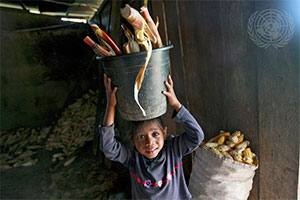 Timorese Girl with Fresh-Picked Corn. Credit: UN Photo/Martine Perret
A global common denominator is the need for a decent job. The economic realities of each country determine just how difficult it is to find one. Despite the labour movement's achievements, serious challenges persist: gender discrimination, child labour, worker migration, the digital divide and AI automation, evaporating pensions, unsafe workplaces, corporate pressure against union organising, negative impacts of trade agreements, and the precariousness of informal employment. The 2025 UN SDG Report identifies jobs and social protections as one of the six priority areas requiring urgent action, with progress either stalled or reversing in many developing nations.
In recent years, the fight to protect labour equality has taken on new dimensions with the rise of Environmental, Social and Governance standards. With the Social aspect aiming to promote equality and human rights, ESG principles have strengthened labour advocacy within corporate and governmental regulatory landscapes. In particular, ESG has become much more institutionalized in emerging economies such as Brazil and China. IPS follows the world’s workers as they confront these challenges - their setbacks and their successes.

The Week with IPS

NEXT STOP - SDGs
Tracking global progress towards a sustainable world
Tracking global progress towards a sustainable world
