Languages
Friday, November 20, 2026



News and Views from the Global South
Natural Resources
UNESCO Protection Crucial – and Controversial
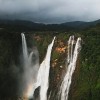
It took six years for a dedicated team of scientists from the Wildlife Institute of India, wildlife officials from six Indian states and officials from the federal ministry to secure international protection for one of India’s most precious biological reserves.
Peru Working to Reform Environmental Impact Assessment System
A random review by the Peruvian government of 205 environmental impact assessments approved between 2001 and 2010 revealed that 86 percent lacked complete information on how they had received the green light from the authorities.
Native Canadians Fear Mining Boom in “Ring of Fire”
With accusations that Canadian resource companies and government officials are disregarding the need for indigenous consent in development projects, First Nations leaders have lashed out by approving a resolution calling for a moratorium on mining development in the so-called Ring of Fire until proper consultation begins.
Profiting from Sustainable Forests on Communal Land in Mexico
Mario Guzmán plans to start cutting down trees again in August and September, the last months of the rainy season. “Now the roads are impassable, and the trucks can’t get in to haul out the timber,” the Mexican farmer, whose community is sustainably managing its forests, told IPS.
Africa Must Earn Its Climate Change Adaptation Finance
With the United Nations Climate Change Conference less than four months away, African countries need to present convincing arguments and successful adaptation projects to attract competitive funding for adjusting to changes in global weather patterns, climate finance experts say.
Scientists Discover New Threats to Corals
Most corals thrive only in shallow waters, where there is enough light for them to grow. But the rapid rise in sea level, due to the melting of polar ice, is making these conditions increasingly scarce.
Deck Stacked Against Women’s Land Rights in Asia
Women across Asia are being shut out from prosperous forestland because of a paradigm geared towards male ownership, according to a new report by the Rights and Resources Initiative (RRI), an environmental non-governmental organisation.
When the Rains Don’t Fall
For many Sri Lankans, the effects of climate change can be summed up in one word: rainfall.
Crops Failing as U.S. Simmers in Record Heat Wave
The United States is suffering one of its most severe droughts in decades, leading to both widespread crop failures and increased public concern about the impacts of climate change.Guyana’s Gold Boom Brings Pollution and Conflict
Pedro Melville, 62, a father of nine from Guyana's northwestern gold and manganese mining district of Matthew’s Ridge, sees the impacts of unchecked prospecting on the local environment every day.
South Korea Offers Marine Technology to Developing Nations
When South Korea inaugurated a U.N. Office for Sustainable Development last October, the new research and training facility was designed to help the world's poorer nations "accelerate economic growth, improve quality of life and protect the environment".
Great Barrier Reef at a Crossroads
The world's largest and best protected coral reef will be doomed by Australia's unprecedented scale of planned coal and gas development, experts say.
Sudan, South Sudan Resume Talks Amid Doubts for Long-term Success
Ahead of an Aug. 2 deadline, the leaders of Sudan and South Sudan over the weekend engaged in their first direct talks since hostilities spiked in late April.
Pacific Coastal Fisheries in Dire Need of Protection
Coastal fisheries in Papua New Guinea, used primarily by local subsistence fisher folk, will face increasing pressure from climate change, compounding the twin problems of population growth and overfishing.Chile Debates Control over Lithium Production
The Chilean government's decision to invite companies to tender offers for mine lithium resources has been widely rejected by mining trade unions and legislators of the opposition.World Bank Approves Contentious Ethiopia-Kenya Electric Line
The World Bank has voted to approve funding credit for a major transmission line that would link Kenya to the controversial Gilgel Gibe III dam site in southern Ethiopia, pushing back against months of calls by local and international rights and environmental groups to keep out of the project.
Local Control Revives Depleted Fisheries
It takes a village to protect a reef and sustain a local fishery, more than two decades of experience now shows.UNDP Predicts Rise of the Global South
When the U.N. Development Programme (UNDP) unveils its annual flagship Human Development Report (HDR) in mid-October, the primary focus will be on a growing new phenomenon on the economic horizon: the rise of the global South and the significant progress in South-South cooperation over the last decade.U.S. Opens Investment in Myanmar Oil and Gas, Over Suu Kyi’s Advice
Following on a May announcement, the U.S. government on Wednesday moved to implement its most significant rollback in longstanding sanctions on Burma, also known as Myanmar.Protests Rising Within China
Tens of thousands of residents in a Chinese city took to the streets last week to protest, forcing the government to scrap plans to build a copper plant. The incident is the latest in a rising number of localised protests as expression of public anger aimed at over-ambitious or corrupt officials in China over-boils.Iowa Firm Accused of Displacing Tanzanians for Profit
A major U.S. energy company, AgriSol Energy, is accused of engaging in land grabs in Tanzania that would displace more than 160,000 Burundian refugees who have lived there for decades, according to a report by the Oakland Institute, an organisation focused on environmental issues.« Previous Page — Next Page »


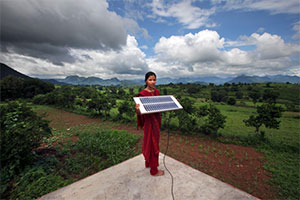 Bringing clean energy to rural India. Credit: Abbie Trayler-Smith / Panos Pictures / Department for International Development
Large reserves of oil, gas and minerals in developing countries generate opulent revenues. They could be used to stimulate economic growth and reduce poverty, but often result in environmental destruction and conflict, benefiting large companies and corrupt governments. Furthermore, competition over natural resources often manifests through geopolitical conflict. For example, before the US-Iraq war, Iraq’s domestic oil industry was nationalized. With US aggression came weakened Iraqi institutions and foreign intervention, thus eventually leading to the privatization of Iraqi oil, leaving the industry now largely dominated by Western companies. As another example, China’s rising investments within the lithium sector in South America are increasing the US-China rivalry across the Western Hemisphere. Notably, Bolivia has the largest reserves of lithium in the world, and the nation’s state-owned lithium extraction firm recently signed a contract with China’s CBC Consortium, while rejecting the entry of Western firms into the nation. In Bolivia’s case, rising Chinese investment in the nation’s lithium sector also raises concerns about environmental sustainability and the sociopolitical rights of Indigenous communities. More broadly, Sub-Saharan Africa holds nearly 30% of global reserves of critical minerals required for low-carbon technologies. Despite this, the region attracts less than 10% of global exploration investment, depicting a critical barrier to both the clean energy transitions and Sub-Saharan Africa’s economic development. Furthermore, resource wealth continues to fuel conflict like Sudan’s civil war, which has led to 9.1 million internally displaced people and is intensely connected to competition over gold, water, and agricultural land. IPS covers news about major oil, gas, and mining projects, their effects on the environment and local communities, and the ideas and actions of the interest groups involved.

The Week with IPS

NEXT STOP - SDGs
Tracking global progress towards a sustainable world
Tracking global progress towards a sustainable world
