Languages
Wednesday, November 18, 2026



News and Views from the Global South
Natural Resources
PERU: Oil Pipeline and Uncontacted Tribes
A 200-km oil pipeline that Franco-British oil group Perenco aims to build in the heart of Peru's Amazon jungle region is at the centre of a controversy because of the reported existence of uncontacted native groups in the area.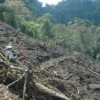
PERU: The Tangled Paths of New Forest Law
Indigenous protests prompted the introduction of a new legislative bill on forests and wildlife in Peru, the second most forested country in South America. Experts consulted by Tierramérica pointed to what the initiative gets right, but also to what's wrong with it.
Q&A: Exposing the “Clandestine Passengers of Globalisation”
Between 30 and 40 percent of taxes that should be collected by developing countries end up in countries operating as tax havens. Overall, these "clandestine passengers of globalisation" contribute to capital flight from developing countries to the tune of 1,000 billion dollars a year.NIGERIA: Acting President Consolidates Power Amid Unrest
This week, acting Nigerian President Goodluck Jonathan dissolved his cabinet, further securing his tenuous hold on the country's top post amidst rising unrest in the Niger Delta and flaring religious tensions in the central region of the country.ECUADOR: Native Leaders Call for Anti-Government Protests
"This is not the end. It is not even the beginning of the end. But it is, perhaps, the end of the beginning." The words of British Prime Minister Winston Churchill after the 1942 defeat of Germany's forces in Africa are an apt description of the situation between the government of Ecuadorean President Rafael Correa and the powerful Confederation of Indigenous Nationalities of Ecuador (CONAIE).FINANCE: Self-Policing of Extractive Industries a “Dismal” Failure
An international initiative that seeks to reform how governments profit from their natural resources should not reduce its existing standards of membership solely because candidate countries have been reluctant or incapable of meeting them, Human Rights Watch (HRW) said on Tuesday.ECUADOR: Avatar Downfall a Blow for Indigenous Communities
Science fiction blockbuster Avatar was the big loser in the Oscar awards ceremony - not only a blow for director James Cameron but also seen as a symbolic reverse in the struggle to recover Amazon rainforest areas in Ecuador from the effects of oil pollution.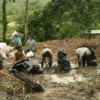
PERU: Suspension of Mining Operation Merely a Placebo
Although the Peruvian government reported that it had suspended the exploration activities of the Afrodita mining company in the country's northern Amazon jungle region to avoid further protests by local indigenous people, officials took no actual steps to bring the firm's work to a halt.LATIN AMERICA: Canada Moves to Oversee Mining Firms
Amidst allegations that Canadian mining companies operating in Latin America have been complicit in the murders and harassment of activists, several positive developments in Canada are seen as a source of hope that firms may begin to be held accountable on human rights and environmental questions.
UGANDA: Pressure Mounts to Make Public Oil Agreements
Uganda’s members of parliament (MPs) are pressurising government to make public details of oil production-sharing agreements it signed with various international oil companies.DR-CONGO: EU Urged to Ban ‘Conflict Minerals’
After the United States senate’s move to stem the flow of money from mineral mines fuelling the brutal civil war in the Democratic Republic of Congo (DRC), the watchdog group Global Witness (GW) is calling on Europe to follow suit.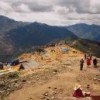
PERU: Relocating Entire Villages for Mines, Dams
Hundreds of Peruvian communities were displaced as they fled the 1980-2000 civil war. Today the government is pushing for urgent passage of a law that would facilitate the relocation of entire villages or neighbourhoods in mineral or energy-rich areas.US-IRAN: Looming Sanctions Could Hit Major Oil Firms
Earlier this month, Iran's ambassador to India said that his country continues to import gasoline from a private Indian oil refinery, even though the firm, Reliance Industries Ltd., had promised last year that it would stop gasoline exports to Iran, fearing U.S. sanctions.RUSSIA: Outpaced by China in Africa
Russian efforts to acquire oil and gas fields in Africa and prospect for minerals on the resource-rich continent have yielded little success over the past decade due to lack of a coherent national strategy, experts say.NIGERIA: U.S. Concerned About Yar’Adua’s Return
U.S. officials expressed concern here Wednesday that the return of Nigerian President Umaru Yar'Adua, after a three-month stay in a Saudi hospital, could destabilise the oil-rich West African country.ARGENTINA-UK: Oil Plans Spark Tension Over Malvinas/Falklands
The imminent arrival of a British oil exploration rig in the South Atlantic ocean has recharged tensions between Argentina and Britain over the Malvinas/Falkland Islands.GUATEMALA: Anti-Mine Activists Encouraged by Canadian Ruling
Ecologists in Guatemala see a recent ruling by Canada's Supreme Court, which ordered Canadian mining companies to carry out rigorous environmental assessments, as a positive precedent that could help improve environmental controls over the mining industry in this Central American country.
GUYANA: Pro-Forest Measures Anger Miners
The mining industry in Guyana is a vocal opponent of new conditions and regulations adopted by the government, which has engaged in a campaign to get millions in international donations for preserving the Amazon jungle as part of the country's contribution to mitigating climate change.PERU-CHINA: Social Responsibility Missing in Growing Trade Ties
China has become Peru's second largest trade partner, with interests basically in mining and oil. However, it is viewed with caution by this Andean nation, because the Asian giant has a reputation for flouting environmental standards and labour rights.PERU: Mining Co’s Making a Mint, Tax Free
Experts and activists in Peru complain that while mining corporations are cashing in on soaring metals prices, they continue to enjoy exemption from royalties and corporate taxes, if they reinvest their profits.
NIGERIA: No Oil Company Will Know Peace in the Creeks
Three flow stations in the oil-rich Niger Delta have had to be closed after a pipeline was sabotaged, according to Royal Dutch Shell.« Previous Page — Next Page »


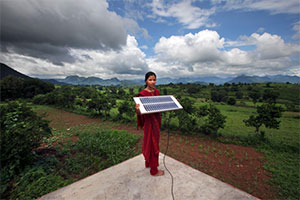 Bringing clean energy to rural India. Credit: Abbie Trayler-Smith / Panos Pictures / Department for International Development
Large reserves of oil, gas and minerals in developing countries generate opulent revenues. They could be used to stimulate economic growth and reduce poverty, but often result in environmental destruction and conflict, benefiting large companies and corrupt governments. Furthermore, competition over natural resources often manifests through geopolitical conflict. For example, before the US-Iraq war, Iraq’s domestic oil industry was nationalized. With US aggression came weakened Iraqi institutions and foreign intervention, thus eventually leading to the privatization of Iraqi oil, leaving the industry now largely dominated by Western companies. As another example, China’s rising investments within the lithium sector in South America are increasing the US-China rivalry across the Western Hemisphere. Notably, Bolivia has the largest reserves of lithium in the world, and the nation’s state-owned lithium extraction firm recently signed a contract with China’s CBC Consortium, while rejecting the entry of Western firms into the nation. In Bolivia’s case, rising Chinese investment in the nation’s lithium sector also raises concerns about environmental sustainability and the sociopolitical rights of Indigenous communities. More broadly, Sub-Saharan Africa holds nearly 30% of global reserves of critical minerals required for low-carbon technologies. Despite this, the region attracts less than 10% of global exploration investment, depicting a critical barrier to both the clean energy transitions and Sub-Saharan Africa’s economic development. Furthermore, resource wealth continues to fuel conflict like Sudan’s civil war, which has led to 9.1 million internally displaced people and is intensely connected to competition over gold, water, and agricultural land. IPS covers news about major oil, gas, and mining projects, their effects on the environment and local communities, and the ideas and actions of the interest groups involved.

The Week with IPS

NEXT STOP - SDGs
Tracking global progress towards a sustainable world
Tracking global progress towards a sustainable world
