Languages
Friday, November 20, 2026



News and Views from the Global South
Economy & Trade

When Only Men Make the News
On the onset, it seems women are everywhere in the media. You switch on the TV, there is inevitably an attractive woman luring you into buying a product. On the radio, there is the 'young new thing' vivaciously flirting with her male co-host while shuffling through songs; and in print, the entertainment pages would simply not sell without a titillating image of a female celebrity and a scoop on her latest rendezvous. But take a closer look, beyond the objectified and stereotypical images of women, being manufactured and mass consumed ad nauseam, and where are the women, really? Take a look at the news media, for instance. Where are the women in the newsrooms, in the bylines on the front and back pages, in the column spaces of our opinion pages, in the talk shows, not simply as hosts, but as commentators on so-called hard issues such as politics and foreign affairs? Where are the women in our news (discounting the PM and her alter-ego), except as wailing victims of violence, natural disasters and such and as muses of our male photographers during cultural festivals?
Deep Discord at United Nations over Global Drug Policy
International drug conventions ultimately aim to ensure the health and welfare of humankind, UN Deputy Secretary-General Jan Eliasson said here Tuesday at the opening of a special three-day session on drugs known as UNGASS.
Arsenic Threat Looms Large in India: Well Switching Provides the Way Forward
An Indian Govt. Parliamentary Committee on Estimates on “Occurrence of High Arsenic (As) content in Groundwater” in December, 2014 stated that more than 70 million people in 96 districts in India is under threat due to As occurrence in groundwater.
Opinion: The Empire’s New Clothes? Conjuring Growth from the TPP
While the main US motivation for the Trans Pacific Partnership (TPP) has been to counter China’s influence in the region, it has also been used to undermine the Doha ‘Development’ Round of trade negotiations to better advance politically influential US corporate interests. Hence, it has become all the more necessary to legitimize the TPP in terms of its ostensible benefits. Touted as a ‘gold standard’ 21st century trade deal, it is nonetheless necessary to ascertain what gains can really be expected and whether these exceed its costs.
Developing countries left out of global tax decisions
Over one hundred developing countries continue to be left out of global tax cooperation negotiations despite leaks such as the Panama papers showing the high cost of tax avoidance.A Cash-Strapped Nation on a Splurging Spree
In our student days there was a commonly used Sinhala phrase – “clean suit empty pocket”. That succinctly conveyed the image of a well-clad individual without a cent on his person.
Climate Change and the Middle East (II)
No Water in the Kingdom of the Two Seas—Nor Elsewhere
There is an oil producing country situated in the Gulf region, made of a cluster of islands. It is small, surface and population wise. But it holds the dubious privilege of ranking top of the list out of the 33 countries most likely to be water-stressed in the year 2040.

Matrix of Biometrics
Biometrics is the science of using physical (and behavioural) features for identification purposes. The most ubiquitous biometrics we encounter is 'the face'. Every individual has a distinct face, which is used by others to identify/ recognise him or her. Human beings also start recognising voices from the age of three months. Handwriting recognition is part of behavioural biometrics. The most versatile and reliable biometric data possibly comes from human genes.
A World Drowning in Oil
Thanks to tensions between Saudi Arabia and Iran, major oil producers couldn’t come to an agreement in Doha to freeze their output to January levels to raise oil prices. The current low oil prices have a lot to do with the grim outlook for global economic growth while supply is growing. China, the second largest economy in the world, is slowing down. Not surprisingly, global oil demand is much lower at 94.8 million barrels a day vis-à-vis supply of 96.3 million barrels a day in the first quarter of 2016 according to the International Energy Agency.
Climate Change (I)
Will the Middle East Become ‘Uninhabitable’?
This is not about any alarming header—it is the dramatic conclusion of several scientific studies about the on-going climate change impact on the Middle East region, particularly in the Gulf area. The examples are stark.
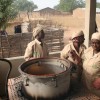
Innovations Boost Income for Women Rice Farmers
Salabanya Tabaitou no longer squints from the irritating wood smoke each time she has to parboil her rice paddy. Now Tabaitou feeds logs into a chute of a specially designed brick stove with a chimney that draws away the smoke. The stove with a stainless steel parboiling vessel cooks her rice in 20 minutes - something she would have spent two hours doing using the traditional method.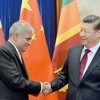
No Free Chinese Takeaway but Chinese Takeover on the Menu
There is no such thing as a free Chinese takeaway; and, if the visiting Lankan high powered delegation led by Prime Minister Ranil Wickremesinghe fancied otherwise, the Chinese hosts made pretty certain the guests got the message crystal clear when the fortune cookie, opened after the diplomatic feast of niceties was over, revealed the thumping bill of fare.
Maquilas Help Drive Industrialisation in Paraguay
“There were cases of people who stopped coming to work after receiving their first wages and then came back a few days later to ask if there was more work,” because they were used to casual work in the informal economy, said Ivonne Ginard.
Genetic Resources to Fight Climate Change
With Kenya’s meteorological records over the last 50 years indicating increased irregularity and variability in precipitation, the effects of changing climate are hitting hard. Rising temperatures as well other forms of extreme weather events in form of droughts and floods are a common feature.
Plugging Asia’s Infrastructure Gap
Investors have an appetite for Southeast Asia's infrastructure projects, but poor structuring of deals keep them at bay.Opinion: Robust Global Economic Recovery Needs Coordinated Policy Response
In the wake of releasing the IMF’s latest assessment of the global economy, Chief Economist Maurice Obstfeld noted in his blog, “Global growth continues, but at an increasingly disappointing pace that leaves the world economy more exposed to negative risks. Growth has been too slow for too long.”
Not So Smart Idea
As Bhubaneswar experiences scorching heat of 43.2 degrees Celsius in early April, 5 degrees above normal, 44-year-old Prasanti Behera barely sleeps at night. Two summers ago, a fire charred 50 homes in her slum and burnt in seconds US$600 she had painstakingly saved over two years for her daughter’s marriage.
Timor-Leste Brings Maritime Dispute with Australia to United Nations
Timor-Leste which won independence from Indonesia in 1999 is now engaged in a new struggle with Australia over rights to oil and gas reserves in the Timor Sea.
Land Tenure Still a Challenge for Women in Latin America
Rural women in Latin America continue to face serious obstacles to land tenure, which leave them vulnerable, despite their growing importance in food production and food security.Right to Information – Is It Catching On in Bangladesh?
There are different ways to measure how the Right to Information (RTI) regime is working in a country. A common measure is to see if citizens' demand for information to public officials is increasing steadily. This would indicate that they are becoming more aware of the law and its importance in exercising their democratic right to monitor the work of the government and its machinery. By doing so, they also seek to ensure that public officials are transparent in their work, abide by the laws and are accountable to citizens.
Panama and Pajama Games
Offshore accounts are nothing new. Their semi-legal and unethical status is well known. Corporate and crony capitalism produce outrageous inequality and concentrations of economic and political power. The wealthy and powerful of the world have secretly stashed away in excess of $20tr in offshore and other tax havens. Moreover, the vast majority of such activity is criminal, illegal or politically unacceptable. Even the inimitable Donald Rumsfeld might agree all this is a “known known.”« Previous Page — Next Page »


 UN Commission on International Trade Law Holds Colloquium on Harmonizing Law in Age of Digital Trade and Finance. Credit: UN Photo/Manuel Elías
Trade has historically been a geopolitical tool that can both be used to propel development as well as entrench inequalities. In various nations in East Asia and Latin America, increased trade, as often seen in export booms, has allowed them to achieve influential standings within the global economy. On the other hand, many low-income countries in Sub-Saharan Africa, Asia, and Latin America struggle to maintain a robust trade performance, and oftentimes are subjugated to exploitative trade dynamics through intense extraction of their natural resources. In recent decades, international trade has reached a new era as emerging economies across the world are rising in economic preeminence. Stable international trade is crucial to world peace as global interconnectedness facilitates reliable diplomacy. Nevertheless, significant challenges are on the rise. Notably, a major wave of United States tariff escalations in January 2025 lifted US import taxes to their highest level since the 1930s, changing market dynamics and forcing renegotiations with global trading partners.These articles are aimed at informing readers about the complexities of trade and its varying effects on development, with a special focus on the consequences of the global economic crisis, the potential of fair trade and the gender implications of trade policies.
Updated by Yilan Batista and Shuli Wong August 2026

The Week with IPS

NEXT STOP - SDGs
Tracking global progress towards a sustainable world
Tracking global progress towards a sustainable world
