Languages
Sunday, November 29, 2026



News and Views from the Global South
Economy & Trade
CHINA: Slowly, Transparency in Public Funds Taking Root
For six decades, governmental budgets and spending in China have remained classified and inaccessible to the general public. Yet this may be about to change.
Q&A: Africa’s Mid-2000s Economic Boom Fuelled Capital Flight
The African continent lost 854 billion dollars due to illicit financial flows during the 39-year period from 1970 to 2008.
Farm Workers Fight for an Extra Cent
Chanting "No more slaves! Pay a living wage!", hundreds of farmworkers, students and others marched 22 miles through central Florida for three days, calling on the Publix supermarket chain to pay an extra penny to the impoverished workers who pick their tomatoes.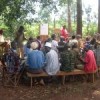
AFRICA: Foreign Investors Safeguarded From Obligations to Locals
Parts of the Tana Delta on Kenya’s northern coastline are being leased to foreigners to grow food and bio-fuels for export. Civil society organisations are worried about such deals as they are done without public consultation while safeguarding investors from requirements that could benefit local communities, such as technology transfer.
ENVIRONMENT: European Activists Against Economic Growth
The global environmental crisis requires replacing the existing capitalist model of production with one that promotes "selective degrowth" of the economy and the restricted and responsible exploitation of natural resources, according to European experts and activists.POLITICS-HUNGARY: Rightward Swing Has Fascist Overtones
In the autumn of 2006 Hungary was rocked by a series of anti-government protests triggered by the release of a tape in which then prime minister Ferenc Gyurcsány confessed to his Social-Democratic Party (MSZP) having lied to win elections that year. Now it is payback time.
Migrants Risk Everything in Arizona Desert Crossing
As he drops his last purification tablet into a pail of swirling, murky water, Sergio, 26, stares out toward the desert. Recently deported from Arizona, where he has a young child and where he has lived for the majority of his life, he explains, "I have to return, it's my home."IBSA – Closer Social Connections, Not Just Gov’t Ties
The IBSA Fund, which finances anti-poverty projects in the most vulnerable countries, is an example of the spirit in which India, Brazil and South Africa wish to build their partnership, their leaders say.BRAZIL-CHINA: An Asymmetric Trading Partnership
"Brazil must increase the added value of its sales" to balance its trade with China, said Brazilian President Luiz Inácio Lula da Silva, the only note of criticism in his references to the partnership between the two countries after they signed a Joint Action Plan.Emerging Powers Cooking Up New International Order
Since the emergence of the Non-Aligned Movement, there has been no louder and more compelling call for a rethinking of the international economic system as the one issued this week in Brazil by the leaders of the main emerging powers.
NAMIBIA: Banking Water for the Future
In the driest capital city south of the Sahara, water engineers are "banking" ground water to meet future demand, but the enormous costs might sink the project before water can be harvested.CLIMATE CHANGE-BOLIVIA: In Defence of Pachamama
Through their ancestral knowledge and traditions, indigenous peoples will make a unique and invaluable contribution to the World People’s Conference on Climate Change and the Rights of Mother Earth, which begins Monday, Apr. 19 in the central Bolivian city of Cochabamba.ENVIRONMENT: Whaling Profitable but Bad for Iceland’s Image
Early April Greenpeace protestors in Rotterdam intercepted seven containers with 140 kg of fin whale meat from Iceland, destined for Japan. They said that the import of whale meat to the Netherlands is illegal, but Dutch authorities turn a blind eye on consignments destined elsewhere.WORLD-ECONOMY: New Directions or Just New Directors?
The business and political leadership of the world's strongest emerging economies meet this week in Brazil. Are these gatherings of the champions of a new and fairer global economy, or of new pretenders to the old throne?COSTA RICA: (In)human Trafficking
The rescue in a Costa Rican port of 36 Asians working as slaves in appalling conditions on two fishing boats once again highlighted the need to fight people trafficking in this Central American country.DEVELOPMENT: Emerging Powers Eager to Get Down to Business
Behind every initiative to form an association of nations, there are "strong economic and commercial interests," said Brazilian Foreign Minister Celso Amorim.
ARGENTINA: Invisible Rural Women
"I had never worked before, and now I produce kilos and kilos of dried fruit to sell. They taught me how to dry peaches, tomatoes, peppers and grapes, and I decided on my own to try it with melons and pears - and they were spectacular," Susana Robledo, a proud new entrepreneur from rural Argentina, told IPS.
ECONOMY: Get the Cab From Shanghai to London
The black, curvy London cab is so much more than just a taxi. It is an icon without which the picture of London can never be complete.Zoellick Sees End of “Third World”
The 2009 global financial crisis marked the definitive end of longstanding paradigms of the global economy and development, such as the "Third World" and "North-South", according to World Bank President Robert Zoellick.MEXICO-CHINA: Trade Winds from the East
China has replaced Mexico as the top supplier of goods to the United States, and experts say that a specific trade strategy is needed for this Latin American country to compete successfully with Beijing in the U.S. market, the world's largest.ECONOMY: Voluntary Simplicity – Answer to Financial Meltdown
The global financial crisis offered an opportunity to reform the economic system and participants in a conference on ‘degrowth’ in Barcelona, last week, appeared determined not to lose it.« Previous Page — Next Page »


 UN Commission on International Trade Law Holds Colloquium on Harmonizing Law in Age of Digital Trade and Finance. Credit: UN Photo/Manuel Elías
Trade has historically been a geopolitical tool that can both be used to propel development as well as entrench inequalities. In various nations in East Asia and Latin America, increased trade, as often seen in export booms, has allowed them to achieve influential standings within the global economy. On the other hand, many low-income countries in Sub-Saharan Africa, Asia, and Latin America struggle to maintain a robust trade performance, and oftentimes are subjugated to exploitative trade dynamics through intense extraction of their natural resources. In recent decades, international trade has reached a new era as emerging economies across the world are rising in economic preeminence. Stable international trade is crucial to world peace as global interconnectedness facilitates reliable diplomacy. Nevertheless, significant challenges are on the rise. Notably, a major wave of United States tariff escalations in January 2025 lifted US import taxes to their highest level since the 1930s, changing market dynamics and forcing renegotiations with global trading partners.These articles are aimed at informing readers about the complexities of trade and its varying effects on development, with a special focus on the consequences of the global economic crisis, the potential of fair trade and the gender implications of trade policies.
Updated by Yilan Batista and Shuli Wong August 2026

The Week with IPS

NEXT STOP - SDGs
Tracking global progress towards a sustainable world
