Languages
Sunday, November 29, 2026



News and Views from the Global South
Economy & Trade
POLITICS: Backlash against Rogue Chinese Investors Alarms Beijing
As China moves up in the world and the need for investment in its own infrastructure declines, Chinese investors and financiers are eyeing lucrative contracts in less developed countries, winning bids to build dams, power plants and highways from Burma to Uzbekistan and Angola.ECONOMY-BRAZIL: Going Up in the World
Brazil's economic achievements are being enthusiastically recognised abroad as never before. "Brazil takes off" was the Nov. 12 cover title of the British weekly The Economist.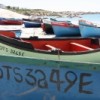
SOUTH AFRICA: Late Start For Crayfish Season
Long after the official opening of the crayfish season in South Africa on November 15, the boats lay idle on the beach in West Coast fishing villages like Paternoster. Fishing permits from the Marine and Coastal Managment unit (MCM) of the Department of Environmental Affairs and Tourism had not been issued.
SOUTH AFRICA: ‘They Haven’t Got a Choice: They Must Go to Sea’
Because of an unfair fishing quota system, more and more small South African fishing communities struggle to survive.MALAYSIA: Social Safety Nets Not Good Enough for Children
Malaysia may have been spared the worst effects of the economic slowdown due largely to its oil and gas reserves and other natural resources.BURMA: China’s Oil, Gas Pipelines Recipe for Abuse, Warn Activists
China’s growing dependence on military-ruled Burma to meet its energy demands is poised to take concrete form when, according to activists, work commences in the coming months on the construction of oil and gas pipelines.
CLIMATE CHANGE: Doors Opening for Carbon Tax
With the chance for a global climate change treaty on hold, a tax on greenhouse gases could be an effective alternative for discouraging the activities that create emissions, say economists and environmentalists.
TANZANIA: Community Still Worried By Mine Contamination
Susanna Solomon is still tending her shamba, but she won't eat the harvest from her farm when it's ready.
COLOMBIA: Farm Subsidy Scandal Exposes Corrupt Policies
The Attorney General's Office of Colombia is keeping a tight lid on developments in its investigation of 113 million dollars in farm subsidies handed out over the last three years to wealthy families, many of whom have no involvement in the agricultural sector whatsoever.CLIMATE CHANGE: Carbon Prices Reflect an Uncertain Year
As what was supposed to be a breakthrough year for action on climate change comes to a close, one indicator of the disappointment surrounding an anti-climactic outcome in Copenhagen and stalled U.S. Senate legislation can be seen on the European Climate Exchange.CUBA-US: Stuck at a Standstill
Relations between Cuba and the United States are still bogged down in longstanding political and ideological differences, in spite of the signals of greater openness and opportunities for dialogue when Democratic U.S. President Barack Obama arrived at the White House.IRAN: Revolutionary Guards Tighten Economic Hold
News that Iran's Revolutionary Guard Corps is withdrawing a billion dollars from the country's Foreign Reserve Fund in order to complete Phases 15 and 16 of the gigantic South Pars gas project has generated concern among Iranian analysts, who believe the move reveals the military organisation's excessive power over Iran's economy.KENYA: Anti-Money Laundering Bill Passes, But Does Govt Mean Business?
Kenya's Parliament finally passed the Proceeds of Crime and Anti-Money Laundering Bill in December. But while the passing of the bill is viewed as a highlight of the Tenth Parliament, many fear it may just be a gimmick by the government to appease international partners.CHINA: What Price Young Lives?
As more and more rural Chinese bid farewell to their impoverished home villages in their pursuit of a better life in bigger cities, leaving behind their young children in the care of relatives or aging parents seems only a small price to pay, especially in times of financial crisis.URUGUAY: ‘Dry Toilets’ Provide Ecological Solution in Slums
Marisabel's modest home had no plumbing, like the rest of the dwellings in this poor suburb on the outskirts of Montevideo, the capital of this small South American country.
MALI: Mobilising in Defence of Migrants
The number of migrants being deported and returned to Mali is increasing. Civil society has mobilised to support the returnees.RIGHTS: Glimmer of Hope for Detained Pakistani Fishermen
Mai Asi has never stopped mourning for her two fishermen sons. They have been held behind bars in India for poaching in the waters of neighbouring Pakistan—a crime for which they were sentenced to two years’ imprisonment.CHINA: Deep Concerns Amid Rapid Economic Growth
Economic figures have now confirmed what analysts have long predicted would be the defining event of 2010. After 30 years of spectacular growth, China is poised to overtake Japan as the world's second largest economy and firmly establish itself as the leading source of global growth.DEVELOPMENT: Tsunami Brings Sea Change in Coastal Lives
Tragic as it was, the Asian tsunami wrought a sea change in the lives of survivors in the sleepy coastal hamlets of southern Tamil Nadu state, where some 8,000 people are known to have died.Q&A: ‘Children Need to Adjust to the Economic Crisis’
During the Asian financial crisis in 1997, Yaowapa Donsay was laid off from the Thai garments factory she was working in. Subsequently, she organised a group of jobless women workers – and that marked her transformation into a labour activist.
MADAGASCAR: Worrying Lapse in Forest Management
The illegal logging of precious wood rose sharply during the political crisis that gripped Madagascar during 2009. Forest communities, who could be part of the preservation of these resources, have been swept up in the rush for rosewood.« Previous Page — Next Page »


 UN Commission on International Trade Law Holds Colloquium on Harmonizing Law in Age of Digital Trade and Finance. Credit: UN Photo/Manuel Elías
Trade has historically been a geopolitical tool that can both be used to propel development as well as entrench inequalities. In various nations in East Asia and Latin America, increased trade, as often seen in export booms, has allowed them to achieve influential standings within the global economy. On the other hand, many low-income countries in Sub-Saharan Africa, Asia, and Latin America struggle to maintain a robust trade performance, and oftentimes are subjugated to exploitative trade dynamics through intense extraction of their natural resources. In recent decades, international trade has reached a new era as emerging economies across the world are rising in economic preeminence. Stable international trade is crucial to world peace as global interconnectedness facilitates reliable diplomacy. Nevertheless, significant challenges are on the rise. Notably, a major wave of United States tariff escalations in January 2025 lifted US import taxes to their highest level since the 1930s, changing market dynamics and forcing renegotiations with global trading partners.These articles are aimed at informing readers about the complexities of trade and its varying effects on development, with a special focus on the consequences of the global economic crisis, the potential of fair trade and the gender implications of trade policies.
Updated by Yilan Batista and Shuli Wong August 2026

The Week with IPS

NEXT STOP - SDGs
Tracking global progress towards a sustainable world
