Languages
Thursday, November 12, 2026



News and Views from the Global South
Economy & Trade

Child Labour Survivor Has a Dream of Freeing Others
Selimatha Dziedzorm Salifu was just seven years old when she went to work for the first time to support her family. Born in the fishing village, Kpando-Torkor, in Ghana, Salifu, was forced to go out and work in the local fishing industry when her father Seidu died, leaving her mother, Mary, with six children to feed, clothe and shelter. The industry is well documented for child slavery and trafficking.
All Africa Student Leader says Political Will, Collective Action, Education and Social Packages Can End Child Labour
Samuel Sasu Adonteng, programme officer for the All-Africa Students Union (AASU), believes that the recent 5th Global Conference on the Elimination of Child Labour has taken us closer to ending child labour for the first time because the voices of those affected were heard.
Former Child Labourer Says Free Quality Education Key to Ending Child Labour
Lucky Agbavor sleeps on a mattress in a church in Accra, Ghana sells juice to earn an income, and has been a child labourer since he was four. Now he has made an impact on the international stage when he participated in the 5th Global Conference on the Elimination of Child labour.
Employee-run Companies, Part of the Landscape of an Argentina in Crisis
"All we ever wanted was to keep working. And although we have not gotten to where we would like to be, we know that we can," says Edith Pereira, a short energetic woman, as she walks through the corridors of Farmacoop, in the south of the Argentine capital. She proudly says it is "the first pharmaceutical laboratory in the world recovered by its workers."
Fighting Inflation Excuse for Class Warfare
A class war is being waged in the name of fighting inflation. All too many central bankers are raising interest rates at the expense of working people’s families, supposedly to check price increases.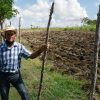
Cuban Farmers Fight Land Degradation with Sustainable Management
Thorny bushes and barren soil made it look like a bad bet, but Cuban farmer José Antonio Sosa ignored other people’s objections about the land and gave life to what is now the thriving La Villa farm on the outskirts of Havana.
Reclaiming Our Future
The Asia-Pacific region is at a crossroads today – to further breakdown or breakthrough to a greener, better, safer future. Since the Economic and Social Commission for Asia and the Pacific (ESCAP) was established in 1947, the region has made extraordinary progress, emerging as a pacesetter of global economic growth that has lifted millions out of poverty.
A Sliver of Hope for Lebanon?
In the midst of what has been an incredibly turbulent period for Lebanon, the conclusion of elections last week ought to be hailed as a chance to focus on the future. This, the first election since the mass uprisings in 2019 against what was seen as a corrupt ruling elite, has shown some signs of the drive for change.
Covid-19: Rise of the Super Rich & Fall of the World’s Poor
Michael Bloomberg, the three-term Mayor of New York city and a billionaire philanthropist, was once quoted as saying that by the time he dies, he would have given away all his wealth to charity – so that his cheque to the funeral undertaker will bounce for lack of funds in his bank account.
Youth Survivors, Activists Will Hold Governments Accountable to Call to Action on Ending Child Labour
Governments of the world must focus on providing quality free education and prosecuting corrupt officials and people who siphon state and donor funds as crucial steps towards taking decisive action to fight child labour across the globe.
What India Needs To Do To Achieve Net-Zero Status by 2070
The recent IPCC report that came out in the month of March 2022 says that, by the end of the century, the temperature rise is likely to be 2 to 3.7 degrees if global emissions, as they stand today, are not curtailed. In fact, according to the report, carbon dioxide (CO2) emissions need to come down by 45 percent globally (compared with 2005) by the end of 2030.
Youth Demand a Voice in Call-To-Action on Child Labour
Ashley has vast work experience. She has laboured by the sweat of her brow in the blistering sun on the streets of Guatemala, in the open fields on farmlands and indoors, toiling for long hours to the hum of a sewing machine. Her work resume might be impressive to some – street trader, farmworker and tailor – but she, like 160 million children around the world, is trapped in child labour, working desperately to support her impoverished family and provide for her education.
Caring for Water Where Mining Leads to Wealth and Tragedies in Brazil
The southeastern Brazilian state of Minas Gerais owes its name to the main economic activity throughout its history: mining – of gold since the 17th century and later iron ore, which took on an industrial scale with massive exports in the 20th century.
Former Child Labourer, now Lawyer, Passes Light of Freedom to Others
Amar Lai’s first memories are working alongside his parents and siblings in a quarry, breaking rocks. He was aged four. Now chatting to Lai, a confident 25-year-old human rights lawyer, it is hard to believe he was once a child labourer.
Technology for Tracing the Work of Child Labour Could Help End the Practice
Technology used to trace the origin and price of consumer goods to ensure farmers earn fair profits could easily be adapted as a tool to fight child labour Fair Trade living wage and income lead Isa Miralles told delegates at the 5th Global Conference on the Elimination of Child Labour.
Oil Business Burns Enough Gas to Power the Whole Sub-Sahara or Two Thirds of Europe
While the attention of mostly Western media and politicians is quasi exclusively hoarded up by the proxy war in Ukraine and its consequences on the energy sector, the world’s big oil business continues to burn Planet Earth with its underreported though highly polluting, wasteful practice of gas flaring.
Political Will and Partnerships Key to Ending Child Labour, says ILO’s Joni Musabayana
With a strong commitment from governments, businesses, labour and consumers, the scourge of child labour can be eliminated, says Dr Joni Musabayana, Director of the International Labour Organisation (ILO) in Pretoria, South Africa.
Africa Expected to Strongly Support Durban Call to Action on Child Labour
Global goals to eradicate child labour will not be achieved without a breakthrough in Africa, where most of the world’s 160 million children entrapped in child labour work in rural regions, mostly in agriculture with their families.
Call to Invest ‘Serious Resources’ in Education, to Stem Tide of Child Labour
"Education is the most powerful weapon you can use to eliminate child labour." So said Dennis Sinyolo, Director of Education International's African Regional Office in Accra, Ghana adapting liberation icon and late South African president Nelson Mandela's famous quote about how education can change the world.
From Child Laborer to Activist, Tara Banjara Asks World to Pledge to End the Scourge
Tara Banjara was four and a half years old when her parents put her to work on the roads, cleaning the garbage and rubble out of potholes to prepare for construction in Nemdi village, Rajasthan, India. She worked in the wind, cold, and rain with her mother, day in and day out, year in and year out. She would return home shattered, too exhausted to eat before falling asleep each night.
Child Labour: No Quick End to Children Trapped in Tobacco Production
Despite World Day Against Child Labour launched in 2002 by the International Labour Organization (ILO), little has changed over the past two decades for the millions of children who remain trapped.« Previous Page — Next Page »





 UN Commission on International Trade Law Holds Colloquium on Harmonizing Law in Age of Digital Trade and Finance. Credit: UN Photo/Manuel Elías
Trade has historically been a geopolitical tool that can both be used to propel development as well as entrench inequalities. In various nations in East Asia and Latin America, increased trade, as often seen in export booms, has allowed them to achieve influential standings within the global economy. On the other hand, many low-income countries in Sub-Saharan Africa, Asia, and Latin America struggle to maintain a robust trade performance, and oftentimes are subjugated to exploitative trade dynamics through intense extraction of their natural resources. In recent decades, international trade has reached a new era as emerging economies across the world are rising in economic preeminence. Stable international trade is crucial to world peace as global interconnectedness facilitates reliable diplomacy. Nevertheless, significant challenges are on the rise. Notably, a major wave of United States tariff escalations in January 2025 lifted US import taxes to their highest level since the 1930s, changing market dynamics and forcing renegotiations with global trading partners.These articles are aimed at informing readers about the complexities of trade and its varying effects on development, with a special focus on the consequences of the global economic crisis, the potential of fair trade and the gender implications of trade policies.
Updated by Yilan Batista and Shuli Wong August 2026

The Week with IPS

NEXT STOP - SDGs
Tracking global progress towards a sustainable world
Tracking global progress towards a sustainable world
