Languages
Thursday, November 12, 2026



News and Views from the Global South
Economy & Trade

When Saviours Are the Problem
Central bank policies have often worsened economic crises instead of resolving them. By raising interest rates in response to inflation, they often exacerbate, rather than mitigate business cycles and inflation.
It’s Time To Globalise Compassion, Says Nobel Laureate Kailash Satyarthi
A mere 53 billion US dollars per annum – equivalent to 10 days of military spending – would ensure all children in all countries benefit from social protection, Nobel Laureate Kailash Satyarthi told the 5th Global Conference on the Elimination of Child Labour.
Youths’ Strident Voices Demand an End to Child Labour
Children's voices took centre stage at the 5th Global Conference on the Elimination of Child Labour, which kicked off in Durban, South Africa, on May 15, 2022. Their voices resonated with the saying: "Nothing about us without us."
Alarm Bells for Africa, Child Labour in Agriculture Requires Urgent Action
The Global Estimate on Child Labour estimates 160 million children are in child labour worldwide – an increase of 8.4 million children in the last four years – with millions more at risk due to the impacts of COVID-19.
Massive Deforestation in the Congo Basin Will Lead to Poverty
Growing up amid under the leafy canopy of the Congo Basin rainforest, the woodland was more than our home. It was our playground, our medicine cabinet, our teacher, our therapist. And it was a source of livelihood with its rich biodiversity and helped shield us from the effects of climate change.
Call to Freedom for Millions of Children Trapped in Child Labour as Global Conference Comes to Africa
Children washing clothes in rivers, begging on the streets, hawking, walking for kilometres in search of water and firewood, their tiny hands competing with older, experienced hands to pick coffee or tea, or as child soldiers are familiar sights in Africa and Asia.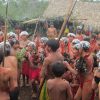
Mining Destroys the Lives of Indigenous People in Venezuela
The voracious search for gold in southern Venezuela, practiced by thousands of illegal miners under the protection of various armed groups, represents the greatest threat today to the lives of indigenous peoples, their habitat and their cultures, according to their organizations and human rights defenders.
Finance Drives World to Stagflation
The world is being pressed by financial interests to raise interest rates, ostensibly to check inflation. After the US Federal Reserve started raising interest rates, more central banks have been doing likewise. Considering inflation’s contemporary causes, such ‘follow the leader’ central bank mimicry cannot check it except by slowing economies. Worse, this has meant taking on huge new risks, seriously damaging world economic prospects in the medium and long-term.
Opacity Surrounds Fossil Fuels in Mexico
In the northern Mexican state of Coahuila the current situation of coal, used mainly to generate electricity, is opaque.
Give Edible Insects a Chance as an Alternative High-Quality Protein Source, say Scientists
Growing up in Samoya Village of Bungoma County in the Western part of Kenya, Elvis Wanjala has fond childhood memories of the rainy season, chasing and catching black-bellied winged termites in the rain.
More Students on the Move in an Increasingly Complex World: Podcast
 This is our third episode on the ongoing movements of people around the world. You can listen to the previous ones, the first about climate migrants and the second on remittances, on any podcast app.

Six Ways Rwanda Is Building Resilient and Sustainable Transport Systems
Over the last decade, Rwanda has invested in building efficient and resilient transport systems. Guided by the country’s Green Growth and Climate Resilience Strategy (GGCRS), the Government of Rwanda has carried out numerous initiatives to promote sustainable mobility and the green economy at large.
Sri Lanka: Economic Meltdown Sparks Mass Protests
Economic crisis has provoked a great wave of protests in Sri Lanka. People are demanding the resignation of the president, blamed for high-handed and unaccountable decision making, exemplified by his introduction of an agricultural fertiliser ban in 2021 that has resulted in a food crisis. People don’t just want the president’s removal: they want a change in the political balance of power so that future presidents are subjected to proper checks and balances. Hope comes from the wide-reaching and diverse protest movement that has put aside past differences to demand change.
Out of Africa: Rich Continent, Poor People
Capital flight from the global South is immense, with widespread adverse effects. A new book proposes measures to curb, even reverse capital flight from Africa. It also offers pragmatic lessons for many developing countries.
Bringing Seeds of Hope to Farmers
Amidst a backdrop of rising food insecurity worldwide and a global food supply chain crisis, many countries are attempting to increase the level of food self-production. One improved input for farming which is receiving renewed attention is improved seed. The two most populous countries in the world, China and India, have recently made ground-breaking moves to improve their competitive position by developing new seeds which will improve their food production and increase resilience to climate change. So far, in 2022, new regulations on using biotechnology (genetic modification and gene editing) have been put in place by both countries to ultimately allow smallholder farmers to benefit from these new seeds.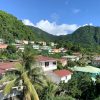
English and Dutch Caribbean Rally Around UN Sustainable Development Framework
When Dominica signed on to the United Nations Multicountry Sustainable Development Framework for the English and Dutch Speaking Caribbean (MSDCF) in March, the country joined others like Saint Lucia, St. Vincent, and the Grenadines, Suriname, and Aruba as part of a 5-year framework to plan and implement UN development initiatives.
Landmark UN Report Issues Stark call for Sustainable Land Management to Save Human Health
With 50% of humanity affected by land degradation, the world must move to a ‘crisis footing’ to conserve, restore and use land resources sustainably, a major UN report has said.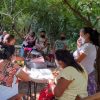
Indigenous Women in Mexico Take United Stance Against Inequality
Every other Tuesday at 5:00 p.m. sharp, a group of 26 Mexican women meet for an hour to discuss the progress of their work and immediate tasks. Anyone who arrives late must pay a fine of about 25 cents on the dollar.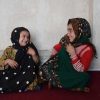
Afghan Moms Receive a Fresh Start in the United States
It was a long, harrowing road for Freshta and Shabaneh, two mothers (their names are pseudonyms) who fled Kabul, Afghanistan, late last summer before eventually settling in the southern New Jersey township of Hamilton.
The World Can Stop Capital Flight Now
Curbing capital flight from developing countries is long overdue. New sanctions against Russian oligarchs show this can be done with the requisite political will. Recent research also shows how to more effectively stop capital flight.
Poor Water Distribution Infrastructure Gives Jamaica a ‘Water Scarce’ Label
It will take billions of dollars and many years to fix a growing problem that has placed Jamaica into the unlikely bracket of being among the world's most water-scarce countries due to the unavailability of potable water.« Previous Page — Next Page »





 UN Commission on International Trade Law Holds Colloquium on Harmonizing Law in Age of Digital Trade and Finance. Credit: UN Photo/Manuel Elías
Trade has historically been a geopolitical tool that can both be used to propel development as well as entrench inequalities. In various nations in East Asia and Latin America, increased trade, as often seen in export booms, has allowed them to achieve influential standings within the global economy. On the other hand, many low-income countries in Sub-Saharan Africa, Asia, and Latin America struggle to maintain a robust trade performance, and oftentimes are subjugated to exploitative trade dynamics through intense extraction of their natural resources. In recent decades, international trade has reached a new era as emerging economies across the world are rising in economic preeminence. Stable international trade is crucial to world peace as global interconnectedness facilitates reliable diplomacy. Nevertheless, significant challenges are on the rise. Notably, a major wave of United States tariff escalations in January 2025 lifted US import taxes to their highest level since the 1930s, changing market dynamics and forcing renegotiations with global trading partners.These articles are aimed at informing readers about the complexities of trade and its varying effects on development, with a special focus on the consequences of the global economic crisis, the potential of fair trade and the gender implications of trade policies.
Updated by Yilan Batista and Shuli Wong August 2026

The Week with IPS

NEXT STOP - SDGs
Tracking global progress towards a sustainable world
Tracking global progress towards a sustainable world
