Languages
Tuesday, October 6, 2026



News and Views from the Global South
Climate Action

Who Wants to Live by the Sea?
For most of history, only those who made their living from the sea chose to live on the coast. Fear of being battered by storms, not to mention vulnerability to attacks from foreign navies, kept most people inland. Gradually that changed and, along with fisherfolk and their families, the idea of a coastal location became something of a cult. High property prices still reflect its popularity. But is it any longer so desirable?
Inequality Also Afflicts Clean Energy in Latin America
The specter of blackouts hovers over the Mexican city of La Paz, the capital of the state of Baja California Sur in Mexico's far northwestern corner, as summer approaches, due to increased electricity demand from air conditioning and insufficient capacity in the local grid.
Nepal Farmers Face Another Year of ‘Agricultural Drought’, Threatening Food Security
Najboon Khatun looks up at the sky every day, searching for the possibility of rain. Clouds come and go without a drop of water. “Winter crops like wheat and vegetables need water, but like last year, there has been no rainfall yet,” says 65-year-old Khatun, expressing her anguish. In her village in Dhanusha, one of the agricultural hubs in the southern plains of Nepal, farmers mostly depend on rain as a source of irrigation. However, they are facing yet another year of drought, affecting winter crops, including wheat, mustard, lentils, and vegetables.
State of the World’s Migratory Species Report ‘Alarming’ Threats, Global Action Urged
A groundbreaking State of the World’s Migratory Species report is calling for accelerated global conservation measures to counter the threat of extinction faced by 1 in 5 of all migratory species.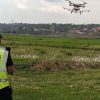
Proven Vector Control Interventions Needed to Stem Malaria Infections in Africa
Experts recommend that the current prevention of malaria in highly endemic countries in Africa should integrate "locally appropriate" control measures to cope with the highest burden of mosquito-borne disease on the continent.
Hit by Climate Change, Authorities Seek to Improve Saffron Yields in Kashmir
Saffron, the expensive spice from the Kashmir Himalayas, has been facing challenges for years, mostly related to yields and inadequate irrigation compounded by the climate crisis.
Road to COP29: Highest Climate Ambitions Needed to Decarbonize World
The road to COP29 has begun in earnest in the backdrop of a global climate report indicating that not only was 2023 the warmest year in a 174-year climate record, it was the warmest by far. Record-breaking temperatures, combined with El Niño, pushed vulnerable and poor nations in the Global South to the frontlines of extreme and severe weather events.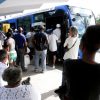
Cubans Are Waiting for a Major Boost to Low Emissions Transport
Jorge Sarmientos said he made a good investment when he bought an electric motorcycle to get around and avoid the anxiety suffered by the users of Cuba's deficient public transportation system or the high prices of private alternatives.
Solar Energy Gives Important Boost to Small-scale Farmers in Chile
The installation of photovoltaic panels to use solar energy to irrigate small farms is expanding quickly in Chile because it lowers costs and optimizes the use of scarce water resources.
Prospects for Commonwealth Countries, Addressing Gaps and Shaping Expectations for COP29
The 28th Conference of Parties (COP28) to the United Nations Framework Convention on Climate Change (UNFCCC) marked a pivotal moment in the global efforts to combat climate change. Held in Dubai, United Arab Emirates (UAE) with the participation of delegates from around the world, COP28 showcased a commitment to drive genuine strides in climate action, bringing optimism and progress to the forefront. Here we explore the implications of COP28 outcomes for small and other vulnerable Commonwealth countries and identify the gaps that still need attention. Additionally, it will discuss concrete expectations for COP29, focusing on critical discussions held at COP28.
Should We Attribute All Climate-Related Disasters Only to Global Warming?
The Republic of Mauritius, an island nation, experienced its latest flash floods since the last bad one in 2013. These floods resulted in the loss of lives and hefty bills for car insurers with over 3000 cars have been damaged.
Why Land Matters with Ede Ijjasz-Vasquez

Land rights are fundamental for three things. One: economic development. No country in the world has gone from low income to Middle income to high income without clear land and property rights and markets. It is a core part of the economy.
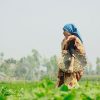
Climate Change Is Taking a Major Toll on Agriculture. Here’s How to Support Farmers
Half the world eats rice. In Bangladesh, everyone eats it. The small, densely-populated nation is the third-highest rice-producing country in the world.
Cooperative Farming Makes Bangladesh’s Coastal Women Farmers Climate-Resilient
In the past, Salma Begum, 40, lost her crops every year due to natural disasters. She lives with her five-member family in Ashabaria village under Rangabali upazila, a remote coastal island in Patuakhali district. “We did not have enough livelihood options in the coastal area where we live. Cyclones, coastal floods, and tidal surges have been having adverse impacts on agriculture, making it difficult for my wage-laborer husband to find work regularly,” she said.
From Chemical Engineer to Climate Justice Avenger: A Journey with Yamide Dagnet
As a child on the French-Caribbean island of Guadeloupe, Yamide Dagnet dreamed of launching rockets into space. She stuck to science, discovering her path in chemical engineering. She became a scientist focused on critical reactions to solving real-world problems like improving water quality in the United Kingdom.
World Bank Enables Private Capture of Profits, Public Resources
The World Bank insists commercial finance is necessary for achieving economic recovery and the Sustainable Development Goals (SDGs), but does little to ensure profit-hungry commercial finance serves the public interest. By failing to address pressing challenges within their purview, the second-ever Bretton Woods institutions’ (BWIs) annual meetings on the African continent, in Marrakech in October 2023, set the developing world even further back.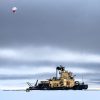
Watching the Arctic Melt, Meteorologist’s Experience on Icebreaker Oden
Conflicting emotions greet the outcomes of COP28. After 28 years of climate conferences, an agreement has, for the first time, proclaimed that fossil fuels are the biggest culprit behind the warming of our planet and stated that it would encourage all nations to “accelerating action in this critical decade so as to achieve net zero by 2050 in keeping with the science." The agreement calls for, among other things, a tripling of renewable energy by 2030, but also an increased pace in the work to develop technical solutions for the separation and storage of carbon dioxide, an extremely expensive and, so far, limited effort.
Caribbean Confidence High Post COP28, But Vigilant Follow-Through on Key Deals Needed
Buoyed by USD 800 million in pledges to the Loss and Damage Fund and an unprecedented agreement to transition away from fossil fuels, but grounded in the reality of the work ahead to meet key climate targets, the Caribbean will need to maintain its focus on sustainable agriculture, renewable energy, and climate resilience.
Peru’s Andean Peoples ‘Revive’ Water that the Climate Crisis Is Taking From Them
"The rich world has caused the climate change that is drying up our water sources, and here we are doing everything we can to recover them because otherwise we will die," said Juan Hilario Quispe, president of the small farming community of Muñapata, just over 50 kilometers from the Peruvian city of Cuzco.
‘Imperfect COP28’ Gives Direction For Managed, Equitable Move From Fossil Fuels
While the outcomes of COP28 are being hotly debated in both the scientific and social justice arenas, the climate conference has taken an unprecedented step forward toward a just transition, says Yamide Dagnet, Director for Climate Justice at the Open Society Foundations.
COP28: Deal to ‘Transition Away’ From Fossil Fuels Agreed
It was an extraordinary COP Summit in a year characterized by record-breaking temperatures combined with El Niño, producing a climatic carnage in Africa—deaths from fatal floods in the Democratic Republic of the Congo, Kenya, and Libya, where floods wiped out a quarter of a city. Deadly cyclones in Malawi, Madagascar, Mauritius, Mozambique, and Zimbabwe; a severe drought in Kenya, Niger, Somalia, Ethiopia, Mauritania, and Djibouti; and a months-long winter heatwave in southern African countries—the need for COP28 to deliver the highest ambition on all items.« Previous Page — Next Page »





The Week with IPS

NEXT STOP - SDGs
Tracking global progress towards a sustainable world
Tracking global progress towards a sustainable world
