
Thursday, November 19, 2026



News and Views from the Global South
Climate Change
Climate-related Security Predictions Coming True in Pakistan
Analysts have been warning for several years that the impacts of climate change directly relate to the national security of the U.S. and other countries, but the link has never been so clear as it is today in northwest Pakistan.
ENVIRONMENT-RUSSIA: Threat To Polar Bears Worries Russian Experts
- Environmental experts in Russia have warned that unless urgent steps are taken internationally, climatic changes combined with man-made factors could reduce the world's population of polar bears by as much as 70 percent by 2060.
ECONOMY: “Sub-Saharan Africa Is Speeding Towards Affluence”
Africa is heading towards a bright economic future, according to a new book co-authored by the former director of the French state agency for economic cooperation and released recently in Paris.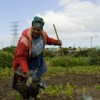
SOUTH AFRICA: Climate Change Policy Ignores Women Farmers
When asked if they have already felt the effects of climate change, Mary-Anne Zimri and Katrina Scheepers eagerly nod their heads. The two small-scale farmers say lack of rain this winter has foiled their planting season, ruined their harvest – and drastically slashed their income.Civil Society Watchdogs Crucial in New Global Order
Six hundred delegates from more than 80 countries flocked to Montreal Aug. 20-23 for the CIVICUS World Assembly in search of innovative ways to approach global challenges like poverty and climate change.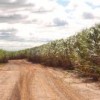
ENERGY: Brazilian Biofuels Run into EU Obstacles
Brazil has begun a counterattack on the European Union's measures for certifying crop-based fuels, which could lead to import barriers for this energy source coming from the South American giant.U.N. Steps Up Pressure to Raise Funds for Pakistan
The U.N. General Assembly met Thursday to express the world community's solidarity with the people of Pakistan and to urge member states to step up their aid commitment to the flood stricken country.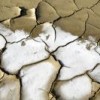
U.N. Decade Hopes to Push Back Encroaching Deserts
Desertification has long been recognised as a major environmental, economic and social problem for countries the world over. But despite major efforts, which started with the United Nations Conference on Desertification (UNOCD) in 1977, the process of land degradation is intensifying.MEXICO: Road Construction Runs Counter to Climate Efforts
Every morning, Mexican biologist Luis Zambrano walks with his daughter to her school, less than a kilometre from his house, in the Magdalena Contreras district, located in the southwest of the Mexican capital.
CLIMATE CHANGE: Cancun Conference Holds Out Little Hope in Face of Extreme Weather
Unusually warm temperatures and more frequent and intense droughts and hurricanes... you have seen the headlines. As options dwindle for negotiating a global pact to fight climate change, the United Nations is pointing to today's "extreme conditions."460 Million Dollars Sought for Pakistan Flood Relief
With an estimated 14 to 16 million people affected by what the Office for the Coordination of Humanitarian Affairs (OCHA) calls "the worst monsoon-related floods in living memory", the U.N. launched a humanitarian flash appeal Wednesday seeking 459.7 million dollars for relief efforts in Pakistan.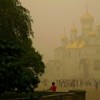
Russia’s Agony a “Wake-Up Call” to the World
A wind turbine on an acre of northern Iowa farmland could generate 300,000 dollars worth of greenhouse-gas-free electricity a year. Instead, the U.S. government pays out billions of dollars to subsidise grain for ethanol fuel that has little if any impact on global warming, according to Lester Brown.
EAST AFRICA: Deadly Cactus Good for Animal Feed
Joseph Ole Morijo is baffled by research findings that cactus plants can be used as animal fodder during drought. Not after he lost his entire herd of 152 goats and sheep to the said plant.INDIA: End to Fuel Subsidies Brings Damaging Diversions
While India's opposition parties are agitating against moves by the pro-reform government of Prime Minister Manmohan Singh to remove subsidies on petrol and other fuels, experts say the country has laboured too long under price distortions that have not benefited poorer people -- or the environment.
WORLD: Cooking Up a Climate Deal
Another round of negotiations towards a global treaty on climate change concluded in Bonn on Aug. 6, with activists calling on parties to rediscover a spirit of compromise and make offers rather than demands.AFRICA: Bring Water Into Climate Change Negotiations
Longer periods of drought, decreased river flow, higher rainfall variability and lower soil moisture content: water is at the heart of the impacts of climate change. Yet the precious commodity scarcely features in climate negotiations.
CLIMATE CHANGE: Native People Demand Autonomy Over Territory
In the view of governments, international bodies and some sectors of civil society participating in negotiations towards new global rules on cutting greenhouse gas emissions, the REDD programme is the last chance to save tropical rainforests.COSTA RICA: Working Towards Carbon Neutrality
With the elimination of certain taxes and the implementation of several green initiatives, Costa Rica is pressing forward in its aim to promote sustainable energy generation with a view to achieving "carbon neutrality" by 2021, the year this country will celebrate two centuries of independence.CLIMATE CHANGE: Cancun May Deliver Little
Little hope has emerged from a meeting here of any binding international regulations to reduce greenhouse gases at the next UN conference on climate change scheduled for November and December in Cancun, Mexico.Transport Workers Fear Job Losses from Climate Change Action
Transport workers are concerned that measures to mitigate climate change, like greenhouse gas emissions reduction, may put their jobs at risk, while experts are urging a transformation of the predominant transport model worldwide.
Q&A: “Incomprehensible” Absence of Women in Global Environment Policy
There is a vacuum in the various texts that currently regulate global policy against climate change: specific mention of the effects of global warming on women and of the role women can play in protecting the environment.« Previous Page — Next Page »


As unsustainable human consumption and production systems are driving changes in average temperatures and weather patterns, "abnormal" is increasingly becoming the norm. So far, a lack of financing has been standing in the way of a comprehensive global plan for climate adaptation, and a global financial crisis has contributed to an increasing reliance on public-private partnerships. Our Climate Change page provides you with the latest news about international and local efforts to address what's frequently been called "the challenge of our time", the forces behind the climate change and the impact it has on the world's most vulnerable populations. Along the way, we bring you stories on growing citizen awareness, new scientific data, and emerging climate policies towards sustainable development.

The Week with IPS

Tracking global progress towards a sustainable world

