
Friday, October 2, 2026



News and Views from the Global South
Climate Change

Climate Activists Target Culture Greenwashing
Civil society is working on all fronts to tackle the climate crisis. Activists are protesting in numbers to pressure governments and corporations to cut greenhouse gas emissions. They’re using non-violent direct action and high-profile stunts, paying a heavy price as numerous states criminalise climate protest.
Tackling the World’s Planetary Emergency
The world is facing a triple planetary crisis of climate change, pollution, and biodiversity loss. Climate change continues to pose an existential threat to humanity, with recent science estimating that we have possibly less than six years left to change course and rapidly reduce greenhouse gas emissions to have a chance of avoiding the worst of the climate crisis.
Conditions In Zimbabwe Worsen From El Niño Drought
Half of Zimbabwe's crops were destroyed and about 7.6 million people are at risk of acute hunger as a result of the El Niño weather phenomenon.
In Samoa, Protecting the Ocean is Our Way of Life
In Samoa, we use a simple phrase to capture our way of life: Fa’asamoa. At the core of this concept is respect for others, devotion to family and a deep appreciation for the preservation of our natural resources. Importantly, Fa'asamoa has enabled us to sustainably fish our vibrant coral reefs for millennia, in a way that provides good health and prosperity for everyone in our communities.
UK: ‘Many in the Climate Justice Movement Are Finding Creative and Imaginative Ways to Protest’
CIVICUS speaks with Chris Garrard, co-founder and co-director of Culture Unstained, about the campaign to end fossil fuel sponsorship of cultural institutions, which oil companies use to try to present a positive public image.

Climate Change Poses Yet Another Stumbling Block for Pakistani Sportswomen
Goalkeeper Rehana Jamali, 17, is jubilant. Her team came in second in the All Sindh Women Hockey Tournament, held last month.
Gender Equality Has Everything To Do with Climate Change
After years of reporting on the frontlines of climate change, I have witnessed the devastating impact extreme weather events have on women and girls. In Kenya’s pastoralist communities in far-flung areas of Northern Kenya, West Pokot, Samburu and Narok counties, droughts mean a resurgence in harmful cultural practices such as outlawed female genital mutilation (FGM), beading and child marriages.
Empowering Women for a Green Future: AFPPD Conference Tackles Climate Change and Gender Equality
Robust data collection, integrated policies, and an accelerated push towards a green economy with a gender focus topped the agenda at a conference in Islamabad, Pakistan, that brought together policymakers, experts, and advocates from across the Asia-Pacific region.
Digital Trade & the Sustainable Development Goals: A Dynamic Agenda
The rapid growth of digitalization has fundamentally altered commerce, impacting production and facilitating the movement of goods. The 2023 Asia-Pacific Trade and Investment Report (APTIR), has pointed out that although digital trade revenues of Asia and the Pacific account for a significant share of global trade, this growth is uneven, with trade concentrated in a few areas, leading to disparities across the region.
Small Farmers Feeling Climate Change Heat Find Little Support From the State
The over 20 million residents of Pakistan’s port city of Karachi, in Sindh province in particular, have been experiencing brutal heat since May. But they are not the only ones bearing the brunt of high temperatures and humidity. Up to 15,000 cattle died due to scorching heat mixed with high humidity which Shakir Umar Gujjar, president of the Cattle and Dairy Farmers Association, Pakistan, said was “no joke”.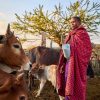
Indigenous Peoples — An Antidote in a World of Crisis
This year’s Equator Prize winners are the antidote we need in a world of crisis. Earlier this year, the World Economic Forum released its annual Risk Report. The key findings highlighted the inescapable trend over the past decade that we are facing a global polycrisis, in which problems of biodiversity loss, climate change, inequality, water scarcity and conflict are increasingly indivisible, simultaneous, and systemic.
Pacific Community Photographic Winners Bring Impacts of Climate Change to Life
The Pacific Community’s photographic competition winners reflect the devastating climate impacts on beautiful and sensitive environments, documenting the most pressing issues the communities who live on the islands face today.
Explainer: Why Kenya is Considered a High Climate Risk for Development Banks
Kenya contributes less than 0.1 percent of global greenhouse gas emissions every year, yet development banks have flagged the East African nation as a high climate risk. This is due to extreme weather changes that are increasingly threatening the country’s development agenda, widening socio-economic inequalities, and deepening rural poverty and hunger.
Pivotal Shift at Seabed Authority: Nations Rally for Deep-Sea Mining Moratorium
The International Seabed Authority (ISA) Assembly meeting concluded last week with no mining authorized, an unprecedented number of States calling for a moratorium or precautionary pause and a new Secretary-General elected.
The Demise of Democracy and Human Rights Violations in Bangladesh: International Financial Institutions’ Culpability
The International Monetary Fund (IMF), World Bank and Asian Development Bank (ADB) are complicit in the gross human rights violations and death of democracy in Bangladesh. They continued to supply financial blood line to the regime, well-documented for its corruptions, human rights violations – such as forced disappearances and tortures in custody – and riggings of votes, including politicization of state institutions in its slide into autocracy. This is despite their professed commitment to transparency, accountability and good governance (IMF, World Bank, ADB).
Partnering for Progress: Maldives’ Sustainable Ocean Initiatives
The ocean is our lifeline, covering 70 percent of the earth’s surface, it is the source of half of the oxygen we breathe, and it absorbs 26 percent of the carbon dioxide we produce. It is home to millions of marine species, contains 97 percent of all of the water on our planet and offers humankind immense resources.
The Price Women Pay for Climate Change
Global warming, widely believed to be a universal crisis, will actually impact girls and women far more than boys and men. It is already known that we live in a patriarchal world, one in which men are afforded far greater opportunities for success while women generally hold less societal power and have access to fewer resources. This especially pertains to developing countries in which agriculture related work, usually delegated to females, depends on a variety of environmental factors and subsequently, significantly hurts their livelihoods.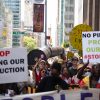
Sportwashing Allegations at Africa’s Top Football Tournament
Following the recent Africa Cup of Nations (AFCON) tournament in Ivory Coast, a continent-wide campaign has emerged on social media challenging the tournament's main sponsor, TotalEnergies, over its involvement in the East African Crude Oil Pipeline (EACOP).
UN: Extreme Heat a Global Issue With an Unequal Impact
“The world must rise to the challenge of rising temperatures," says the UN Secretary-General as he launches a call to action on extreme heat and its impact on society and the environment.
Belém Improving to Host 2025 Climate Summit in Brazil
Hotels and other amenities may be lacking for participants at the 30th Conference of the Parties on Climate Change (COP30), in this northern Brazilian city in late 2025, but the bottom line is they will have a unique experience in the Amazon.
Silenced: Women’s Many Layered Struggles for Climate Justice in Nepal
A group aligned with the mayor of Chhayanath Rara Municipality in the Mugu district of Nepal’s Karnali Province physically attacked Aishwarya Malla for simply asking for a budgetary review of the local government. “As a deputy mayor, I have the right to know where the budget is allocated, but the mayor’s team attacked me,” Malla said. “They did it only because I’m a woman, but they forget I’m also an elected representative with a responsibility to serve people, especially women and marginalized sections of our society.”« Previous Page — Next Page »


As unsustainable human consumption and production systems are driving changes in average temperatures and weather patterns, "abnormal" is increasingly becoming the norm. So far, a lack of financing has been standing in the way of a comprehensive global plan for climate adaptation, and a global financial crisis has contributed to an increasing reliance on public-private partnerships. Our Climate Change page provides you with the latest news about international and local efforts to address what's frequently been called "the challenge of our time", the forces behind the climate change and the impact it has on the world's most vulnerable populations. Along the way, we bring you stories on growing citizen awareness, new scientific data, and emerging climate policies towards sustainable development.

The Week with IPS

Tracking global progress towards a sustainable world

