
Saturday, October 3, 2026



News and Views from the Global South
Climate Change

Malawi Moves To Regulate Carbon Trading Amid Transparency Concerns in Global Market
Malawi is increasingly pitching carbon trading as a source of revenue it needs to bolster the economy, which is suffering from foreign exchange shortages caused by a large trade imbalance and being buffeted by several shocks, including the climate crisis.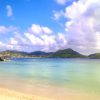
Countdown to Critical Conference for Small Island Developing States
Delegates from small island developing states (SIDS) worldwide are meeting in Antigua and Barbuda to strategize for the next decade.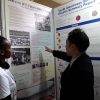
Lessons From Youth-Focused ‘Future Action Festival’ Ahead of UN Summit of the Future
The world has crossed the halfway point to the end of the Sustainable Development Goals (SDGs) era amid multiple, unprecedented, and significantly destructive global shocks. Two of the most pressing global challenges are the climate crisis and the threat of nuclear armament. Of serious concern is a severe lack of youth engagement on issues of critical global importance. Speaking to IPS during the 2024 UN Civil Society Conference, the outcome of which will inform high-level discussions when the UN hosts hundreds of world leaders, policymakers, experts, and advocates in September at the Summit of the Future in New York, Tadashi Nagai stressed the importance of coalition and movement building and youth engagement to escalate progress towards attainment of the SDGs.
Education Cannot Wait Interviews Bruno Maes, UNICEF Representative to Haiti
Bruno Maes is the UNICEF Representative in Haiti. He officially took office in August 2020. A Belgian national, Mr. Maes previously served as UNICEF Representative in Madagascar from 2007 to 2012, in Chad from 2012 to 2015, and recently in Egypt from September 2015 to 2020.

Education Cannot Wait’s #ShareTheirVoices Global Advocacy Campaign Launched by ECW Executive Director Yasmine Sherif in Lead Up to United Nations Summit of the Future
In the lead up to United Nations Secretary-General António Guterres’ Summit of the Future, taking place on 22-23 September 2024, Education Cannot Wait is supporting the global #ActNow Campaign with an urgent call to increase funding for the +226 million crisis-impacted children worldwide urgently in need of an education through ECW’s global #ShareTheirVoices campaign.
Small Island Developing States can be Nature-Positive Leaders for the World
Small island developing states (SIDS) are scattered across the globe, dotting the Pacific Ocean, the Caribbean, the west and east coasts of Africa and the Indian Ocean.
Panama’s Elections: Has Impunity Prevailed?
Regional experts called it Panama’s most important election since the 1989 US invasion that deposed de facto president General Manuel Noriega. Panamanians went to the polls amid high inflation and unemployment, with a stagnating economy. Endemic corruption was also high on their long list of concerns, along with access to water, education and a collapsing social security system.
International Diplomat Erik Solheim on Politics, Climate Change, Much-Needed UN Reform and Trump
Erik Solheim, a senior internationally renowned politician and diplomat, has long been an advocate for combining development assistance with private investment and better taxation systems in recipient countries.
Rising Temperatures Drive Human-Wildlife Conflict in Zimbabwe
Rising temperatures are being blamed for an increase in human-wildlife conflicts in Zimbabwe as animals such as snakes leave their natural habitat earlier than usual.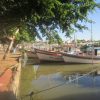
Women Organize to Fight Coastal Erosion in Southeastern Brazil
Coastal erosion has been aggravated by climate change and has already destroyed more than 500 houses in the town of Atafona in southeastern Brazil. Movements led largely by women are working to combat the advance of the sea and generate economic alternatives.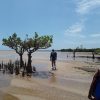
Ocean Action on Global Agenda as Negotiations to Save Biodiversity Deepen
The oceans are as fascinating as they are mysterious. Home to the largest animals to ever live on Earth and billions of the tiniest, the top 100 meters of the open oceans host the majority of sea life, such as fish, turtles, and marine mammals. But there is another world far below the surface. In the belly of the ocean, there are seamounts—underwater mountains that rise 1,000 meters or more from the seafloor.
Biodiversity Masterplan: Negotiations on Crucial Science, Technology for Implementation Underway
The triple planetary crises of climate change, biodiversity loss, pollution, and waste are escalating. At the current pace, the world is on track to lose one quarter of all plant and animal species by 2030, with one species already dying out every 10 minutes. One million species face extinction. Human activity has already altered three-quarters of the land on Earth and two-thirds of the ocean.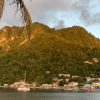
Latin America and the Caribbean Hit with Record-Breaking Heat and Other Climate Effects in 2023
Every year for the last four years, a collaborative effort involving scientists and other experts has assessed the state of the climate in Latin America and the Caribbean. The findings have revealed increasingly alarming trends for the world’s second-most disaster-prone region.
Choose Hope: Standing at the Crossroads of the Future
We are at the tipping point in human history, facing major existential crises. The conflict between Russia and Ukraine has heightened the risk of a nuclear weapon being used since the Cold War. Furthermore, the climate crisis is accelerating. In these crises, the most affected are those in vulnerable situations.
Beyond the Fields: Unraveling Zambia’s Drought Crisis and the Urgent Call for Climate-Health Solutions
For most families in Zambia, April is traditionally a month of plenty—it is typically the beginning of a harvest season for various food and cash crops. Both fresh and dried maize, groundnuts, pumpkins, and a whole variety of both traditional and exotic food crops are usually in full supply and readily available for consumption, supporting household food security and nutrition.
LDCs Need Concessional Grants, Not Loans, Say Experts
Olaide Bankole was born and raised in Nigeria, and he observed how climate change was evident in the country with temperature rises and rainfall variability and how drought, desertification, and sea level rises have been affecting its people. He is also aware of how rising sea levels threaten southern Nigerian cities like Lagos and coastal areas, increasing their vulnerability to flooding and waterborne diseases.
UN Secretary-General’s message for World Press Freedom Day
 The world is going through an unprecedented environmental emergency which poses an existential threat to this and future generations.

We Should Aim to be at Peace with Nature, Says David Cooper of UN Convention on Biological Diversity
In a world faced with habitat loss and species extinction, climate change, and pollution, it’s crucial that countries develop their national action plans and create a society that lives in harmony with nature, says David Cooper, Acting Executive Secretary of the UN Convention on Biological Diversity (CBD), in an exclusive interview with IPS.
Press Freedom and Climate Journalism: United in Crisis
Journalism is in crisis, again. The challenges to press freedom are enormous and multi-faceted and they are deepening -- in “free” and open societies as well as autocracies. And there are no simple solutions. For individuals and entire media outlets the crisis is existential.
Using Industrial Waste to Fight Pollution in Brazil
Biogas sounds like redemption, the conversion of the sinner. Its production involves extracting energy from filth, from the most disgusting environmental pollution, and at the same time avoiding the worsening of the global climate crisis.
Education Cannot Wait Interviews Amy Clarke, Co-Founder and Chief Impact Officer for Tribe Impact Capital LLP
Amy Clarke is Co-Founder and Chief Impact Officer of the multi award-winning Tribe Impact Capital, a dedicated impact wealth manager and B Corps, based in London. She has over 29 years of experience in sustainability, both leading in-house teams (Microsoft and Bank of America) and as a management consultant specialising in climate and sustainability (PwC and EY). Amy serves as a Trustee to B Lab UK and is also an Advisor to fellow B Corps, Greenheart Consulting and Black Seed Ventures. She sits on the Global Steering Group of the Global Ethical Finance Initiative (GEFI) and the Investment Committee of The Blue Cross (having previously served as a Trustee). Amy has both BSc and MSc degrees in environmental studies. In her spare time, she serves as Head of Catering and Entertainment for her three-legged rescue Staffordshire Bull Terrier.
« Previous Page — Next Page »


As unsustainable human consumption and production systems are driving changes in average temperatures and weather patterns, "abnormal" is increasingly becoming the norm. So far, a lack of financing has been standing in the way of a comprehensive global plan for climate adaptation, and a global financial crisis has contributed to an increasing reliance on public-private partnerships. Our Climate Change page provides you with the latest news about international and local efforts to address what's frequently been called "the challenge of our time", the forces behind the climate change and the impact it has on the world's most vulnerable populations. Along the way, we bring you stories on growing citizen awareness, new scientific data, and emerging climate policies towards sustainable development.

The Week with IPS

Tracking global progress towards a sustainable world

