
Friday, November 6, 2026



News and Views from the Global South
Environment

Biogas in Argentina: Turning an Environmental Problem into a Solution
"Until five years ago, we didn't know about the circular economy, but today our waste generates environmentally neutral products that also offer a return,” says José Luis Barrinat, manager of a cooperative that brings together some 550 small farmers in Monje, Argentina.
Bridging the Digital Divide Will Save Our Planet
Data, analysis and information are essential building blocks in our race to save humanity from the clear and present risks posed by the climate crisis.
CORRECTED VERSION: Struggle for the Future of Food
Producers and consumers seem helpless as food all over the world comes under fast growing corporate control. Such changes have also been worsening environmental collapse, social dislocation and the human condition.
Brazil Relies on Rainfall that Depends on the Forests
"Rainfall is fundamental; the streams and rivers we have would not suffice for irrigation, even if they were the Amazon River," said Dirceu Dezem, referring to the amount of water required for the extensive crops in Brazil’s midwest.
UN Banks on Water as the ‘Game Changer’ in Food Production and Consumption
As the United Nations prepares for its solutions-based Global Food Systems Summit in September, officials say resolving issues around water scarcity, pollution and wastage is crucial transforming food production and consumption.
Why Experts are Saying It’s a ‘Make or Break’ Moment for Forests
A new global report on forests says that while the COVID-19 pandemic is the latest threat to achieving ambitious forest protection goals, it has brought the importance of forests to global well-being into sharp focus, and that this recognition must now be met with collection action.
The Complex Energy Transition of Chile’s “Sacrifice Zones”
Standing on Punta Ventanilla, Carlos Vegas, 65, looks across at the industrial park which has been there most of his life. He looks at the impact of the 15 industries spread around the bay that connects the towns of Quintero and Puchuncaví, in central Chile.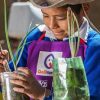
Transparency Offers Pathway to a More Sustainable Earth
Last week, the world marked Earth Day – an opportunity to put the spotlight on the pressing needs of our planet, in the face of ever-growing impacts by humanity, and galvanize action to change practices and behavior. Yet these issues were not, and cannot be, addressed in a single day. Resolve and action to protect the environment is a 365 days-a-year endeavor.
To Effectively Combat Climate Change, Listen and Act on Ideas from the Youth
Recently, I participated in Kids Climate Summit 2021, a virtual event that gave younger students an opportunity to take a stance on climate change, express their concerns, and learn about global climate and the actions we all can take to mitigate climate change.
Youth Demand Action on Nature, Following IUCN’s First-Ever Global Youth Summit
Following almost two weeks of talks on issues such as climate change, innovation, marine conservation and social justice, thousands of young people from across the globe concluded the first-ever International Union for Conservation of Nature’s (IUCN) One Nature One Future Global Youth Summit with a list of demands for action on nature.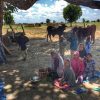
This Earth Day, a People’s Perspective is What is Most Needed
Today marks Earth Day and all around the globe, advocates and activists, concerned citizens and the like will gather to raise awareness about the climate crisis.
Agro-industry Surrounds Xingu Indigenous Territory in Brazil
Watatakalu Yawalapiti is 40 years old. She was born in the Amakapuku village, surrounded by a large preserved forest in the heart of Brazil. She spent part of her childhood on the white sands and clear waters of the Tuatuari river. At other times, she would sit in a circle listening to her great-grandfather telling stories, like the one about how the white man would arrive with a huge blade and cut down the trees as one shaves one's body hair.
Earth Day 2021: Passing On a Cleaner World
Preserving the beauty and wonder of our natural world for future generations should certainly be a goal everyone can get behind. While progress is often stymied by polarizing debates, clean air and water should be a priority for everyone.
GGGI appoints Kyung Hee University Professor, Mr. Kyung Nam Shin, as Assistant Director-General and Head of Investment and Policy Solutions
The Global Green Growth Institute (GGGI) has officially appointed Professor Kyung Nam Shin as Assistant Director-General and Head of Investment and Policy Solutions. He will assume his duties at the GGGI Seoul headquarters on May 1, 2021, to further the organization’s aim to catalyze green investments and policies for its Members.
Another False Start in Africa Sold with Green Revolution Myths
Since the Alliance for a Green Revolution in Africa (AGRA) was launched in 2006, yields have barely risen, while rural poverty remains endemic, and would have increased more if not for out-migration.
Kenya’s Poor Need Different Lockdown Restrictions to Survive, Scientists Urge
After Joseph Mandu lost his job because of the country’s coronavirus lockdown, he would still wake every morning and leave his home in the City Carton slum in Kenya’s capital, Nairobi. But instead of heading to the restaurant he worked at as a pool-table attendant, he would walk around City Carton searching for odd jobs to earn an income so he could pay for the food his family needed to survive.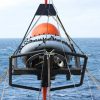
Studying Marine Life’s Brief Break from Human Noise
Travel and economic slowdowns due to the COVID-19 pandemic have combined to brake shipping, seafloor exploration, and many other human activities in the ocean, creating a unique moment to begin a time-series study of the impacts of sound on marine life.
Ecological Cookstoves Help Preserve El Salvador’s Coastal Mangroves
 A score of coastal communities in El Salvador are staking their bets on sustainable development as a form of life that does not overexploit natural resources diminished by years of government neglect and a lack of environmental awareness, using instruments ranging from ecological cookstoves to mangrove reforestation.
COVID-19 Teaches Us to Better Manage Global Systemic Risks
Millions of lives lost. Trillions of dollars in economic damage. Over 120 million more people pushed into extreme poverty. The human and economic toll of the COVID-19 pandemic is almost unimaginable – a once-in-a-century catastrophe.
New Report Calls for Improved Eating Habits in a World of Extremes
With the two extremes of global hunger and obesity on the increase, a new report suggests a radical reset for food and nutrition to ensure the long-term sustainability of livelihoods and the environment.
Barilla Foundation Brings Health and Climate Together in New Double Pyramid
Following an extensive scientific review, the Barilla Center for Food and Nutrition Foundation (BCFN) is preparing to launch a new food systems model which incorporates nutrition and climate.« Previous Page — Next Page »





Through our global network of local writers, we are continuing our award-winning coverage of global and local environmental challenges, with a focus on the people for whom the ecosphere matters in a direct way: rural dwellers who have little means to protect themselves against adverse conditions; communities that need to switch to sustainable development in order to survive; poor women and children, who are the most vulnerable in natural disasters. Sponsored by the United Nations Environment Program (UNEP), the United Nations Development Program (UNDP) and The World Bank (WB), IPS also maintains the award-winning Tierramérica, a specialised information service on environment and development.

The Week with IPS

Tracking global progress towards a sustainable world


