
Friday, November 6, 2026



News and Views from the Global South
Environment

Farmers in Brazil Benefit as Biogas Replaces Firewood
"Biogas is worth gold to us, we can no longer live without it," Claudete Volkswey, a poultry farmer in the municipality of Toledo, in the southwestern state of Paraná, Brazil, said enthusiastically about the new source of energy that has allowed her to get a good night’s sleep again, because she no longer has to get up to stoke the fire every two hours.
Overcoming COVID-19: World Leaders Must Finance a More Equal World to Beat Pandemics
Leaders at this year’s World Bank/IMF Spring Meetings (April 5-11) will determine how best to recover from one of the biggest crises the institutions have faced since their founding in 1944—COVID-19’s impact and its economic aftermath.
Indonesia’s Climate Villages Where Communities Work Together to Mitigate Climate Change
Residents of Ngadirejo village in Sukaharjo regency, Central Java province, had often found themselves helpless when their wells dried up or water flooded through their homes. But thanks to a national campaign called Program Kampung Iklim, known by its acronym ProKlim, they now have solutions to this flooding that generally occurs because of a lack of adequate water catchments.
A Post-COVID-19 Recovery will not be Possible if Water, Sanitation & Hygiene are not High on the Agenda
This World Health Day, G20 finance ministers will meet in Rome, Italy, to discuss how they will build back from the pandemic. The global economy is and concerted effort, coordination and imagination is needed to enable not only a worldwide recovery but also to ensure that the world’s poorest people are not left behind.
On World Health Day, a Call for Equity, Justice & the End of Paternalism
The past year has forced many of us to address difficult truths about how we treat and take care of each other — among them is a reckoning with racism and injustice.
Transforming Global Food Systems
Jose Graziano da Silva on the Path to Zero Hunger
The battle for the future of food has grown contentious, and José Graziano da Silva has become a lightning rod for criticism. In 2014, as Director General of the United Nations Food and Agriculture Organization (FAO), he presided over the institution’s first International Agroecology Symposium, opening what he called “a new window in the Cathedral of the Green Revolution.” The FAO has since then formalized support for “Scaling Up Agroecology” while continuing to promote the kinds of chemical-intensive agriculture associated with the Green Revolution.

Getting to Better than Normal in a Post-COVID-19 World
Girls in Asia don't want to go back to normal – they want to go "back to better than normal", says Zara Rapoport, a delegate during an online seminar on the impact of the COVID-19 pandemic on gender.
Mexico Looks to the Heavens for a Solution to Its Water Crisis
In neighbourhoods like Tehuixtitla in southern Mexico City, rain brings joy, because it provides water for showering, washing dishes and clothes, and cooking, by means of rainwater harvesting systems (RHS).
Should the 2021 Climate Summit in Glasgow Still Take Place?
Among the COVID-19 pandemic’s many damaging impacts, could a halt to international progress on environmental issues be added to the list?
Conserving Tigers, Elephants and Bison, One LPG Stove at a Time
As the sun sets over the canopy of Albizia amara trees, a thin blanket of fog begins to descend over the forests of the Malai Mahadeshwara Hills Wildlife Sanctuary, which lies roughly 150 km south of the Indian city of Bangalore. Not so long ago, plumes of smoke would rise from the hamlets dotting the forests as women busily cooked dinner for their families over wood stoves. But tonight, dinner will be a smokeless affair in dozens of villages as communities have opted for the use of liquefied petroleum gas (LPG), a clean burning fuel that has given a boost to the health and safety of both the forest and its people thanks to a unique conservation project.
Recipes with a Taste of Sustainable Development on the Coast of El Salvador
Salvadoran villager Maria Luz Rodriguez placed the cheese on top of the lasagna she was cooking outdoors, put the pan in her solar oven and glanced at the midday sun to be sure there was enough energy for cooking.
What’s in a Hurricane Name? Dorian, Laura, Eta & Iota Retired from WMO List
The World Meteorological Organization’s (WMO) Hurricane Committee decided at its annual meeting to retire four tropical cyclone names from its rotating list after assessing the record-breaking hurricane 2020 season.
Covid19 a Wake-up Call to Address Development Fault Lines in Asia and the Pacific
The world is emerging from the biggest social and economic shock in living memory, but it will be a long time before the deep scars of the COVID-19 pandemic on human well-being fully heal. In the Asia-Pacific region, where 60 per cent of the world lives, the pandemic revealed chronic development fault lines through its excessively harmful impact on the most vulnerable. The United Nations Economic and Social Commission for Asia and the Pacific (ESCAP) estimates that 89 million more people in the region have been pushed back into extreme poverty at the $1.90 per day threshold, erasing years of development gains. The economic and educational shutdowns are likely to have severely harmed human capital formation and productivity, exacerbating poverty and inequality.
Humanitarian & Food Aid Can Never be Enough to Manage Cascading Disasters
The intersection of crisis, climate change and COVID-19 has resulted in a “rapid rise in hunger”, according to United Nations World Food Programme (WFP) Deputy Executive Director Amir Abdullah.
Hope & Numbers: What will it take to Tip the Scales on Climate Action?
We should be well on the way to solving the climate crisis by now. According to the Paris Agreement, last year should have been the year that all countries presented their commitments to cut carbon emissions for limiting global climate heating to within 1.5oC of pre-industrial levels.
Water Governance and Data Collection is Key to Reach Development Goals
Prioritising water governance and ensuring data collection and investment in groundwater use around the world are some of the key issues that need to be addressed with regards to achieving development goals.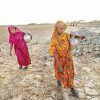
World Water Day: Cry for Water in the South
Roksana Khatun moves aside dirt and floating leaves from a pond, slowly lowers her earthen pitcher into it and fills it with around 20 litres of water.
Why Water & Sanitation Systems are Vital for the Economy
This World Water Day, we celebrate the value of water, which at first might be a given: after all, water is the basis of all life. Without water we have no health, wealth, equality, or education.
The Value of Water Goes Far Beyond its Stock Price
In the midst of a global pandemic, when the presence of water in our lives has never seemed more important, its future availability has also never been more uncertain.
Access to Safe Water Never Loses Value
The global community is celebrating World Water Day 2021. In the COVID-19 pandemic era, the importance and value of water for all people has never been clearer. Access to safe water is essential for public health and thriving communities.
Indigenous Communities in Mexico Fight Energy Projects
Indigenous farmers on communally owned lands have blocked since 2016 a private solar farm in the southeastern Mexican state of Yucatan by means of legal action, due to the company’s failure to hold consultations with local native communities and the risk of environmental damage.« Previous Page — Next Page »





Through our global network of local writers, we are continuing our award-winning coverage of global and local environmental challenges, with a focus on the people for whom the ecosphere matters in a direct way: rural dwellers who have little means to protect themselves against adverse conditions; communities that need to switch to sustainable development in order to survive; poor women and children, who are the most vulnerable in natural disasters. Sponsored by the United Nations Environment Program (UNEP), the United Nations Development Program (UNDP) and The World Bank (WB), IPS also maintains the award-winning Tierramérica, a specialised information service on environment and development.

The Week with IPS

Tracking global progress towards a sustainable world


