
Friday, November 6, 2026



News and Views from the Global South
Environment

A Moral Failure: Billions of People with No Access to Clean Drinking Water
Water is integral to sustainable development, but we are well behind on the goals and targets that we have set ourselves.
Clean Water Vital for Protecting Those on the Frontline of Climate Change in Post-Pandemic World
For many, the last year will be remembered as the time our day-to-day lives screeched to a halt. As Covid-19 spread mercilessly across the world, wreaking havoc on health and livelihoods, world leaders, health experts and scientists grappled with how to protect populations and stem the tide of the virus.
Sustainable Development Goals Can Guide Asia-Pacific to Build Back Better
The COVID-19 crisis poses an unprecedented threat to development in the Asia-Pacific region that could reverse much of the hard-earned progress made in recent years. The good news is we know how to tackle this challenge. Recovery from the pandemic and our global efforts to deliver the United Nations Sustainable Development Goals (SDGs) by 2030 must go hand-in-hand. The Goals provide a compass to navigate this crisis, faster and greener, everywhere and for everyone.
COP26 and India’s NDCs
Climate change is one of the most pressing issues that the world is collectively facing at the moment. It is contended that strengthening the global response is pertinent to combat the threat of climate change.
International Women’s Day, 2021
More Women Leaders Make Better Societies
This year it will be 128 years since the right of women to vote was first recognized, with New Zealand becoming the first nation to allow the participation of women in its general election in 1893.
From the suffragettes - to today’s feminists, both men and women have fought to increase women’s political participation and representation. It has been a slow, sometimes bitter and occasionally even dangerous struggle. Yet global progress remains slow and uneven – as it does in Samoa. As we approach the 2021 General Election on 9 April, it is important to remember that women’s full and effective participation in all areas of life drives progress for everyone.
Only Small Percentage of COVID-19 Recovery Allocated to Green Initiatives
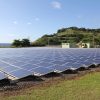
Last year, only $368 billion of a $14.6tn budget geared towards COVID-19 recovery measures across the world’s largest 50 countries took into account green recovery initiatives, according to a report launched yesterday, Mar. 10.
International Women’s Day, 2021
Why Green Growth and Climate Action Fall Short Without Addressing Gender Inequality
As the global effort to address climate change has strengthened over the last few years, so has the realization that rising temperatures and climactic disruptions disproportionately impact women, particularly in developing countries, as they tend to be more dependent upon natural resources and are thus overrepresented in resource-intensive economic sectors. Furthermore, inherent in gender inequality are disadvantages for and discrimination against women in all facets of society, including in the economy and politics. Thus, it is unfortunate, yet perhaps unsurprising, that these structural disparities are mirrored in the negative effects of climate change. Therefore, if gender differences are not incorporated into climate change plans, women will be unable to access the co-benefits that arise from concerted climate action.

International Women’s Day, 2021
Recognizing Rural Women as Central to Cost-COVID Recovery: An Imperative for International Women’s Day
In times of crisis, policymakers have a tendency to prioritize economic recovery while leaving “social issues” like women’s empowerment on the backburner. During the COVID-19 pandemic, however, women’s leadership is as essential to full and meaningful recovery as it is to basic human rights. As the world mobilizes to design and build a post-COVID landscape, women’s rights, interests and priorities must not only be included in international recovery agendas but pushed to the forefront. To achieve this, women themselves must not simply be included in the discussion, but equitably represented in leadership roles.

Hundreds of Wells Alleviate Water Shortages in Venezuelan Capital
Thousands of families in the Venezuelan capital have dipped into their savings or gone into debt, in the midst of the worst economic crisis in this country since the 19th century, so that their building has access to a well that will supply the water that has stopped running from the faucet.
International Women’s Day, 2021
Gender Equality is The Roadmap We Need to Overcome Our Most Pressing Global Challenges
In 2020, progress on gender equality stalled or regressed in many countries in large part because of the far-reaching impacts of the COVID-19 pandemic. According to a recent analysis, by 2021, around 435 million girls and women will be living on less than $1.90 a day, including 47 million pushed into poverty as a result of the pandemic. Global lockdowns contributed to a surge of gender-based violence worldwide, and estimates show that sexual and reproductive health and rights (SRHR), the bedrock of gender equality, have been severely disrupted, resulting in an additional 49 million women at risk of experiencing an unmet need for modern contraception. Our most pressing global issues have seldom been so daunting, and fault lines in existing social, political, and economic systems have never been so deep.

International Women’s Day, 2021
To Aspire and Achieve- Women’s Leadership in the 21st Century
As a member of the second wave of the feminist movement who were also the first generation of women to receive positions of leadership, I recall the prejudices and biases that framed our experience. Women rarely were put in charge of “hard” core issues, only what were termed “soft” ones in keeping with their role as nurturer and carer. When they were present in the Board room, they were often silent. When they spoke, they were inevitably spoken over. It was the exceptional woman who could navigate the corridors of corporate culture, male expectations, and a workplace that was unsympathetic to her dual burden.

Renewed, More Ambitious Targets of Paris Agreement Needed
Projected reductions in greenhouse gas emissions are falling "far short" of what is required to achieve the targets of the Paris Agreement.That is according to the United Nations Framework Convention on Climate Change (UNFCCC), which released its Nationally Determined Contributions (NDC’s) Scorecard today, Feb 26.

A Growing Shift in the Narrative about Climate Action
A keen awareness about the intersection of our ecosystem and the “accelerating destabilisation of the climate” is helping shift the narrative for climate action and can help us transition from being polluters to becoming protectors of the climate, said Marco Lambertini, Director General at the World Wide Fund for Nature.
The Global Insecurity of Climate Change
For Sudanese youth, climate change is synonymous with insecurity. “We are living in a continuous insecurity due to many factors that puts Sudan on top of the list when it comes to climate vulnerability,” said Nisreen Elsaim, Sudanese climate activist and chair of United Nations Secretary General's Youth Advisory Group on Climate Change.
Mexico to Ban Glyphosate, GM Corn
Presidential Decree Comes Despite Intense Pressure from Industry, U.S. Authorities
Mexican president Andrés Manuel López Obrador quietly rocked the agribusiness world with his New Year’s Eve decree to phase out use of the herbicide glyphosate and the cultivation of genetically modified corn. His administration sent an even stronger aftershock two weeks later, clarifying that the government would also phase out GM corn imports in three years and the ban would include not just corn for human consumption but yellow corn destined primarily for livestock. Under NAFTA, the United States has seen a 400% increase in corn exports to Mexico, the vast majority genetically modified yellow dent corn.

Cuba Prioritises Sustainable Water Management in the Face of Climate Challenges
With the construction of aqueducts, water purification and desalination plants, and investments to upgrade hydraulic infrastructure, Cuba is seeking to manage the impacts of droughts and floods that are intensifying with climate change.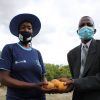
Natural Enemies: How Mango Farmers are Tackling an Invasive Fruit Fly Pest
Every harvest season, Susan Zinoro, a mango farmer from Mutoko, Zimbabwe, buries half the mangoes she’s grown that season. They have already started rotting either on the tree or have fallen to the ground before harvest. It’s a difficult task for Zinoro because she knows she is throwing away food and income meant for her family.
Q&A: UN Environment Assembly Kicks Off With a Call to Make Peace with Nature
Its time for the world to radically change our ways if we are to make peace with the planet and create the environmental conditions so that all of humanity can thrive, delegates attending the Fifth Session of the United Nations Environment Assembly (UNEA-5) heard this morning.
In Argentina’s Chaco Region, the Forest Is Also a Source of Electricity
The forest is the main resource in the Chaco, a vast plain shared by Argentina, Bolivia and Paraguay. And how to use it sustainably is the most difficult question. Two recently inaugurated power plants fired by forest biomass provide a possible answer, although they are not free of controversy.
UN Blueprint that Could Urgently Solve Earth’s Triple Climate Emergencies
“Our war on nature has left the planet broken. This is senseless and suicidal. The consequences of our recklessness are already apparent in human suffering, towering economic losses and the accelerating erosion of life on Earth,” António Guterres Secretary-General of the United Nations said.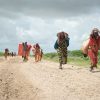
Corporate Reporting on SDGs: Challenges and Opportunities
Since the launch of the Sustainable Development Goals (SDGs) in 2016, the role of the private sector in fulfilling the 2030 Agenda has been widely acknowledged, as set out under SDG 12. Yet to assess how companies are actually contributing towards these Global Goals, we need greater transparency on their impacts.« Previous Page — Next Page »





Through our global network of local writers, we are continuing our award-winning coverage of global and local environmental challenges, with a focus on the people for whom the ecosphere matters in a direct way: rural dwellers who have little means to protect themselves against adverse conditions; communities that need to switch to sustainable development in order to survive; poor women and children, who are the most vulnerable in natural disasters. Sponsored by the United Nations Environment Program (UNEP), the United Nations Development Program (UNDP) and The World Bank (WB), IPS also maintains the award-winning Tierramérica, a specialised information service on environment and development.

The Week with IPS

Tracking global progress towards a sustainable world


