
Tuesday, November 17, 2026



News and Views from the Global South
Environment
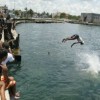
CUBA: Swim at Your Own Risk
They get ready for the jump, a spectacular airborne pirouette follows and then a stream of saltwater spray rounds off the plunge. Dozens of youngsters, mainly boys, cool off from the summer heat with daring dives from the sea wall lining the Malecón, the Cuban capital's famous seaside avenue.
BRAZIL: Rainforest Defenders Marked for Death
Raimundo Francisco Belmiro dos Santos, a defender of the Amazon jungle, has requested urgent protection from the authorities in Brazil after reporting that a number of hired gunmen are looking for him, because landowners in the northern state of Pará have offered a 50,000 dollar contract for his death.
U.S.: New Oil Pipeline Sparks Civil Disobedience
On the tenth day of a protest wave that has been gaining momentum since Aug. 20 and will continue until Sep. 3, nearly 300 people gathered in Lafayette Park directly across from the White House in Washington D.C., chanting, "When I say 'tar sands', you say 'no!' When I say 'action', you say 'go!'"
Haiti: 'Abandoned Like Stray Dogs'
Hundreds of thousands of people displaced by the 2010 Haitian earthquake continue to endure horrific conditions in makeshift camps with little hope of improvement in sight, as revealed by this investigative report to which Tierramérica was given exclusive access.Ecobreves – VENEZUELA: Oil Upgrading Plant Blamed for Health Problems
Soot from the coke and sulfur produced as byproducts of crude oil upgrading at the Jose industrial complex, in the eastern Venezuelan municipality of Peñalver, is polluting the air and affecting the health of humans, animals and plants in the surrounding areas, say local NGOs.Ecobreves – BRAZIL: Forests Near Sugar Cane Fields Boost Carbon Capture
Preserving forests located in the midst of sugar cane plantations helps reduce the greenhouse gas emissions generated by these monoculture plantations, according to a team of researchers at the University of São Paulo, Brazil.Ecobreves – HONDURAS: First Graduates in Environmental Risk Management
The first 68 specialists in natural disaster risk management, prevention and recovery have graduated from the public National University of Honduras, as part of efforts to build capacity in order to reduce the vulnerability of this Central American nation.U.N. Launches Campaign to Break Catch-22 of Statelessness
For the majority of the world’s population, citizenship is a fact of life, something so fundamental that the idea of not being citizen to any state seems unfathomable. Yet for 12 million people worldwide, ordinary life as most people expect it is impossible because they belong to no country and are thus deprived of basic rights.Palestinians Thirsting for Justice in Water-Starved Occupied Territories
In the strife-stricken Middle East, oil has always been in the realm of politics. But in the Israeli-occupied territories of Gaza and the West Bank, oil has been supplanted by water.
Q&A: NGOs Must Play Key Role in Rio+20 Summit on Sustainable Development
As the United Nations readies for a major international conference on sustainable development next June in Brazil, non-governmental organisations (NGOs) are preparing to play a key role in the run-up to the summit meeting and are preparing a plan of action to be adopted by world leaders.CONGO: Poachers Feel the Long Arm of New Law
Authorities in the Republic of Congo are showing an encouraging new readiness to arrest and prosecute people trading in endangered species.Global Warming Behind Somali Drought
The severe drought in the Horn of Africa, which has caused the death of at least 30,000 children and is affecting some 12 million people, especially in Somalia, is a direct consequence of weather phenomena associated with climate change and global warming, environmental scientists say.CENTRAL AMERICA: ‘Green Economy’ Not a Panacea
The "green economy" will not solve the problems of poverty and natural disasters in Central America as long as the development model continues to be based on over-consumption and over-production, regional experts say.Africa Remains Hamstrung in Battle for Water and Sanitation
The statistics coming out of Africa are staggering: 40 percent of Africa’s 1 billion people live in urban areas and 60 percent live in slums, where water supplies and sanitation are "severely inadequate", according to the Nairobi-based U.N. Environment Programme (UNEP).
BOLIVIA: Morales Clashes with Native Protesters over Road through Tropical Park
The lack of regulations for consulting indigenous communities in Bolivia on initiatives that affect their territories is at the heart of a dispute over a road to facilitate traffic from Brazil, which would run through an enormous tropical national park self-governed by indigenous communities.Lenape Take On Ford
"We have been living here for thousands of years. Unfortunately, we are the original people of this land, but we get no respect," says Vivian Milligan, in a tone filled with sarcastic laughter.‘Sustainable Development Must Start with People’
When world leaders meet in Brazil next June for a U.N. Conference on Sustainable Development, the third since the landmark 1992 Earth Summit in Rio de Janeiro, the question lingering in the minds of many is: what really is "sustainable development" in the context of a fast-changing world of growing poverty, hunger, pollution, political repression and social unrest?
Mexican Fisherwomen Organise Against Climate Change
Every night, Adlemi Marrufo goes out to catch bait crabs used to fish for octopus in this small seaside town and others along Mexico's Yucatan Peninsula, as part of a women's cooperative that is working to adapt to and fight climate change.
Fragmented Efforts to Save Honduran Mangroves
A mix of local and international initiatives are aimed at saving the mangrove forests and other coastal wetlands of Honduras, home to an abundance of marine life and a natural protective barrier against hurricanes, which have shrunk by over 80 percent on the Caribbean coast and almost a third on the Pacific coast.8.7 Million Species Run Spaceship Earth
The life support system that generates the planet’s air, water, and food is powered by 8.7 million living species according to the newest and best estimate. We know next to nothing about 99 percent of those unique species - except that lots of them are going extinct.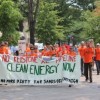
NORTH AMERICA: Keystone XL: A Pipeline to Europe?
The promoters of Keystone XL, a huge new oil pipeline from northern Canada to the U.S. Gulf Coast, claim that it will reduce U.S. reliance on oil imports from unfriendly countries.« Previous Page — Next Page »


Through our global network of local writers, we are continuing our award-winning coverage of global and local environmental challenges, with a focus on the people for whom the ecosphere matters in a direct way: rural dwellers who have little means to protect themselves against adverse conditions; communities that need to switch to sustainable development in order to survive; poor women and children, who are the most vulnerable in natural disasters. Sponsored by the United Nations Environment Program (UNEP), the United Nations Development Program (UNDP) and The World Bank (WB), IPS also maintains the award-winning Tierramérica, a specialised information service on environment and development.

The Week with IPS

Tracking global progress towards a sustainable world


