
Thursday, November 19, 2026



News and Views from the Global South
Environment
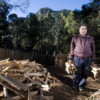
Mexico, the Leader in Community Forest Management
Thanks to its experience with community forestry projects, Mexico can provide tips on how to manage forests while fomenting the development of local economies in 2011, the International Year of Forests.EL SALVADOR: Small-Scale Fishers Want a Slice of the Sea
For the third time in 10 years, small-scale fishers in El Salvador are trying to get Congress to modify the country's fishing law, to create a five-mile exclusion zone along the coast where the industrial fleet would be banned from fishing.
ECONOMY: Namibia Embarks on Nuclear Policy
Namibia is set to develop its rich uranium resources and intends to pursue uranium enrichment locally. It also plans to build its own nuclear electricity plant.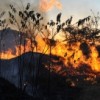
BRAZIL: Resilient Plants Could Hold Key to Adapting Agriculture
A vision of "the Apocalypse, everything burnt, turned black from ashes and smoke," was what photographer Mila Petrillo saw when she returned in October to what had been her Eden in the Brazilian municipality of Alto Paraiso, 230 km from Brasilia.
NICARAGUA: Lobster Divers in Deep Trouble
Edgard Walters, who belongs to the Association of Disabled and Active Divers of the Atlantic Coast of Nicaragua, has been in a wheelchair since 2003, when he made his last dive for lobster in the waters of the Caribbean.CHILE: Clouds on the Horizon in Fishing Industry
Unemployment in Chile's fishing industry will rise this year, experts and the association of small-scale fishers warn, due to the reduction in catch quotas adopted in response to overfishing and plunging stocks of key species, particularly jack mackerel.
ECUADOR: Delayed Return of Fishing’s ‘Golden’ Years
"This year there haven't been many 'dorados', but they're beginning to appear now," Ramón Díaz says hopefully as he disembarks with his fellow fishermen after spending the entire night out on the water.
BRAZIL: Climate Change Means New Crop Health Concerns
Farming around the globe, already reeling from drought, heat waves and major storms, will have to prepare for the new challenges that global warming will bring, especially in the form of pests and disease.
BRAZIL: Oil Palm Plantations Expand on Degraded Land in Amazon
Brazil hopes to eventually become a major producer of palm oil, thanks to the expansion of this new exotic monoculture crop in the eastern Amazon jungle, where eucalyptus plantations are also mushrooming on broad swaths of already deforested land.Assumptions on Overfishing Challenged
For decades, fisheries around the world have relied on practices that take for granted certain assumptions about the industry, such as protecting younger fish while exploiting older fish and using trophic levels to monitor the health of fisheries. Recently, however, some scientists have begun to question these unanimously accepted practices. Experts are beginning to think that the science behind the global fishing industry may be completely wrong.CHINA: Scientists Push Desalination To Meet Water Shortages
While China faces grave water shortages, researchers at institutions across the country are working on new water- saving and desalination technologies that they hope can alleviate the crisis in the crucial years to come.BIODIVERSITY: A Year for Limited Optimism
Nearly 12 months ago, when the U.N. heralded 2010 as the ‘International Year of Biodiversity’, unrealistic goals seemed to indicate failure for the ambitious initiative. But now that the year is drawing to a close, some experts also see the year’s progress as encouraging, and a reason for optimism.ARGENTINA: On-Board Cameras to Monitor Hake Fishing in South Atlantic
A video monitoring system will begin operating Jan. 1 on fishing vessels in the South Atlantic in a bid to halt the collapse of the Argentine hake population in one of the world's largest fisheries supplying the white fish market.
CENTRAL AMERICA: Threats Churn in the San Juan River
The San Juan River, centre of discord and diplomatic conflicts between Costa Rica and Nicaragua, is seeing its riverbanks fill up with economic projects that scientists and environmentalists say will irreversibly alter its course.
Q&A: “This Time There Will Be No Noah’s Ark”
"The market is not going to resolve the environmental crisis," says theologian and environmentalist Leonardo Boff, professor at Brazil's State University of Rio de Janeiro. The solution, he says, lies in ethics and in changing our relationship with nature.
CHINA: Researchers Race Toward Renewable Energy
Researchers in China, the world’s leading provider of wind turbines and solar panels, are working toward making renewable energy cheaper, more efficient and a bigger part of the country’s power grid.PERU: Sacrificing the Rainforest on the Altar of Energy
The construction of five hydroelectric dams in Peru as part of an energy deal with Brazil will do considerable damage to the environment, such as the destruction of nearly 1.5 million hectares of jungle over the next 20 years, according to an independent study.
BIODIVERSITY: Sealed With a Comeback
After 50 years of near absence, grey seals are coming back to Polish coast of Baltic Sea. Not everyone is happy about it.Ecobreves – HONDURAS: Renewed Permit for Gas del Caribe
After eight months of hearings, the Honduran Secretariat (ministry) of Environment and Natural Resources announced the two-year permit renewal for the controversial Mexican company Gas del Caribe, which operates in the Atlantic region of Omoa, in the Honduran northwest.Ecobreves – BRAZIL: Shell of Amazon Fruit Replaces Flour in Bread
A bread made from the shell of the cupuaçú (Theobroma grandiflorum), a typical fruit of the Amazon forest, was widely approved in a consumer test. This alternative product, developed by researchers from the University of São Paulo (USP), achieved a favorable rating from more than 90 percent of those surveyed.
Climate Change Means New Crop Health Concerns
Phytosanitary problems could see dramatic changes in the coming decades as a result of climate change. A Brazilian project is dedicated to researching the possibilities and providing solutions.« Previous Page — Next Page »


Through our global network of local writers, we are continuing our award-winning coverage of global and local environmental challenges, with a focus on the people for whom the ecosphere matters in a direct way: rural dwellers who have little means to protect themselves against adverse conditions; communities that need to switch to sustainable development in order to survive; poor women and children, who are the most vulnerable in natural disasters. Sponsored by the United Nations Environment Program (UNEP), the United Nations Development Program (UNDP) and The World Bank (WB), IPS also maintains the award-winning Tierramérica, a specialised information service on environment and development.

The Week with IPS

Tracking global progress towards a sustainable world


