
Sunday, November 22, 2026



News and Views from the Global South
Environment

Q&A: When Intelligence Is Used Unintelligently
All eyes were on Hans Blix, the seemingly unflappable Swede, on TV screens around the world before the U.S.-led invasion of Iraq in 2003.PERU: Mobilising to Hold President to His Promises
Social movements, trade unions, peasant farmer and indigenous organisations are holding strikes and demonstrations to demand that Peruvian President Alan García fulfil the social commitments he has made, in writing and at negotiating tables.
ARGENTINA: Guardians of the River
"There is no water...there are no fish," says Olga Ledesma, her skin weathered from 40 years of small-scale fishing, as the boat slowly winds its way along a branch of the Paraná river, South America’s second-longest river.
ENVIRONMENT-INDIA: In Sore Need of E-Waste Regulation
India’s lack of safe electronic waste-disposal is growing to a crisis situation, needing strong laws to control the situation, say experts.
ENVIRONMENT-AUSTRALIA: Discoveries Highlight Danger to Reefs
Efforts to create an inventory of life on Australia’s major coral reefs - to be used as part of a baseline to determine the impacts of global warming and overfishing upon reefs - have turned up hundreds of previously unknown and rare species.HEALTH: Dengue Threatens Asia Pacific Region
Over the past three decades, dengue fever has affected more and more countries in the Asia-Pacific region and is now regarded as the fastest of emerging mosquito-borne diseases.
ARGENTINA: Women Create Food and Jobs in Wetlands
Wearing a cap and a white apron, Melina Lucero cuts the heads and tails off fish caught in the Paraná River, before skilfully filleting them. Her co-workers will process and package the fish to sell as traditional, small-scale fish preserves at food fairs along the banks of the river in Argentina.ENVIRONMENT: Companies Scramble for Ever-Scarcer Resources
As humanity runs out of oil and minerals, the extraction of previously untouched deposits suddenly pays off - financially. But experts warn that it will likely further accelerate climate change and seriously damage the environment.
U.S.: Great Place for the Oil Business
Why do U.S. oil companies - some of the most profitable corporations on the planet - receive 20 to 40 billion dollars a year in subsidies from the U.S. government?
Q&A: 'Oil Prices Have Revived Interest in Dams'
Concerns over the future of fisheries in the Mekong River floated to the surface at the first round of discussions held here late this month to shape a blueprint to build a series of mega dams across South-east Asia’s largest body of water.ENERGY-LATIN AMERICA: PDVSA’s Growing Presence
Central America, Cuba, the Dominican Republic and islands in the eastern Caribbean are receiving more and more oil from Venezuela, while major refineries are planned in South America - at Pernambuco in northeastern Brazil, and at El Aromo, on Ecuador's Pacific coast.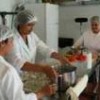
Women Create Food and Jobs in Argentine Wetlands
Tierramérica explored the effort behind preparing artisanal dishes made from a declining catch of fish, an effort towards sustainability taken up by the women of river communities in northeast Argentina.“Future Prosperity Is in Green Technologies”
In times of economic crisis, the shift to a low-carbon economy is the smartest investment any country can make, says United Nations Environment Program chief Achim Steiner in this Tierramérica interview.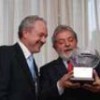
Ecobreves – LATIN AMERICA: Official Inauguration of Tierramérica Center
The Tierramérica International Center for Sustainable Development and Environmental Defense was inaugurated at the United Nations headquarters in New York, with Brazil’s President Luiz Inácio Lula da Silva in attendance.Ecobreves – CUBA: Eco-Materials for Areas Hit by Hurricanes
A construction method with alternative materials resistant to extreme climate will help alleviate the housing deficits in two Cuban provinces hard hit by hurricanes Ike and Gustav.Ecobreves – CHILE: Promoting Inclusive Recycling
Very few municipalities in Chile apply “clear policies for waste management, with environmental, economic and social components, where all benefit,” Exequiel Estay, secretary-general of the National Movement of Recyclers, told Tierramérica.Ecobreves – CENTRAL AMERICA: Honduras and El Salvador Agree on Water Management
The governments of Honduras and El Salvador will launch a binational project in 2009 to manage the water resources they share in the Lempa River zone, Karen Zelaya, the Honduran minister of cooperation, told Tierramérica.Ecobreves – VENEZUELA: GPS to Monitor Harpy Eagle
Dozens of harpy eagles (Harpia harpyja) are being tracked by GPS, the satellite location system, after being captured and released for research in the Imataca mountains, in southeastern Venezuela.VIETNAM: Heeding Climate Change Warnings
With a predicted sea level rise of one metre by 2100, Vietnam may end up being one of the nations worst hit by climate change. Such a rise would affect five percent of the land area, 11 percent of the population and seven percent of the agriculture.
GUATEMALA: Lachua, a Corner of the Jungle Resists
Guatemala’s Laguna Lachuá National Park is a small corner of the Central American jungle that has withstood the encroachment of oil exploration, monoculture crops and road building, and serves as the area for sustainable development projects run by the indigenous people who live there.
MALAYSIA: Murum Dam – Public Funds for Corporate Profit?
Who will foot the bill for the Murum resettlement? ''Is it Sarawak Energy or will it be passed on directly to the state government and hence the tax payer,'' asked one Sarawak-based activist, who declined to be identified.« Previous Page — Next Page »


Through our global network of local writers, we are continuing our award-winning coverage of global and local environmental challenges, with a focus on the people for whom the ecosphere matters in a direct way: rural dwellers who have little means to protect themselves against adverse conditions; communities that need to switch to sustainable development in order to survive; poor women and children, who are the most vulnerable in natural disasters. Sponsored by the United Nations Environment Program (UNEP), the United Nations Development Program (UNDP) and The World Bank (WB), IPS also maintains the award-winning Tierramérica, a specialised information service on environment and development.

The Week with IPS

Tracking global progress towards a sustainable world


