Languages
Tuesday, November 10, 2026



News and Views from the Global South
Featured
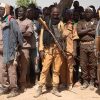
Death toll of Burkina Faso Attack Reaches 160
On the night of Friday 4th June, a group of unidentified armed men stormed the village of Solhan in the north of Burkina Faso, shooting indiscriminately, looting the market and burning homes. A report by RFI, the French radio station said there could have been as many as 200 attackers by some accounts of survivors.
Is the UN Fighting a Losing Battle Against World’s Corrupt Leaders?
A hilarious anecdote, recounted in the New York Times years ago, related to the widespread corruption embedded in the political culture of a Southeast Asian country where crooked politicians were willing to provide receipts every time they received a bribe—big time bribes.
UN’s Battle Against Climate Hazards Undermined by a Devastating Pandemic
The United Nations has been in the forefront of an ongoing battle against the growing hazards of climate change, including the destruction of different species of plants and animals, the danger of rising sea-levels threatening the very existence of small island developing states (SIDS), and the risks of oceans reaching record temperatures endangering aquatic resources.
On World Environment Day — Pakistan Showcases Ecosystem Restoration
Pakistan's Prime Minister Imran Khan has been making sure that all foreign dignitaries visiting the country get their hands dirty. With a shovel and a watering can, they are invited to plant a tree for one of the largest reforestation initiatives in the world — the Ten Billion Tree Tsunami Programme or TBTTP.
Indian Muslim Minority Targeted During COVID-19 Pandemic
A Muslim call centre operator at a COVID-19 ‘war room’, who once saw himself a COVID-warrior, is now unemployed after being falsely branded by a top politician as a key member of a bed-for-bribe scam. He is a victim of the rise in Islamophobia in India as the country grapples with the COVID-19 pandemic – with scant evidence of condemnation from the authorities, say activists.
Life Below Water – the UN Calls for Action on Ocean Protection
President of the United Nations General Assembly Volkan Bozkir has told a high-level debate on oceans that the world cannot afford to delay action on ocean protection. “There is simply no scenario wherein we live on a planet without an ocean,” he said.
Bridging the Gaps Between Climate Action & Biodiversity Preservation
With the climate negotiations getting more and more intense in the light of ensuring meaningful achievements in the upcoming COP- 26 summit in Edinburgh, an event that is key to move forward the pathway towards a net zero future started in Paris, this year World Environment Day on June 5 assumes an even more emblematic meaning.
Calls for Zimbabwean Journalist Jeffrey Moyo to be Given a Fair Trial after Bail is Denied
As international correspondent Jeffrey Moyo was denied bail for allegedly breaching a section of the Zimbabwe Immigration Act by helping two foreign journalists work in the country without proper media accreditation, local organisations have called for his release and for him to be accorded a fair trial.
Sowing Water by Restoring Ancient Ditches in the Peruvian Highlands
In the highlands near the capital of Peru, more than 3,000 metres above sea level, ageold water recovery techniques are being used to improve access to water for 1,400 families, for household consumption and for crops and livestock.
Motorcycle Diaries with a Twist
Four women, two motorbikes, 64 districts and a journey of a lifetime, this is the story of Dr. Sakia Haque from Bangladesh. In November 2016, Dr Haque co-founded “Travelettes of Bangladesh - Bhromon Konya,” a women's only group, with the motto of “empowering women through travelling.” This platform is not just an ordinary online travel group, but it is a platform of connection, sisterhood and networking of almost 60,000 girls and women in Bangladesh that empowers them by teaching them to raise their voices and encourages them to step out of their comfort zones and to “go see the world”.
Is Sharing More than Water the Key to Transboundary Governance in the Meghna River Basin?
Kajol Miah is a rice farmer from the Bangladesh side of the Meghna River Basin. And in towns on the Indian side of the river basin, Bangladeshi rice is in great demand.
It’s Time to Reimagine Our Relationship with Nature
Our natural earth is dying. It is on the brink of collapse. Due to human impacts the planet is losing species – its biodiversity – at a rate so alarming it’s said to be comparable to the 5th mass extinction 65 million years ago, bringing the era of the dinosaurs to an end. Just 15% of the world’s forests remain intact, and only 3% of the world’s oceans are free from human pressures.
Latin America’s Challenge of Financing Energy Recovery
Hit by the pandemic's socioeconomic and health impacts, Latin America is facing the challenge of financing an economic recovery based on a sustainable energy sector and a transition to clean sources of energy.
The Kenyan Peacekeeper Championing the Ideals of the Women, Peace and Security
Major Steplyne Buyaki Nyaboga of Kenya singles out the establishment of gender-responsive military patrols in farming communities in Central Darfur, Sudan as one of the proudest moments of her two-year mission with the African Union–United Nations Hybrid Operation (UNAMID).
– Why Experts are Saying It’s a ‘Make or Break’ Moment for Forests –
On the occasion of World Environment Day, 5 June 2021, drawing from IPS’s bank of features and opinion editorials published this year, we are re-publishing one article a day, for the next two weeks. The original article was published on April 28 2021
Are There Clinically Meaningful Differences Between anti-COVID-19 Vaccines?
Despite claims by the industry and some politicians, there are no clinically meaningful differences among the variety of vaccines approved under emergency use authorisation (EUA).
Why Stakeholder Coalitions Could Be Key to the Glasgow Climate Summit’s Success
The past few weeks brought a burst of optimism on the climate front. It began on April 18 with the US-China announcement on climate cooperation. This was followed in quick succession by the EU Parliament’s vote to cut emissions 55% by 2030, the UK’s promise of a 78% cut by 2035, Japan nearly doubling their commitment from 26% to 46% based on 2013 levels and US President Biden’s pledge of a 50-52% reduction, also by 2030 (compared with 2005 levels).
– Youth Demand Action on Nature, Following IUCN’s First-Ever Global Youth Summit –
On the occasion of World Environment Day, 5 June 2021, drawing from IPS’s bank of features and opinion editorials published this year, we are re-publishing one article a day, for the next two weeks. The original article was published on April 23 2021

COVID-19 Widens Learning Gap For Girls In Rural Ghana
Seventeen-year-old Muniratu Adams, a form two student of the Jeyiri D/A Junior High School at Funsi in the Wa East District of the Upper West Region of Ghana, is fortunate to have returned to school this January after the long COVID-19 shutdown.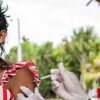
To Beat Covid, Beat HIV, & Beat Inequality, Find the Money
In this time of intersecting crises – the Covid crisis, the HIV crisis, the inequality crisis, and more – progress on all these crises is being blocked by another crisis: finance.
Q&A: If China had a Free Press COVID-19 Pandemic ‘May not Have been so Severe’
China is one of the worst places in the world for media freedom, according to the global media watchdog Reporters Without Borders (RSF) which ranked the country 177 out of 180 in its latest World Press Freedom Index. In the report, the group warned that Beijing is taking “internet censorship, surveillance and propaganda to unprecedented level,” and had “taken advantage of the Covid-19 pandemic to enhance its control over online information even more”. China is also the world’s biggest jailers of journalists with more than 120 journalists and what the group calls “defenders of press freedom” currently detained.« Previous Page — Next Page »





The Week with IPS

NEXT STOP - SDGs
Tracking global progress towards a sustainable world
Tracking global progress towards a sustainable world
