Languages
Wednesday, November 11, 2026



News and Views from the Global South
Featured

The Exploitative System that Traps Nigerian Women as Slaves in Lebanon
“I need help, right now I cannot walk properly,” trafficking victim Nkiru Obasi pleaded from her hospital bed in a video she posted online. The young Nigerian woman had been injured in the Aug. 4 Beirut blast, which ripped through the Lebanese capital, killing 190 people injuring a further 6,500 and damaging 40 percent of the city. However, it’s not her injuries keeping her in Lebanon but a restrictive and abusive system of migrant laws.
Mapping Nature to Create a Global Biodiversity Framework
The year 2020 was considered a “Super Year” for biodiversity. A string of interconnected events offered a unique opportunity to build a global coalition and international policy framework that recognized the central role of nature to all life on Earth.
Will Trump Threaten to Pullout or De-fund the United Nations?
Back in 1998, Senator Jesse Helms, a rightwing Republican from the US state of North Carolina, carried out a virulent one-man hate-campaign against the UN-- and its very presence in New York.
Q&A: Land Restoration can Help Restore Post-COVID-19 Economy
Investing in sustainable land management and land restoration will help build economies post-COVID-19 and help poor people increase their incomes as the destruction of global food chains by the pandemic provides a chance for ensuring diversity in production through ensuring the inclusion of local producers.
No ‘Business as Usual’ for Children Post-COVID-19, say Laureates & Leaders
Addressing delegates at the end of the virtual 3rd Fair Share for Children Summit, 2014 Nobel Peace Laureate Kailash Satyarthi told global citizens that “business as usual” in dealing with COVID-19 is not going to be tolerated. “We’re not going to accept the miseries of child labour and trafficking to continue to be normal,” he said.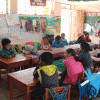
A Marathon, Not a Sprint: Peru Needs Fiscal Reforms to Quell High COVID-19 Death Rate
“It’s a major paradox, no?” asks Hugo Ñopo, a researcher at the Peruvian think tank Group for the Analysis of Development (GRADE). Since the beginning of the pandemic, Peru has presented itself as an example for the region: it quickly implemented drastic prevention measures, followed scientific recommendations and prepared an economic support plan for the most vulnerable segments of the population.
A New Social Contract Needed for Children on the Move
Forced to flee wars and disasters, sometimes without family, and struggling to survive in the worst of circumstances, children on the move have long led very precarious lives. Be they refugees, internally displaced or asylum seekers, vulnerable and marginalised, they lose years of childhood. They are exposed to the worst forms of abuse, such as commercial exploitation and violence. Today, their situation is dire as they remain at the very bottom of the list to receive emergency measures to protect them from the impacts of COVID-19.
Save 70 million Lives Through #FairShare of COVID-19 Response Fund, Youth Urge Governments
Young people have added their voice in calling on world leaders to allocate at least 20 percent of the COVID-19 stimulus package to the marginalised children and youth.
Preserving Food Security in Africa’s Urban Areas
In Torit State, southern South Sudan, Margaret Itto is one of the farmers in Africa’s youngest country who have invested heavily in agriculture. But she is not able to access the lucrative market for her produce in the capital Juba simply because of poor roads.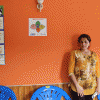
Acidic Masculinity
The recent attack on 22 year old Pavitra Karki has yet again stoked the discourse on acid attacks and gender based violence in Nepal. Pavitra is one of the many young women in Nepal who were targeted by young males, a tragic but more and more common occurrence in the country and elsewhere in South Asia.
Hold Corporates Accountable for Using Child Labour, Nobel Laureates Urge World Leaders
The COVID-19 pandemic should give governments across the world an opportunity to hold corporates accountable against child labour. Kailash Satyarthi, the 2014 Nobel Peace Laureate, made this submission at the virtual 3rd Fair Share for Children Summit.

COVID-19 Pandemic an Opportunity to Re-evaluate How we Treat World’s Starving Children
While COVID-19 pandemic has affected the entire world, Nobel Laureates and world leaders have today expressed concern that ongoing crisis is far from being an equaliser. The pandemic has revealed that the most vulnerable and marginalised populations, including and especially children, remain largely unprotected against the virus and its impacts.
Re-inventing Multilateral Solidarity: Rhetoric, Reaction or Realignment of Power?
Multilateral solidarity is gaining traction as the slogan for mobilizing support for international cooperation and for the UN. Is it replacing or merely renaming cross-border obligations, many of which have been enshrined over decades in UN treaties, conventions and agreements, and the principle of common but differentiated responsibility in their implementation?
Hopes and Challenges for the First-Ever Food Systems Summit
Building inclusive and healthier food systems, and safeguarding the health of the planet will be some of the key priorities at the first-ever Food Systems Summit next year.
TikTok, Trump and the Need for a Digital Non-Aligned Movement
Recent weeks have seen a dramatic escalation in the U.S.’ stance towards tech companies from the People's Republic of China (PRC). After hounding the telecommunications company Huawei for years, the social networking app TikTok is the latest Chinese company to enter the firing line.
Caring for Poorest and Most Underserved Children Vital for Creating a Better World
Kerry Kennedy has a clear mission – along with Nobel laureates and leading international figures – she wishes to ensure that hard-won gains in children’s rights are not destroyed by the economic fallout from the COVID-19 pandemic.
Failing Africa’s Farmers, Starving the Continent
African organizations are demanding answers after a recent report found that Alliance for a Green Revolution in Africa (AGRA) strategies have failed spectacularly to meet its goals of increasing productivity and incomes for millions of small-scale farming households by 2020 while reducing food insecurity on the continent.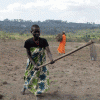
UN’s First-Ever Food Systems Summit to Fight Impending Emergency
Food systems involve all the stages that lead up to the point when we consume food, including the way it is produced, transported, and sold. Launching a policy brief on food security in June, UN chief António Guterres warned of an “impending food emergency”, unless immediate action is taken.
Regressive Taxation Must Be Reversed
With many in the world experiencing declining living standards, there has been growing frustration. Many hope that progressive taxation will improve things. While some economies once had progressive tax systems, recent decades have seen regression.
Nobel Laureate Kailash Satyarthi on Where to Find the $1 trillion Needed for Marginalised Children
 Nobel Laureate Kailash Satyarthi says that $1 trillion can solve many of the problems the world's most marginalised communities are facing.

Exclusive: Kailash Satyarthi Warns over a Million Children Could Die Because of COVID-19 Economic Crisis
Nobel Laureate Kailash Satyarthi warns of the danger that over one million children could die, not because of the COVID-19 pandemic, but because of the economic crisis facing their families. In an exclusive interview with IPS, Satyarthi said that without prioritising children we could lose an entire generation as evidence mounts that the number of child labourers, child marriages, school dropouts and child slaves has increased as the COVID-19 pandemic spread across the globe.« Previous Page — Next Page »





The Week with IPS

NEXT STOP - SDGs
Tracking global progress towards a sustainable world
Tracking global progress towards a sustainable world
