Languages
Thursday, November 12, 2026



News and Views from the Global South
Featured

Catalysing Change for Gender Equality
Great strides have been taken to empower women and girls in the Asia-Pacific region since the Fourth World Conference on Women in Beijing adopted an ambitious global agenda to achieve gender equality twenty-five years ago. Gender parity has been achieved in primary education. Maternal mortality has been halved. Today, the region’s governments are committed to overcoming the persistent challenges of discrimination, gender-based violence and women’s unequal access to resources and decision-making.
Despite Halting Progress, UN Continues its Push for a Nuclear-Weapons-Free Zone in the Middle East
A longstanding proposal for a regional nuclear-weapons-free zone (NWFZ) in the Middle East – one of the world’s most conflict-ridden regions – has been kicked around the corridors of UN committee rooms since 1974.
UN Warns of ‘Screen Teens’ not Getting Enough Exercise
It is a common complaint of parents globally that their children and teenagers spend far too many hours sprawled on couches playing video games, sharing selfies with online friends and giggling over TikTok videos.
I am Generation Equality: Child Marriage Survivor & Activist
-- I am Generation Equality because… I didn’t want other girls to go through the same struggles I experienced. I got married when I was 14 years old. I had no idea what marriage was.
Businesses Have Key Role in Safeguarding Human Rights
Unanimously endorsed by the UN Human Rights Council in 2011, the Guiding Principles on Business and Human Rights are the authoritative global reference point articulating the responsibilities of companies to respect and protect human rights.
Social Protection Necessary to Quickly End Poverty, Hunger
Historically, most social security systems have developed in the formal sector of rich economies. However, most of the poor and hungry in the world live in rural areas, surviving in the informal economy.
When African Women are Financially Included, an Entire Continent Wins
When Rwandan-born, Senegalese-raised entrepreneur and businesswoman Kristine Ngiriye was 18 she had a brilliant idea that she wanted to translate into a business. But when she went to her local bank for a loan they told her to rather get married, because “ a woman must be married instead of venturing into business”, Ngiriye tells IPS.
Statistics and Stories – Time to Change the Refugee Narrative?
Statistics and stories. When aid agencies appeal for funding to tackle the latest refugee crisis and journalists do their reporting, then these are the two narratives most chosen -- one impersonal and the other upfront and individual. The sheer numbers can feel overwhelming. The UN refugee agency UNHCR says more than 70 million people are currently displaced by conflict, the most since the Second World War. Among them are nearly 26 million who have fled their countries (over half under the age of 18) and 3.5 million more are registered as asylum seekers.
Science & Policy Must Remain Partners in Mercury Challenge
It has been more than two years since the Minamata Convention on Mercury entered into force. The global treaty protects humans and the environment from the toxic metal, but countries are still stuck on how to measure the agreement’s effectiveness.
More Austerity for Developing Countries: It’s Bad News, and It’s Avoidable
After years of austerity, a number of Eurozone countries are now considering expansionary fiscal policies. And in the UK, government spending is set to return to levels last seen in the 1970s. But austerity abounds elsewhere in the world, including in some of the poorest countries.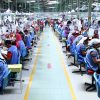
Global Clothing Brands Should Respond to the #MeToo Mandate
It has been two years since #MeToo went viral, and it’s about time the garment industry’s sexual harassment problem got the attention it deserves. Clothing and footwear brands can do much more to prevent and address gender-based violence in their supply chains, but first they need to confront how badly their inspection or “social auditing” programs fail women.
Saudi UNESCO Win Riles Khashoggi Standard-Bearers
Human rights campaigners have reacted angrily to the election of Saudi Arabia to the United Nations cultural agency UNESCO’s top board, highlighting the kingdom’s ongoing crackdowns on political freedoms and critics.
A 650 Million Dollar Pledge Aimed at Eradicating Extreme Hunger by 2030
When a coalition of international donors pledged more than $650 million to provide assistance to over 300 million smallholder farmers in developing countries, the primary aim was to help increase agricultural and livestock production besieged by droughts, floods and other natural disasters triggered by climate change-- mostly in sub-Saharan Africa and South Asia.
We Shouldn’t Expect Philanthropists to Fund Activism
Since philanthropists are unlikely to fund anything that destabilises their businesses, building independent institutions can be an effective approach to create lasting impact.
Green Steel
How Indonesian craftsmanship is undergoing a revival at the world’s first ‘bamboo university’. It’s fast-growing, flexible and strong. Standing underneath a bamboo canopy, it is easy to understand why people have been using this grass plant for years, in the construction of houses, bridges and scaffolding.
Sri Lanka’s Presidential Election Brings Back a Polarising Wartime Figure
On 16 November, Gotabaya Rajapaksa – who served as defence secretary during the final phase of Sri Lanka’s brutal civil war – won a decisive victory in Sri Lanka’s presidential election.
U.N. Group Launched to put Afghan Women at Centre of Peace Initiatives
Afghanistan’s first female ambassador to the United Nations this week launched a U.N. group that aims to put women at the centre of peace initiatives in Afghanistan.
More Than just a Toilet: Fusing innovation & Partnerships for a Better World
Each year, World Toilet Day* raises awareness of the crucial role that sanitation plays in reducing disease and creating healthier communities. At Kohler, we’re committed to finding solutions for universal sanitation access by leveraging our design & innovation competencies and partnering with like-minded organizations to bring meaningful innovations to those communities most in need.
Evo Morales: Hero or Villain?
To be president in a country like Bolivia might be like a precarious act performed by a tightrope-dancer between “the Devil and the deep blue sea”. After 23 years as Bolivia’s President, Evo Morales finally lost his foothold and ended up as political refugee in Mexico, adding his name to a long list of previous revolutionary exiles, like Augusto Sandino, Fidel Castro, and most prominently – Leon Trotsky. The last one was murdered, though the others came back, something Evo Morales has promised to do:
Achieving the Possible: “Weapons of Mass Destruction Free Zone in the Middle East”
A historic conference on the Middle East opened at the United Nations in New York on 18th November and will continue until 22nd November. The Conference on the Establishment of a Middle East Zone Free of Nuclear Weapons and Other Weapons of Mass Destruction is presided over by Ambassador Sima Bahous of Jordan.
As Donors Ramp up Polio Funding, Worries of Comeback Persist
Efforts to wipe polio off the face of the planet took a step forward this week, with a multibillion-dollar fundraiser in the Middle East helping eradication schemes tackle a virus that disproportionately kills and cripples children in poor countries.« Previous Page — Next Page »





The Week with IPS

NEXT STOP - SDGs
Tracking global progress towards a sustainable world
Tracking global progress towards a sustainable world
