Languages
Thursday, November 12, 2026



News and Views from the Global South
Featured

Are We Fighting a Losing Battle in the War Against Drugs?
How effective is the global war on drugs? The latest statistics released by the UN Office on Drugs and Crime (UNODC) are staggering: 35 million people across the globe currently have a substance use disorder, and as of 2017, 585,000 people have died worldwide as a result of drug use.
Financialization Undermines Real Economy
The relationship between finance and the real economy is arguably at the root of the contemporary economic malaise. Unlike earlier acceptance of simple linear causation, recent recognition of a curvilinear relationship between finance and economic growth, implying ‘diminishing returns’, has important implications.
Food From Thought
As the weather continues to change and land becomes degraded, the socio-economic security implications are vast. In an effort to tackle these issues, climate-smart agriculture is quickly gaining traction around the world.
U.S.-backed Kurds to Halt Child Soldier use in Syria
The United States-backed Syrian Democratic Forces (SDF) have struck a deal with the United Nations to stop using child soldiers across swathes of eastern Syria under their control and to release all youngsters from their ranks, the U.N. announced Monday.
Unseen and Unsafe: Violence Against Women within Migrant Families
Refugee and migrant women often face inescapable violence in the home. And the potential for intimate forms of violence is exacerbated by humanitarian crises and job insecurity.
Could the Election of Qu Dongyu as FAO´s General-Director be a Turning-point for Sustainable Agricultural Development?
Agriculture is the bedrock of sedentary human civilization, without it we would have no governments or nations. It was food surplus generated by agriculture that enabled people to live in cities and form regimes able to organize food production in such a manner that some community members could engage in other activities than direct food production and thus give rise to the ideologies, techniques and goods which now constitute and govern our existence.
US & Iranian Actions Put Nuclear Deal in Jeopardy
Iran’s announcement that it may soon breach the 300-kilogram limit on low-enriched uranium set by the 2015 nuclear deal is an expected but troubling response to the Trump administration’s reckless and ill-conceived pressure campaign to kill the 2015 nuclear agreement, known as the Joint Comprehensive Plan of Action (JCPOA).
Kenya’s March Towards Demographic Dividend with Investments in Health Sector Partnering with The Netherlands
Demographic dividend is a term which is increasingly preoccupying discussions among development economists and the donor community in general in Kenya. The term refers to countries with the greatest demographic opportunity for development and those that are ushering in a period in which the working-age population has good health, quality education, decent employment and a lower proportion of young dependents. Smaller numbers of children per household generally lead to larger investments per child, more freedom for women to enter the formal workforce and more household savings for old age. When this happens, the national economic payoff can be substantial, and this is the demographic dividend.
Indigenous Rights Approach a Solution to Climate Change Crisis
The Global Landscapes Forum (GLF) was held in Bonn, Germany to rally behind a new approach to achieving a future that is more inclusive and sustainable than the present – through the establishment of secure and proper rights for all.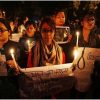
India’s Criminal Justice System is Failing Victims of Sexual Violence
Early in 2018, India was shaken by the horrific details surrounding the abduction, gang rape, and murder of an 8-year-old girl in Kathua, a district in the north Indian state of Jammu and Kashmir.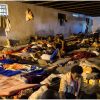
“Unimaginable Horrors” in Libya’s Migrant Detention Centers
For over 10,000 migrants fleeing to Libya from war and violence, their fate often comes down to the mercy of human traffickers or the dark unknown awaiting in detention centers.
Will “UN@75” Revive Multilateralism?
Despite the polarization and stasis that characterizes so much of the present politics at the United Nations, Secretary-General António Guterres is betting that the 75th anniversary of the organization, in 2020, will provide an opportunity for the international community to begin to address the “crisis in multilateralism,” and to shape a more robust and effective organization.
We Cannot Save the World from Climate Catastrophe if Largest Emitters of CO2 Don’t Step up Now
SUVA, Fiji, 27 June 2019 (IPS) -- Are the most climate-vulnerable nations of the world right to demand that developed and major economies commit to carbon neutrality by 2050? Should the poorest nations of the world insist that the “haves” put their significant economic and political resources behind aggressive efforts to combat climate change?
Beyond Saudi Arabia: The World Is Failing Journalists
Saudi journalist Jamal Khashoggi was deliberately killed at the hands of state actors and journalists around the world are increasingly seeing the same fate, said a United Nations expert.
A Roadmap for Children as Victims, not Terrorists
The feeling in the air at a recent meeting of the United Nations Office on Drugs and Crime (UNODC) was one of compassion and benevolence. The focus was on children as Foreign Terrorist Fighters (FTFs), a subject that everyone at the panel discussion argued is delicate and politically sensitive.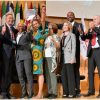
How Effective is a Non-Binding Treaty Aimed at Ending Harassment at Work Places?
Against the back drop of widespread charges of sexual abuse and harassment at workplaces-- including the United Nations-- the International Labour Conference (ILC) last week adopted a “Convention” and a set of “Recommendations” to protect workers and employees worldwide.
Looking to the Land in the Climate Change Race
The international community still has a long way to go to chart a new, sustainable course for humanity. But the upcoming climate change meetings provide a renewed opportunity to tackle climate change head on.
Women’s Rights are Key in Slowing Down Population
The increase in world population by 2 billion in the next 30 years will present a serious global challenge especially if we do not find new paradigms of development thought and renewed global political leadership.
A Bad Free Trade Agreement Is Worse than Nothing
With growing economic conflicts triggered by US President Donald Trump’s novel neo-mercantilist approach to overcoming his nation’s economic malaises, many voices now argue that bad free trade agreements are better than nothing. After US withdrawal following Trump’s inauguration in early 2017, there is considerable pressure on signatory governments to quickly ratify the Comprehensive and Progressive Trans-Pacific Partnership (CPTPP), the successor to the TPP.
Blockchain Releases Farmers From the Collateral Trap
A Jamaican start-up has an innovative solution to help smallholder farmers—many of whom do not have the collateral demanded by financial institutions to access loans—build a track record of their production that is proving better than collateral.
Partnering for Youth in Central Asia
Young people around the world are facing increasingly insurmountable, persistent barriers as they try to achieve their full potential and secure a prosperous future. However, Central Asia and the Asia-Pacific have already begun working to ensure that no one is left behind.« Previous Page — Next Page »





The Week with IPS

NEXT STOP - SDGs
Tracking global progress towards a sustainable world
Tracking global progress towards a sustainable world
