
Wednesday, November 11, 2026



News and Views from the Global South
Gender Violence

What still needs to happen to win the fight against human trafficking
In late 2019, we learned of the harrowing plight of Suma Akter, a Bangladeshi woman in Saudi Arabia who secretly recorded and shared on social media her story of abuse and exploitation abroad. In Saudi Arabia, Akter said, her employer beat her and at one point poured hot oil on her hand. Later on, when she fell ill, Akter said her employer sold her to another person for 22,000 riyals (almost Tk 5 lakh).
African Governments Failing Survivors of Child Sexual Exploitation
In Malawi, Mary* was only 14 years old when she was recruited and trafficked to the city of Blantyre and sold for sex in a bar. A man had arrived in her village looking for girls to work as domestic helpers for families.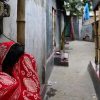
Broke and broken, sex workers ending up homeless
The life of sex workers on the streets, hard as it is during normal times, has taken a worse turn after the coronavirus pandemic hit the country.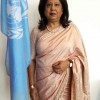
Q&A: Sexual Violence Survivors and their Access to Care Should not Be Forgotten
While the coronavirus does not discriminate, its impact does. And the needs of survivors of sexual violence in conflict "cannot be put on pause, and neither can the response” during the current COVID-19 pandemic.
Migrant Women Exploited by Those They Trust
Maliha Masud (25), was promised an affluent life and opportunities for higher education. A bright student studying Biochemistry and Molecular Biology, she wanted to complete her studies and become someone her parents would be proud of. She was promised an opportunity to get her Master’s degree from a good university in the United States but, two years later, was left battered and wounded at the doorstep of a shelter.
No Woman Should Ever Die Giving Life
Consider this. 24 women, children and babies were murdered at a hospital in Kabul, the Afghan capital. Even by standards of a country as accustomed to bloodshed as Afghanistan, the May 12 attack on a Kabul maternity clinic was an event of unmitigated horror.
My Adherence My Fallacy: Stigma and Mental Health
The World Health Organization (2019) states that every 40 seconds someone dies by suicide. Annually, this represents over 800,000 people, more than the number of people who die in conflict and by homicide put together. Every suicide is a tragedy that has long-lasting effects on the people left behind and most cases stem from prolonged mental health issues and abuses that are not reported.
Q&A: COVID-19 Means we Must Innovate Data Collection, Especially on Gender
The current coronavirus pandemic can offer insight into how to shake-up traditional methods of data collection, and might provide an opportunity to do it in more innovative ways, in turn enhancing progress towards gender equality.
Why Reproductive Rights Must Be a Critical Part of Our Arsenal to Fight Pandemics
Sexual and reproductive health and pandemics might seem to be unrelated topics, but large and dense populations are drivers of the high velocity transmission of COVID-19, and there are lessons to be learned for the future.
Addressing the rise in domestic violence during lockdown
While one-fourth of the world's population is under home-quarantine to contain the spread of the novel Covid-19 pandemic, another crisis is brewing behind closed doors—domestic violence.
Domestic violence during the time of corona
The Covid-19 pandemic has opened our eyes to many vulnerabilities. With home quarantine proving to be a successful strategy, we are finally catching up and practicing it. Bangladeshi narratives about home quarantine now discuss how home is the safest place to ensure sanitisation, hygiene and disinfection.
Surviving Domestic Violence in times of Covid19
“I come from Baglung District, a part of Dhawalagiri Zone in Nepal. My house overlooks the river. Do you know, our district is known for the suspension bridges?”, her eyes glimmer for a fraction of a second and then she breathes a heavy sigh! Her right hand is still wrapped in a scarf, while with the other she pats her 17-month-old. “If I ever get a chance I will take you to my village, we have a lot of medicinal plants.” She pauses while tears roll down as she continues our Facetime session. “I was 16 when I had my first child and I was 17 when my arm was broken by my mother-in-law.”
Never Give up on Women’s Rights – Edna Ismail
For Dr Edna Adan Ismail maternal health and midwifery is deeply personal. In an interview with Women Deliver Young Leader Musu Bakoto Sawo, Ismail recalls her mother’s devasting experiences which impacted on her own life’s choices.
I Am Generation Equality: Storytelling for Equality
When you flip through grade one Bangla school textbooks there is very little written about the progress women have made in Bangladesh since the Beijing Conference for Women in 1995.
A Woman Peacebuilder’s Reflections on Beijing+25 & the Generation Equality Forum
Where are the women and youth peacebuilders in the Beijing+25 and the Generation Equality Forum processes? Their absence raises serious questions about the effectivity and coherence of the work of the UN on gender equality since armed conflict is both a cause and a consequence of gender inequality.
On 8th March – and All the Other Days: Each for Equal
Development efforts over the past two decades have seen millions of people freed from poverty and hunger, and inequalities reduced worldwide. This is an undoubted achievement, but is no reason for complacency. The fact is that inequality between men and women, between boys and girls, remains not only a social justice concern, but one of the impediments on development in countries across Africa and beyond. Addressing such inequalities is a duty for all of us, and one which is at the heart of the theme of this year’s International Women’s Day on 8th March: Each for Equal.
What Future for the Rohingyas after the ICJ Ruling?
 In a groundbreaking ruling in January 2020, the International Court of Justice demanded that Myanmar halt all measures that contribute to the genocide of the Rohingya community.
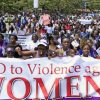
The Hammer of Justice for Sexual Assault Victims Must Be Swift, Loud and Consistent
Every year Valentines Day is celebrated with great relish & celebration. People show their affection for another person or people by sending cards, flowers or chocolates with messages of love.
Internet Needs New Global Regulations Against Online Sexual Exploitation
Online sexual exploitation is a global epidemic that is increasing at an alarming rate.
Do I Need Permission to Breathe? – A Migrant Woman’s Story
“I soiled my pants, I could feel the wetness seeping into my waistband, my eyes started to become blurry. Only the sound of the blaring television assured me that I was still alive. I tried to stop thinking and make my mind go completely blank. Over the years I have adapted and now I can make my mind go numb. But the only nagging question ringing on my mind during the last 45 seconds was: will this stain the carpet? Should I clean myself first or should I clean the carpet first? Which one is safer? Did he notice the stain?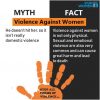
Am I Abused or Am I a Failure to Adjust? – A Migrant’s Story
Every year hundreds of immigrants leave their homes and trail to a land of dream and hope where they aspire to find peace, happiness and sometimes a little bit of safety compared to what they leave behind.« Previous Page — Next Page »





One in three women around the world have been subject to violence. Women face physical, sexual, and psychological violence in both public and private. Taking forms such as violence in the intimacy of a relationship, human trafficking, and sexual exploitation, gender violence is an issue that affects women in all countries. Only two-thirds of countries have outlawed domestic violence, leaving millions of women unprotected from abuse including from marital and de facto partners in many cases. Additionally, through human trafficking countless women are subjected to sexual exploitation and sexual violence, including horrific acts such as genital mutilation. Today many actors from individuals, to multinational organizations work to address these issues. These articles help to shed light on the violence that women experience every day and how its is being addressed.

The Week with IPS

Tracking global progress towards a sustainable world
