
Friday, October 2, 2026



News and Views from the Global South
Gender Violence
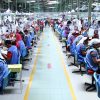
Global Clothing Brands Should Respond to the #MeToo Mandate
It has been two years since #MeToo went viral, and it’s about time the garment industry’s sexual harassment problem got the attention it deserves. Clothing and footwear brands can do much more to prevent and address gender-based violence in their supply chains, but first they need to confront how badly their inspection or “social auditing” programs fail women.
A Staggering One-in-Three Women Experience Physical, Sexual Abuse
Violence against women and girls is among the most widespread, and devastating human rights violations in the world, but much it is often unreported due to impunity, shame and gender inequality, the UN highlighted ahead of Monday’s World Day to stamp out abuse of women and girls.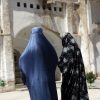
U.N. Group Launched to put Afghan Women at Centre of Peace Initiatives
Afghanistan’s first female ambassador to the United Nations this week launched a U.N. group that aims to put women at the centre of peace initiatives in Afghanistan.
End Rape—an Intolerable Cost to Society
If I could have one wish granted, it might well be a total end to rape. That means a significant weapon of war gone from the arsenal of conflict, the absence of a daily risk assessment for girls and women in public and private spaces, the removal of a violent assertion of power, and a far-reaching shift for our societies.
Empower Young People to Sustain Our Planet, and Let Peace and Prosperity Thrive
Q: At ICPD25 we heard that women and girls are still waiting for the unmet promises to be met? DO you think this time around there is a commitment to ensure that these promises are met? The Nairobi Summit is about the Future of Humanity and Human Prosperity.
Art Helping Women to Highlight Gender-based Violence at ICPD25
While women find it hard to talk about their painful experiences, some have found a way of expressing themselves through art. Women, trained as artists, from Nairobi’s informal settlements Kibera and Kangemi, have produced a beautiful quilt that tells stories about their daily challenges.
This Time Around ICPD25 Commitments Will Be Met Says UNFPA …
 The United Nations Population Fund, UNFPA Ethiopia country representative, Bettina Maas speaks to IPS at the ICPD25 Nairobi Summit and she says she is optimistic that this time around that the three critical commitments; bringing preventable maternal deaths, gender based violence and harmful practices, as well as unmet need for family planning to zero will be realized.

Young People at ICPD25: ‘ We Have the Right to Sexual and Reproductive Rights’
Every day in developing countries it is estimated that 20,000 girls under the age of 18 give birth. This amounts to 7.3 million births a year.
World Youth Call to Governments to Ban All Hindrances to LGBTQI Communities
Governments across the world must ban all state-implemented harmful practices against the Lesbian, Gay, Bisexual, Transgender, Queer and Intersex (LGBTQI) community delegates at the ICPD25 tells IPS.
ICPD25: Lessons From the East
The Japan Parliamentary Federation for Population represented by Mr Teruhiko Mashiko and its secretariat, the Asian Population and Development Association (APDA) has made a clear and concrete commitment to endorse the ICPD25 agenda. Mashiko tells IPS that Japan, as should every country driven by the well-being of its population, should create the best possible conditions to achieve the ICPD25 agenda.
Women with Disabilities Speak out Against Exclusion at ICPD25
One in five women globally lives with a disability even as they have same needs and interests as women without disabilities, their access to sexual and reproductive health services and rights remains severely limited.
Forced Child Marriage Must Be Stopped Says South Sudanese Child Activist
Young women and girls are still subjected to a range of harmful practices and violence, including early marriage. Every year, an estimated 12 million girls get married before the age of 18.

Cairo Dream Requires $264 Billion to Deliver Women’s Call for Justice and Bold Leadership
For each of the 830 women dying each day from pregnancy complications and childbirth, an estimated 20 others suffer serious injuries, infections or disabilities. This is the reality that millions of women face, and informs the Nairobi Summit’s three critical commitments which are to bring preventable maternal deaths, gender-based violence and harmful practices, as well as unmet need for family planning, to zero. To achieve this objective money is needed.
Nairobi Summit to Redouble Efforts to Urgently Deal with Reproductive Rights for Women and Girls
More than 6 000 delegates in the population development sector are gathering in the Kenyan capital of Nairobi this week to renew the promise made to girls and women 25 years ago in Cairo.
Call to Action as Thousands Breathe New Life to the Cairo Promise at ICPD 25 Summit in Nairobi This Week
Every day 830 women die while giving life. At least 33,000 girls are forced into child marriage with 11,000 girls undergoing female genital mutilation. These are some of the cruel realities young women face every day. However, there is renewed hope that delegates expected to attend the International Conference on Population and Development (ICPD) in Nairobi this week will re-energise and breathe new life to the Cairo Promise.
Central America – Fertile Ground for Human Trafficking
Central America is an impoverished region rife with gang violence and human trafficking - the third largest crime industry in the world - as a major source of migrants heading towards the United States.
The Nairobi Summit Is about the Future of Humanity and Human Prosperity
As we count down the remaining days to the opening of the Nairobi Summit or the International Conference for Population and Development(ICPD), I am confounded by how much humanity has managed to simultaneously empower more women than at any other time in history, while at the same time failing to see that ‘women’s issues’ are actually ‘everyone’s issues’.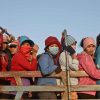
The #MeToo Movement’s Powerful New Tool
If one dreamed up an ambitious global #metoo success story, it might involve governments around the world enthusiastically supporting legal norms and action on sexual harassment with active support and cooperation from businesses and workers.
For Some in Kashmir Marriage Equates to Sexual Slavery
Haseena Akhtar was only 13 when an agent told her parents that they could earn a good amount of money by letting her marry a Kashmiri man. The man was, however, three times older than Akhtar, the agent said.
Domestic violence: Still a formidable challenge
After a week’s absence, Nazma entered the house with a lacklustre expression spread across her normally cheerful demeanour, with the slack of her sari pulled low over her face. When questioned in regards to her absence, while hesitant at first, she later revealed that she had been repeatedly threatened, forced to have sexual intercourse, and consequently suffered a miscarriage.
Promoting Women’s Safety in Latin America
Every year, over 12,000 women are killed in Latin America. The region is plagued by extremely high levels of violence, and a vacuum of state power persists. Public face of this violence is caused by paramilitary, guerrilla, gangs and armed groups.« Previous Page — Next Page »


One in three women around the world have been subject to violence. Women face physical, sexual, and psychological violence in both public and private. Taking forms such as violence in the intimacy of a relationship, human trafficking, and sexual exploitation, gender violence is an issue that affects women in all countries. Only two-thirds of countries have outlawed domestic violence, leaving millions of women unprotected from abuse including from marital and de facto partners in many cases. Additionally, through human trafficking countless women are subjected to sexual exploitation and sexual violence, including horrific acts such as genital mutilation. Today many actors from individuals, to multinational organizations work to address these issues. These articles help to shed light on the violence that women experience every day and how its is being addressed.

The Week with IPS

Tracking global progress towards a sustainable world
