Languages
Wednesday, November 11, 2026



News and Views from the Global South
Gender
Little Money to Promote Gender Equality in Eastern Europe
Despite pushes from international bodies such as the United Nations (UN) or the European Union (EU) to promote gender equality in Central and Eastern Europe, access to funding for such initiatives remains largely conditional upon national governments’ willingness to embrace this agenda.Little Money to Promote Gender Equality in Eastern Europe
Despite pushes from international bodies such as the United Nations (UN) or the European Union (EU) to promote gender equality in Central and Eastern Europe, access to funding for such initiatives remains largely conditional upon national governments’ willingness to embrace this agenda.Argentine Women Refused Legal Abortions in Cases of Rape
For over 90 years, a law in Argentina has allowed women who become pregnant as a result of rape to have an abortion. However, hospitals often refuse to carry out the procedure, instead referring the women to the justice system.
KENYA: Microloans, Greenhouses Help Women Cope with Climate Change
At Gakoromone Market in Meru, in Kenya’s Eastern Province, Ruth Muriuki arrives in a pickup full of tomatoes and cabbages despite the scarcity of rainfall in the area, thanks to the greenhouse technology she uses on her farm – and microcredit.
ZIMBABWE: Farmers Tackle Water Problems Fuelled by Climate Change
Beauty Moyo’s desire for access to water has finally been met. The rains that fell in the past week after a long dry patch have awakened this small-holder farmer deep in rural Plumtree, Zimbabwe on the border with Botswana to the reality of sparse rainfall, climate change and how she and her fellow villagers can respond.
U.N. Meet Holds Governments to Account on Women’s Equality
In 2008, delegates meeting for the annual U.N. Commission on the Status of Women (CSW) agreed that much greater investments in women and gender equality were a critical – and overlooked – aspect of sustainable development.Argentine Women Refused Legal Abortions in Cases of Rape
For over 90 years, a law in Argentina has allowed women who become pregnant as a result of rape to have an abortion. However, hospitals often refuse to carry out the procedure, instead referring the women to the justice system.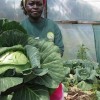
KENYA: Microloans, Greenhouses Help Women Cope with Climate Change
At Gakoromone Market in Meru, in Kenya’s Eastern Province, Ruth Muriuki arrives in a pickup full of tomatoes and cabbages despite the scarcity of rainfall in the area, thanks to the greenhouse technology she uses on her farm – and microcredit.U.N. Meet Holds Governments to Account on Women’s Equality
In 2008, delegates meeting for the annual U.N. Commission on the Status of Women (CSW) agreed that much greater investments in women and gender equality were a critical – and overlooked – aspect of sustainable development.
PERU: Time to Adapt to Climate Change Impact on Women’s Lives
This year’s unusually rainy season in Peru is having a negative effect on the wellbeing and health of women in rural areas who are forced, for example, to spend three times as much time walking to collect firewood and water. But the authorities continue to turn a blind eye to the problems they face.India’s Girl Child Struggles to Survive
At the intensive care unit of the state-run All India Institute of Medical Sciences (AIIMS) hospital in New Delhi, a two-year-old battered baby girl is fighting to survive.Women Still Trapped Below Glass Ceiling of Party Politics
The right of women to participate in political life is guaranteed by several international conventions, but transforming an abstract right into a reality requires hard work on the ground, says a new study released here.CULTURE-ARAB SPRING: A Revolution Through the Lens
The Arab world is talking about a revolution; not just out on the streets but in films, in newspapers, in songs – using any means necessary to document events, expose the horrors of war and explore the struggles and possibilities that lie ahead as the Arab Spring feels the wintry chill of post-revolutionary democratic challenges.
India’s Girl Child Struggles to Survive
At the intensive care unit of the state-run All India Institute of Medical Sciences (AIIMS) hospital in New Delhi, a two-year-old battered baby girl is fighting to survive.
Women Still Trapped Below Glass Ceiling of Party Politics
The right of women to participate in political life is guaranteed by several international conventions, but transforming an abstract right into a reality requires hard work on the ground, says a new study released here.Index Offers Improved Method to Gauge Women’s Progress
If an organisation wants to monitor how its projects in the developing world are affecting women in specific areas of female empowerment, it probably can't, as it lacks the proper tools. But a new system, the "Women's Empowerment in Agriculture Index", is working to change that.
ZAMBIA: No Longer “Waiting for the Mangoes to Ripen”
Eight years ago when Mary Sitali’s husband divorced her, by sending a traditional letter to her parents saying that he no longer wanted her and they could "marry her to any man of your choice - be he a tall or a short man, the choice being entirely yours," she returned to her village in rural Zambia with their two children and no way of supporting them.
Rural Women Are Leading the Way – Will the World Follow – Part 2
The United Nations’ 56th session of the Commission on the Status of Women (CSW) opened Monday in New York, with the empowerment of rural women high on a list of priorities for this year.Women Journalists in Cuba Revive Transgressive Group
More than 15 years after the "deactivation" in Cuba of the Association of Women Communicators (MAGIN), its members remain united in an informal network that transcends any specific political situation and has become a reference for the new generations.
Q&A: Climate Funding Needs Gender Equity
Gender considerations remain largely disregarded in existing climate funds, even though women are some of the hardest hit by the impacts of climate change on livelihoods and agriculture.Index Offers Improved Method to Gauge Women’s Progress
If an organisation wants to monitor how its projects in the developing world are affecting women in specific areas of female empowerment, it probably can't, as it lacks the proper tools. But a new system, the "Women's Empowerment in Agriculture Index", is working to change that.« Previous Page — Next Page »





Women make up half the world's population, but don't nearly share half of the world's wealth, well-being and opportunity. Two-thirds of the world poor are women, disproportionally exposing women to precarious living conditions, disease and unmitigated natural disasters. The media, meanwhile, remains a male-dominated sector in much of the world, contributing to women's voices lacking a crucial amplifier to put their concerns on political agendas and unleash the development potential of their ingenuity. Rather than then stereotypical victims of local and global forces, women are also organizer, innovators, conservators and community builders. These are some of their stories.

The Week with IPS

NEXT STOP - SDGs
Tracking global progress towards a sustainable world
Tracking global progress towards a sustainable world
