
Monday, October 26, 2026



News and Views from the Global South
Women in Politics
ZIMBABWE: Rural Women Voting With Their Feet
At independence in 1980, Loyce Tshuma (55), a villager in rural Tsholotsho in Matebeleland North, was a loyal believer in politics as a powerful vehicle to change and better lives. Since then she never missed an opportunity to cast her vote.
SOUTH AFRICA : Women Candidates Struggle in Local Government Elections
Political parties should be forced, through changes in legislation, to bring more women into government.
POLITICS: First Woman Speaker of Parliament Changing Politics
Very soon wives in Uganda will legally have the right to a share in their husband’s property, that’s if the country’s new speaker of parliament has her way.
SOUTH AFRICA: Woman Navigating a Tough Political System
Victoria Zanele KaMagwaza-Msibi admits she is no angel. But for 30 years she’s navigated through South Africa’s tough political landscape, mainly as a member of a male-dominated party, and now as the leader of her own political party.
SOUTH AFRICA : Women’s Issues Missing from Election Manifestos
Come rain or shine, single mother of five, Sylvia Mathebula,* can be found selling fruit and cigarettes at the roadside because it is the only way her family can survive. "Since the government is not helping us with jobs, rather than work as a maid for a white person I decided to start this little business by myself," she says lamenting the lack of opportunities for unskilled women.SIERRA LEONE: Promise of More Space for Women in Decision-making
In Sierra Leone’s highly patriarchal society, where institutionalised gender inequalities are exacerbated by discriminatory customs, one group is singing its way towards changing this.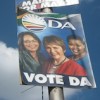
SOUTH AFRICA: Do More Women Politicians Mean Better Politics?
The Democratic Alliance (DA) election posters, which feature party leader Helen Zille, Cape Town mayoral candidate Patricia de Lille and party spokeswoman Lindiwe Mazibuko, do not necessarily mean that a vote for the party is a vote for women, analysts say.KENYA: Feisty Politician Enters Presidential Race
Martha Karua fears nothing and no one, and when her adversaries look back at her long track record in politics, they must get nervous. This previously staunch supporter of Mwai Kibaki resigned as justice minister in 2009, and will challenge all comers for the presidency at the head of her own party next year.Nigerian Women Stand Up to be Counted
As Nigeria tries again to begin its staggered general elections on Apr. 9, spare a thought for the women who will be putting themselves forward as candidates in an overwhelmingly male field.ZIMBABWE: Fears for Next Generation of Women Leaders
Zimbabwe's veteran women politicians fear there are no younger women coming up through the ranks to replace them. Measures to improve women's representation have achieved little and young women are absent from the traditional entry points into politics.ZIMBABWE: Backlash Against Women in Politics
"Women in Zimbabwe are largely seen as a huge demographic to be exploited by politicians who seek our support," says Ntombikayise Mswela. "But when we take to the streets to demand respect and our rights from the same government we are thrown into prison.BOTSWANA: Women in Politics – A House Divided… But Determined
"The Botswana Caucus for Women in Politics has failed to realise the objectives it was intended for, but we will not give up on it just yet," says Margaret Nasha.ZAMBIA: Women Resume Struggle for Representation Ahead of Elections
Zambians head to the polls sometime before October and civil society groups are working hard to ensure their voices are heard. Groups which were excluded during the 2005 elections and the National Constitutional Conference that began in 2007 are mobilising to ensure they are not excluded.
MOZAMBIQUE: Educator in the Foothills of Her Political Career
If women like Judith Mussacula realise their aspirations to become the next generation of Mozambican politicians, the country's future will be in safe hands.POLITICS-ZAMBIA: Days of Male Domination Numbered
Elizabeth Phiri was so incensed when she was overlooked as a parliamentary candidate for the Patriotic Front in a 2008 by-election on the basis of her gender that she quit the party. Four years on, she has rejoined the party but remains pessimistic - but other women politicians see reasons to hope the 2011 elections will be different.Botswana Parliament’s Speaker a Well-Loved Woman
It would have been hard for a teenaged Margaret Nnananyana Nasha to imagine that she would grow up to become one of the most powerful figures in Botswana's government.
Mauritian Women Dreaming of Active Politics
"We have had enough of the training given to us in cooking, sewing and household works... We now have another dream: of participating actively in the development of our island at decision-making level," says Marie-Anne Laganne, a political trainer at Women In Politics.KENYA: One Woman’s Turbulent Journey to Success
Mount Elgon in Western Kenya is one of the most marginalised regions in the country. It is so marginalised that it is the only area where not even an inch of tarmac road has been constructed.SOUTH AFRICA: Rising Leader With Her Feet on the Ground
Zanele Magwaza-Msibi is a woman with a mission: to serve the people of South Africa. She is poised to become leader of South Africa's newest political party, the National Freedom Party (NFP), after breaking away from the Inkatha Freedom Party (IFP), where she served as national chairperson.
SOUTH AFRICA: New, Assertive Women’s Voices in Local Elections
Noncedo Pulana lacks many things, but she is certainly not short of confidence as she prepares to stand for election as Khayelitsha ward councillor. She feels her long years as an activist in the sprawling township have prepared her to do a better job.
Malawi Missing Its Local Government
An hour and fifteen minutes each day: Melina Kalunga has plenty of time to measure how long it takes to resolve a legal battle over Malawi's Electoral Commission.« Previous Page — Next Page »





In societies throughout the world, women’s participation in political and leadership roles is limited. Underrepresented as voters and position holders, women are restricted at local and at global levels. A variety of obstacles bar women’s political participation. Reduced access to education in many countries, as well as weaker political connections make it more difficult for women to enter the political stage. In addition, there are many discriminatory laws that severely reduce the opportunity for women to gain leadership positions. As has been seen, there are many individuals who have overcome these obstacles with great success. There have been great strides to increase women’s political participation. In the last 20 years, the percentage of women in parliamentary positions has nearly doubled. This promising, albeit slow progress, is necessary to empower women and reduce gender inequality. These articles look at various aspects of women’s participation politics.

The Week with IPS

Tracking global progress towards a sustainable world
