Languages
Saturday, August 15, 2026



News and Views from the Global South
Eye on the IFIs
Massive Theft of Developing World’s Farmland
The mass acquisition or lease of arable land in developing countries, especially in Africa, by foreign investors – a practice aggravated by the outbreak of the financial crisis in 2007 – has reached record highs, according to several new studies.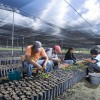
Food Security Slipping Ever Further Away
Continuing near-record high food prices around the world are highlighting international inattention to a looming threat, observers here warned on Friday.Multilaterals Warned Not to Go Too Far, Too Fast in Myanmar
As multilateral lending agencies prepare to seriously re- engage with Myanmar for the first time in decades, observers at the spring meetings of the World Bank and International Monetary Fund (IMF) are warning that a poor understanding of ground conditions in the country could jeopardise many of the early opportunities created by government-initiated reforms.
U.S.’s Kim Prevails in First World Bank President Contest
Capping an unprecedented multinational contest for the post, the World Bank's executive board upheld a nearly 70-year tradition Monday by selecting the U.S. candidate, global health expert Jim Yong Kim, to be the Washington-based agency's next president.World Bank Supports Harmful Water Corporations, Report Finds
Water privatisation has been proven not to help the poor, yet a quarter of all World Bank funding goes directly to corporations and the private sector, bypassing both governments and its own standards and transparency requirements in order to do so, says a new report released Monday.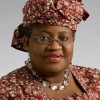
World Bank Race Heats Up
While the U.S. candidate for World Bank president, Jim Yong Kim, still has the inside track, the two non-U.S. candidates, Nigerian Finance Minister Ngozi Okonjo-Iweala and former Colombian finance minister Jose Antonio Ocampo, have been raking in high-profile endorsements.
Europe Urges More Development Aid for Women
Though United Nations experts agree that governments should focus on empowering girls and women as a key to managing a world of seven billion people, not enough is being done for women’s rights in developing countries, aid advocates say.European NGOs Put IFIs Under Microscope
European civil society organisations continue to demand that international financial institutions (IFIs) such as the World Bank and the International Monetary Fund apply the same standards of transparency and accountability to their internal affairs that they demand for governments across the world.
BRICS Tighten United Front
At their summit in the Indian capital on Thursday, leaders of the coalition known as BRICS – Brazil, Russia, India, China and South Africa – made several noteworthy decisions that experts say hint at the converging of economic and political interests of a disparate regional bloc.Unexpected Nomination by Obama for World Bank Chief
In a surprise to many development and finance experts here on Friday, U.S. President Barack Obama nominated Jim Yong Kim, a relatively unknown but highly regarded international health specialist to become the next president of the World Bank.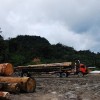
Treat Illegal Logging Like Organised Crime, Urges World Bank
With illegal loggers clearing the equivalent of a football field of the world's most valuable forests every two seconds, local and international law enforcement systems should target the criminal operations that profit most from the trade, according to a new report released here Tuesday by the World Bank.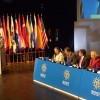
Inequality, the Achilles’ Heel of Latin America’s Economies
The countries of Latin America and the Caribbean were able to cushion the jolt of the global economic and financial crisis by means of anti-cyclical policies, but they need to remain vigilant and pay attention to social inequality, their most vulnerable flank.
European Left Backs Hollande in United Front Against Austerity
Practically all European Social Democratic and Socialist parties are supporting the French presidential candidate François Hollande in the upcoming elections, in the hope that his likely triumph against incumbent president Nicolas Sarkozy will create enough continental momentum to put an end to the present Conservative-inspired social and economic austerity policies.BRICS Bank Could Change the Money Game
India’s proposal to set up a bank of the BRICS nations (Brazil, Russia, India, China and South Africa) will top the agenda at the summit of the group in New Delhi Mar. 28.
Q&A: “Social Unrest Can Be a Creative Force”
Social unrest and demands for change are not a negative thing during times of crisis like today, says Rubens Ricupero, a prominent Brazilian diplomat and intellectual.
Q&A: “Social Unrest Can Be a Creative Force”
Social unrest and demands for change are not a negative thing during times of crisis like today, says Rubens Ricupero, a Brazilian diplomat and thinker.
Brazil, Emerging South-South Donor
The Brazilian government is stepping up South-South aid, to strengthen the South American giant’s status as a donor country and its international clout. It now provides assistance to 65 countries, and its financial aid has grown threefold in the last seven years.
INDIA: Kashmir Missing Its ‘Demographic Dividend’
Kashmir is missing out on a ‘demographic dividend’ and unable to cash in on its youthful population for lack of initiatives from a state government bogged down by a two-decade-old separatist insurgency.
Correcting the Record of Haiti’s Earthquake
The world reacted swiftly to Haiti's catastrophic 7.0 earthquake in 2010. The United States shipped in 20,000 troops, some to perform lifesaving medical procedures, others to protect aid workers from earthquake victims deemed dangerous. Movie stars, criminals and other prospective parents rushed to adopt motherless Haitian babies.
Eastern Caribbean Seeks Funds for Green Growth
As developing countries urgently seek new sources of financing to cope with problems linked to climate change, delegates from the nine-nation Organisation of Eastern Caribbean States (OECS) met here last week to evaluate potential funds and outline a more concrete vision of what is required for the subregion.
Haiti’s University Languishes in Ruins – Part 2
When the Interim Haiti Reconstruction Commission failed to approve, or even respond to, a proposal by the University of the State of Haiti (UEH) for a unified campus to replace the nine destroyed or badly damaged faculties in the capital, Vice Rector Fritz Deshommes was not surprised at the silence.« Previous Page — Next Page »


They underpin the world's financial architecture, with the power to revamp whole economies and channel billions of development dollars each year. But the so-called International Financial Institutions -- the World Bank Group, International Monetary Fund and regional investment banks -- face a new era of public scrutiny and challenges to their relevancy. How are the IFIs responding to growing demands from the South and civil society groups for greater democracy and accountability? And are they living up to their stated mission of promoting economic prosperity for all? IPS reports.

The Week with IPS

NEXT STOP - SDGs
Tracking global progress towards a sustainable world
Tracking global progress towards a sustainable world
