Languages
Wednesday, November 11, 2026



News and Views from the Global South
Global Governance
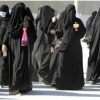
Campaign to Whitewash Saudi Arabia’s Image Does Little for Women in the Kingdom
Amid a high-profile public relations campaign to convince the world just how much the Kingdom of Saudi Arabia is modernising – highlighted in last year’s lifting of the ban on women driving – Saudi authorities continue their relentless persecution of women human rights defenders.
US Withdrawal From Iran Nuclear Deal: One Year On
On 8 May last year, US President Donald J. Trump announced that the United States would pull out of the Joint Comprehensive Plan of Action (JCPOA), which sets limits on Iran’s nuclear programme to ensure that it cannot produce nuclear weapons.
Leaving No One Behind: Young People’s Participation at UN
Walking down 44th street towards UNICEF House was a poignant moment for me: having sought out resources, gone through strenuous immigration processes and having had my assumptions unraveled with the realities of New York City (NYC). This was it.
The Ethiopian City Lost in the Shadow of South Sudan’s War
 Right up against the border with South Sudan, the western Gambella region of Ethiopia has become a watchword for trouble and no-go areas as its neighbour’s troubles have spilled over. But now there may be reason for optimism on either side of the border.
UN Chief’s Reprehensible Bankrolling of Violence in Burundi
Last week the Washington Post published a scathing critique by the executive director of Human Rights Watch, titled “Why the U.N. Chief’s Silence on Human Rights is Deeply Troubling.” Kenneth Roth argued that Secretary-General António Guterres “is becoming defined by his silence on human rights—even as serious rights abuses proliferate.”
The Burning of Notre Dame and the Spirit of Place
The catastrophic fire in Notre Dame produced a massive emotional reaction. In a Paris famous for its secularism tearful people knelt on the pavement, sang the Ave Maria and prayed to God to save their cathedral. Several stated that it was not only a church burning, but the soul of Paris passing away. What did they mean to say?
Sustainable Development Goals: One of the Greatest Fun Things in the World!?
This year’s annual “SDG Global Festival of Action” was held in Bonn, Germany, from May 2–4, 2019. The festival’s overall aim is to gather campaigners and multiple stakeholders from around the world at one place for interaction with each other; furthermore, it seeks to inspire them to scale up action in support of the 17 Sustainable Development Goals (SDGs) set forth in the 2030 Agenda adopted by the United Nations General Assembly.
West Africa’s Fine Line Between Cultural Norms and Child Trafficking
On a bus in Cotonou, Benin’s commercial capital, four Nigerian girls aged between 15 and 16 sit closely together as they are about to embark on the last part of their journey to Mali, where they are told that their new husbands, whom they never have met, await them.
Women, Peace and Security: Let’s Turn Words into Action
To be able to tackle a problem we must first recognize that it exists. When I first spoke at the United Nations Security Council in 2009, I was asked why the issue of sexual violence was even relevant to peace and security. At that time, it was not generally accepted that rape is in fact a weapon of war. Today, that statement is both widely accepted and central to the international community’s understanding of this crucial issue.
Future of Our Planet Requires Deeper Cooperation, Long-term Thinking
For most of the 7 billion people on the planet, global institutions are remote, far removed from their day to day existence. Yet, our global institutions matter.
Opting In: The Value of Vaccines
Since the introduction of vaccines, diseases such as measles and polio were quickly becoming a thing of the past. However, the world’s progress on immunisation is now being threatened.
Are Migrant Workers Humans or Commodities?
The United Nations has estimated a hefty $466 billion as remittances from migrant workers worldwide in 2017—and perhaps even higher last year.
Trump’s Arms Control Gambit: Serious or a Poison Pill?
Smart U.S. leadership is an essential part of the nuclear risk reduction equation. Unfortunately, after more than two years into President Donald Trump’s term in office, his administration has failed to present a credible strategy to reduce the risks posed by the still enormous U.S. and Russian nuclear arsenals, which comprise more than 90 percent of the world’s nuclear weapons.
Massacre of the Innocents: Whereto from Here?
We have been here before. This blooded precipice is familiar, this looming abyss. What is unfamiliar, what renders the Easter Sunday massacre most vile and truly nightmarish is the total absence of any knowable rationality.
Coping With World Bank-Led Financialization
The World Bank has successfully promoted its ‘Maximizing Finance for Development’ (MFD) strategy by embracing the United Nations’ Sustainable Development Goals, internationally endorsed in September 2015. It has also secured support from the G20 of twenty biggest economies, and effectively pre-empted alternative approaches at the third UN Financing for Development summit in Addis Ababa in mid-2015.
Kenya and Ethiopia Cross-Border Initiative: A Move Towards Sustainable Peace
Many years of internecine conflict is being replaced by a new narrative of peace along the Kenya-Ethiopia border. Communities that once fought each other are now dreaming of a joint journey towards a better future.
Land Conservation: A Risky Business
In light of land degradation and climate change, the protection of the environment is crucial—but the protection of the very people working tirelessly and with much risk to preserve nature should be just as important.
US Takes Back Signature on Arms Trade Treaty
The United States dropped a political bombshell when President Donald Trump announced his administration would withdraw from the historic Arms Trade Treaty (ATT) which the former Obama administration signed in September 2013.
Muslim Terrorists Heading Towards a Jihadist Hell Hole
The history of terrorism in Sri Lanka reveals a clear pattern. The first to take up arms in the post-Independent era were the misguided Sinhala youth. They were educated youth desperately running in search of a quick solution to establish their classless paradise. Their violence did not take them anywhere.
US & Western Arms in Yemen Conflict Signal Potential War Crime Charges
When US political leaders urged the Trump administration to either reduce or cut off arms supplies to Saudi Arabia – largely as a punishment for its indiscriminate bombings of civilians in the four-year old military conflict in Yemen—President Trump provided a predictable response: “If we don’t sell arms to Saudi Arabia, the Chinese and the Russians will.”
A Treaty to End Corporate Immunity?
When Ecuadorean diplomat Luis Gallegos first proposed a “Binding Treaty on Business and Human Rights,” many countries and environmental activists welcomed the idea with open arms.« Previous Page — Next Page »





The Week with IPS

NEXT STOP - SDGs
Tracking global progress towards a sustainable world
Tracking global progress towards a sustainable world
