Languages
Friday, November 20, 2026



News and Views from the Global South
Global Governance
U.N. Says Maternal Mortality Rate Has Nearly Halved since 1990
The global rate of maternal deaths is reducing faster than any time in history, according to a new report presented to the United Nations on Tuesday.
An Italian and Tanzanian Partnership
20 years on from Beijing, gender inequality is still a priority at United Nations.
Women Make Progress in Politics, But Glass Ceiling Remains Unbreakable
Secretary-General Ban Ki-moon, a creature of the U.N.’s 193 member states and who serves at their will and pleasure, did not hesitate to fault 13 countries that kept women out of their national parliaments and governments in power.
200 Million Fewer Women than Men Online
Two hundred million fewer women have access to the internet than men, according to a report released Monday.
First the Taliban, then the Army, now Hunger: The Woes of Pakistan’s Displaced
A doctor shakes his head in despair as he examines a 10-year-old child at the Jalozai refugee camp, about 35 km by road from Peshawar, capital of Pakistan’s northern Khyber Pakhtunkhwa (KP) province.
Opinion: The World Sees Progress Against Undernutrition, but it’s Uneven
In 2014, an estimated 805 million people – one in nine people worldwide – were estimated to be chronically hungry. All but 14 million of the world’s hungry live in developing countries, i.e., 791 million are in developing countries, where the share of the hungry has declined by less than half – from 23.4 per cent (1990-1992) to 13.5 per cent (2012-2014).
Opinion: A Year of Progress for “Children, Not Soldiers”
One year ago, representatives of the last eight governments of the world named by the U.N. secretary-general for the recruitment and use of children in their security forces gathered at the United Nations in New York to declare they were ready to take the steps necessary to make their security forces child-free.
From the Mountains to the Sea, Timorese Women Fight for More
In Timor-Leste, the gap between rich and poor is most keenly felt by rural women and children. But while women are working hard to help rebuild Timor-Leste, their contributions are not always recognised, in a country where men’s narratives still heavily dominate.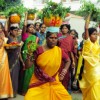
The 15 Journalists Putting Women’s Rights on the Front Page
Media coverage of maternal, sexual and reproductive health rights is crucial to achieving international development goals, yet journalists covering these issues often face significant challenges.
Opinion: A Legally-Binding Treaty to Prohibit Nuclear Weapons
Five years after the adoption of the NPT (Nuclear Non-Proliferation Treaty) Action Plan in 2010, compliance with commitments related to nuclear disarmament lags far behind those related to non-proliferation or the peaceful uses of nuclear energy.
In India, an Indoor Health Crisis
For years, Kehmli Devi, a middle-aged woman from the village of Chachadeth in India’s northern Himalayan state of Uttarakhand, has prepared her family’s meals on a wood-burning stove.
World Misses Its Potential by Excluding 50 Percent of Its People
The meeting is billed as one of the biggest single gatherings of women activists under one roof.
Opinion: Eco-efficient Crop and Livestock Production for Nicaraguan Farmers
For Roberto Pineda, a smallholder farmer in the Somotillo municipality of Nicaragua, his traditional practice after each harvest was to cut down and burn all crop residues on his land, a practice known as “slash-and-burn” agriculture.
Opinion: Bridging the Gap – How the SDG Fund is Paving the Way for a Post-2015 Agenda
The countdown has begun to September’s Summit on the Sustainable Development Goals (SDGs), with world leaders discussing the 17 goals and 169 targets proposed by the United Nations Open Working Group.42 Human Rights Groups Slam Indonesia’s Death Penalty
More than 40 human rights groups from around the world have penned an open letter to Indonesian President Joko Widodo, pleading for the halting of 10 imminent executions.Prominent Lawyer Defending the Poor Gunned Down in Mozambique
As billions pour into Mozambique from foreign investors scooping up fields of coal and natural gas, the signs of newfound wealth are impossible to miss.Burundi-Watchers See Erosion of Human Rights and Civic Freedoms
The bad old days of the 1980s and 1990s when Burundi was widely considered a police state may be making a comeback.
Opinion: Let’s Grant Women Land Rights and Power Our Future
Women are not only the world’s primary food producers. They are hardworking and innovative and, they invest far more of their earnings in their families than men. But most lack the single most important asset for accessing investment resources – land rights.
Opinion: Greece and the Germanisation of Europe
At last, on Tuesday Feb. 24, the Eurogroup (of eurozone finance ministers) approved the Greek government’s commitment to a programme of reforms in return for extending the country’s bailout deal.Syrians “Have No Faith” in International Community to Solve Human Rights Crisis
Syrian citizens “have no faith” in the international community to solve the chaos and war raging across their country, according to a prominent human rights defender.
Opinion: It’s Time to Step It Up for Gender Equality
If we look at the headlines or the latest horrifying YouTube clip, Mar. 8 – International Women’s Day – may seem a bad time to celebrate equality for women.« Previous Page — Next Page »


The Week with IPS

NEXT STOP - SDGs
Tracking global progress towards a sustainable world
Tracking global progress towards a sustainable world
