Languages
Tuesday, November 24, 2026



News and Views from the Global South
Global Governance

Q&A: How to Analyse a Budget’s Impact on Female Empowerment
Tools such as "gender markers", which screen budgets and resources dedicated to promoting gender equality, are proving critical to improving the effectiveness of monetary support that seeks to empower women and girls.
U.N. Special Envoy on Iran Details Pattern of Rights Abuses
A United Nations envoy has called on the Iranian government to release all political prisoners and prisoners of conscience, and to conduct an extensive, impartial and independent investigation into the violence that followed the 2009 presidential election.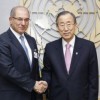
Syria’s Chemical Weapons Trigger New Threats in War Zone
As the besieged government of President Bashar al-Assad continues to violently suppress the warring political opposition in Syria, the United Nations has expressed "concern" over reports "on the possible existence of chemical weapons" in the embattled Middle Eastern country.
Following the Money Trail in Gender Financing
Promising methods of tracking aid funding intended to improve women's and girls' livelihoods also offer the possibility of revealing whether donors and policymakers are walking the walk when it comes to gender financing.U.S. Lags in Legalising Women’s Rights Treaty
The United States has fallen behind. Many other countries have already implemented it, but the United States still has yet to ratify the Convention on the Elimination of All Forms of Discrimination Against Women (CEDAW), which promotes women's rights as human rights.
Green Economy Seeks to Maintain Growth Threatened by Disasters
There is every indication that major disasters could be the new midwives of history. Seeking to prevent them, the green economy aims to reduce "environmental risks" and "ecological scarcities" while improving human well-being and social equity.Green Credit Scarce in Latin America
In Latin America, where bank loans for environmentally sustainable activities are rare, the United Nations Environment Programme (UNEP) is seeking to foment green credit.Green Credit Scarce in Latin America
In Latin America, where bank loans for environmentally sustainable activities are rare, the United Nations Environment Programme (UNEP) is seeking to foment green credit.Malaysians Fight Radioactive Waste From Oz
Malaysians protesting against an Australian-owned rare earth refinery, that will generate radioactive waste, are determined to agitate until the project is abandoned.
Q&A: “Social Unrest Can Be a Creative Force”
Social unrest and demands for change are not a negative thing during times of crisis like today, says Rubens Ricupero, a prominent Brazilian diplomat and intellectual.After Pro-Israel Conference, Gaps Remain Between Netanyahu and Obama
More than 10,000 U.S. citizens descended on Capitol Hill Tuesday under the direction of the American Israel Public Affairs Committee (AIPAC), the leading voice of the powerful Israel lobby here, to urge their congressional representatives to take a more aggressive stance towards Iran.Prospects for War with Iran Unclear As Obama, Netanyahu End Summit
Is war against Iran, either by Israel, the U.S. or both, closer or farther off after this week's meeting here between President Barack Obama and Prime Minister Benjamin Netanyahu?
Obama to Pro-Israel Lobby Group: ‘Too Much Loose Talk of War’
U.S. President Barack Obama Sunday made a clear statement against a rush to war - either by the U.S. or Israel - with Iran, while also emphasising that he would pursue that option if alternatives were unsuccessful in ensuring that Iran would not develop a nuclear weapon.
World Has Met Development Target on Water, U.N. Claims
When the U.N. General Assembly unanimously adopted a resolution back in September 2000 laying out eight Millennium Development Goals (MDGs), it specified 2015 as the target date to achieve them.
World Has Met Development Target on Water, U.N. Claims
When the U.N. General Assembly unanimously adopted a resolution back in September 2000 laying out eight Millennium Development Goals (MDGs), it specified 2015 as the target date to achieve them.
The Tale of Iran’s “Critical” Election
Iran's Mar. 2 parliamentary elections were touted by many Iranian officials, including Supreme Leader Ayatollah Ali Khamenei, as the most "critical" event since the establishment of the Islamic Republic 33 years ago.
Q&A: “Social Unrest Can Be a Creative Force”
Social unrest and demands for change are not a negative thing during times of crisis like today, says Rubens Ricupero, a Brazilian diplomat and thinker.Washington Struggles to Find a Path Forward on Syria
As the Syrian army has stepped up its attacks against opposition strongholds in Homs and elsewhere, the U.S. and its allies have achieved little consensus in choosing a course of action to oust President Bashar al-Assad.Could Europe’s Anti-Counterfeiting Pact be a “Pandora’s Box” of Rights Violations?
Foggy details surrounding Europe’s anti-counterfeiting trade agreement (ACTA) have divided pubic opinion, with activists on one end of the spectrum claiming it to be the end of Internet freedom and the generic drug market, while proponents continue to defend the act as a “modest” agreement to protect Europe’s intellectual property.Abolitionists Target Funds Behind Nuclear Arms Industry
The world's nuclear weapons industry is being funded - and kept alive - by more than 300 banks, pension funds, insurance companies and asset managers in 30 countries, according to a new study.
Tense Tug-of-War over Peru-Brazil Energy Agreement
Brazil is keen to move ahead quickly with the construction of hydropower plants in neighbouring countries to supply its demand for electricity. But Peru is still stalling on an agreement between the two countries, due to a number of conflicting interests and demands.« Previous Page — Next Page »


The Week with IPS

NEXT STOP - SDGs
Tracking global progress towards a sustainable world
